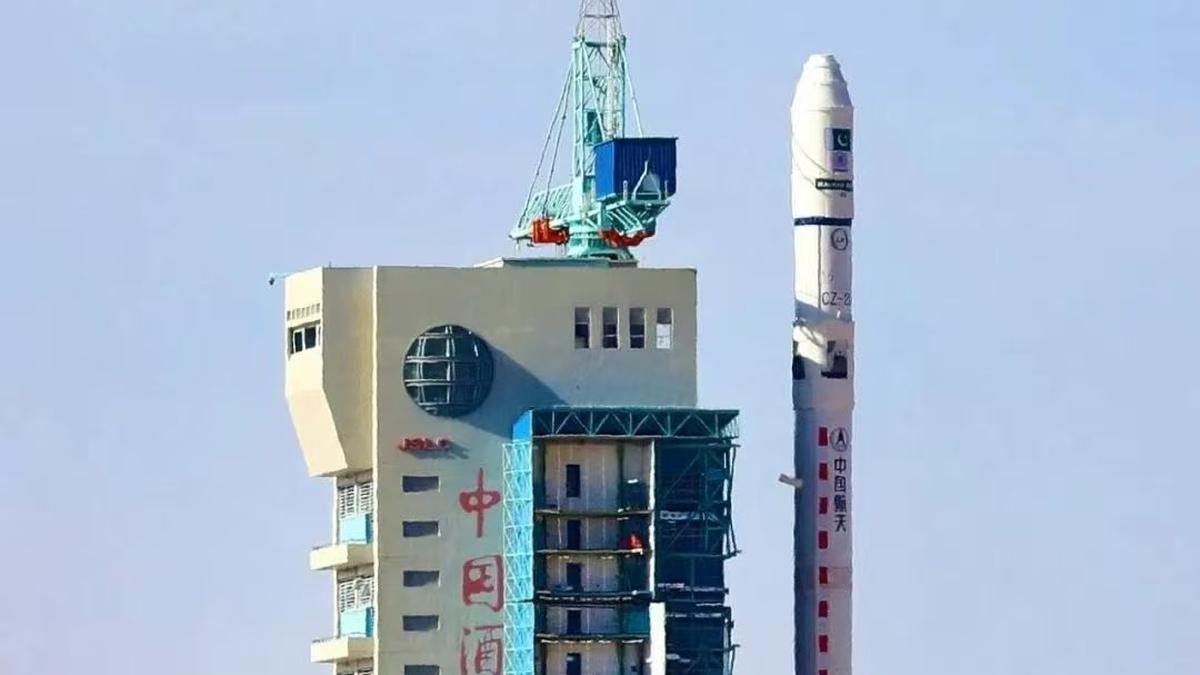
Pakistan launches first home-made observation satellite
The Hindu
Pakistan launches first observation satellite to boost monitoring capabilities, part of growing global trend in satellite technology.
“Pakistan launched its first home-made observation satellite on Friday (January 17, 2025) from the Jiuquan Satellite Launch Centre in northern China,” Pakistan’s space agency said.
The PRSC-EO1 satellite will boost Pakistan’s ability to monitor and manage natural resources, respond to disasters, and improve urban planning and agricultural development, the Space and Upper Atmosphere Research Commission (SUPARCO) said in a statement.
This type of satellite uses electro-optical sensors to collect data and images of the Earth’s surface by detecting and measuring reflected sunlight or emitted radiation.
China's Long March-2D carrier rocket also launched on Friday (January 17, 2025) two other satellites, Tianlu-1 and Blue Carbon 1, into orbit along with the PRSC EO1, China Aerospace Science and Technology Corporation said in a statement.
Currently valued at $5 billion, the earth observation satellite market is among the fastest growing sectors within the commercial space industry, with Novaspace predicting it to exceed $8 billion by 2033.
Countries including the United States, China and India have been building their own government and private satellite constellations to map the Earth. Indian startup Pixxel this month launched the country’s first privately built satellite constellation.


Indonesian billionaire Michael Bambang Hartono, co-founder of Djarum Group, has died at 86, leaving a significant legacy.

European nations, Japan, and Canada unite to ensure safe passage through the Strait of Hormuz and stabilize energy markets.

Some of the estimated 20 billion yuan ($2.9 billion) worth of equipment, including screen-printing production lines, will require export approval from Chinese regulators, according to the people. It wasn't immediately clear how much of the equipment would require approval or how long it would take.

Three men, including a Super Micro VP, charged with smuggling U.S. AI technology to China, threatening national security.

Trump compares U.S. strikes on Iran to Pearl Harbor in meeting with Japan's PM, highlighting the element of surprise.

Iran-Israel war: Follow the latest updates from The Hindu on the West Asia conflict on March 20, 2026

The closure of the Strait of Hormuz disrupts a vital artery of the global economy, triggering price increases and turmoil in energy markets; as supply shocks reshape the geopolitics of energy, countries like India, the U.S., and Russia recalibrate strategies amid shifting oil flows and rising dependence

EU lawmakers advance U.S. trade deal legislation, overcoming delays and adding safeguards amid concerns over compliance from the Trump administration.

Pro-Iran Iraqi group pauses U.S. embassy attacks for five days, imposing conditions amid ongoing regional tensions and strikes.

Russia condemns the Israeli airstrike injuring RT journalists in Lebanon, calling it deliberate amid ongoing regional conflict.

Iran criticizes France's Macron for ignoring Israel-US attacks amid escalating West Asia conflict over shared gas fields.

China condemns killing of Iran's Larijani, urges halt to violence and calls for regional peace and humanitarian aid.

Iran executes three men from January protests amid rights concerns over coerced confessions and unfair trials.