Ontario's scrapping of Toronto's green roof bylaw has opposition MPPS, advocates seeing red
CBC
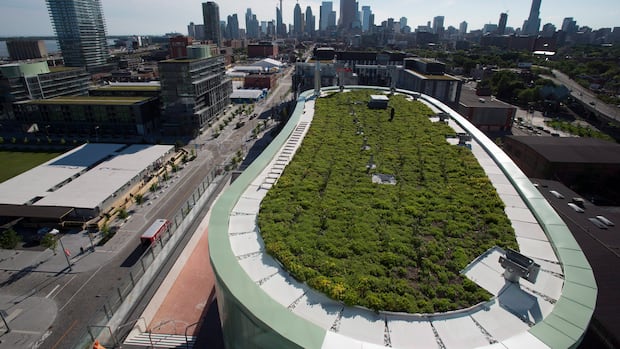
Ontario's decision to repeal Toronto's green roof bylaw is drawing concern from the city's mayor as well as opposition MPPs, who say the tool helps to increase efficiency, cool urban areas and prevent flooding.
Toronto was the first in North America to have a green roof bylaw. Adopted in 2009, the bylaw made it mandatory for green roofs to be built on new commercial, institutional and residential developments with a minimum gross floor area of 2,000 square metres.
The bylaw led to more than 1,200 green roofs across Toronto, according to the city, but the province is now making the roofs voluntary.
Mayor Olivia Chow is "disappointed" by the decision, said her press secretary, Braman Thillainathan.
"For more than 15 years, Toronto’s green roof bylaw has helped divert stormwater and reduce energy consumption and greenhouse gas emissions," Thillainathan said in a statement Tuesday. "Green roofs make life less expensive and more comfortable for residents."
In an email on Tuesday, the city said it no longer had the authority as of Monday to enforce the bylaw.
The province announced its intention to repeal the bylaw when it tabled Bill 60: Fighting Delays, Building Faster Act, 2025, but it ultimately repealed it through an order-in-council on Oct. 23, according to the city.
Alexandra Sanita, spokesperson for Ontario Housing Minister Robert Flack, would not confirm the passage of the order-in-council but said the move is part of the government's "bold action to get infrastructure and homes built faster."
"By making green roofs voluntary, builders and taxpayers have the flexibility of choice, while reducing unnecessary costs and keeping Ontario workers on the job," Sanita said in an email on Tuesday.
Flack defended the decision in Question Period on Tuesday.
"Our government has been very clear: Ontario can no longer afford costly boutique requirements when getting homes built," noting Toronto was the only municipality in the province with such a bylaw.
"We’re standardizing this across the province. They are optional... It’s just not going to be mandatory," he added.
Opposition MPPs, however, object not only to the decision but how it was done.
Mary-Margaret McMahon, Ontario Liberal MPP for Beaches-East York, said the government did not consult opposition parties, the public, city or industry stakeholders. She said the bylaw supported 1,600 jobs in Ontario, mainly in rural areas.


Shawne Hopkins never saw it coming.

Politicians return to Queen’s Park Monday for a shortened spring session, as Premier Doug Ford prepares to unveil his eight budget amid heightened global economic uncertainty.

Despite a recent announcement that a water supply pipeline will be build in Oneida Nation of the Thames, some members of the community say that's no excuse for taking water for granted.

As scandal has swirled around former prince Andrew Mountbatten-Windsor, questions and curiosity have also focused on his ex-wife, Sarah Ferguson, and their daughters, Princesses Beatrice and Eugenie.

Friday may have been the first day of spring, but winter storms are not over yet for Newfoundland.

While we officially welcomed spring last week, an incoming system will be a reminder that snow is still very much part of the new season, especially early on.

The future of a national historic site in Fredericton is up for discussion at meetings across New Brunswick in the next few weeks as the Anglican diocese considers what to do about costly repairs needed at Christ Church Cathedral.

Amanda Lathlin, the first First Nations woman to be elected to the legislative assembly in Manitoba's history, has died, the provincial NDP said on Saturday.

CBC's road trip series Land of Living Stories explores inspiring stories of community spirit from across Saskatchewan. In our latest visit, CBC-Radio Canada hit the road to La Ronge. This is the fifth of a multi-part series from that community.

Dozens of people filled Regina's Fresh and Sweet cafe on Saturday to paint, collage and craft their concerns about artificial intelligence by making zines — a type of self-published small booklet, typically created by hand.

Wildfire season has officially started in Alberta. As the snow starts to melt, people are starting to wonder: Will I have to evacuate this year?

Two hikers were rescued near Lions Bay, B.C., on Saturday after slipping down steep, treacherous terrain, according to search and rescue personnel.

Members of the Filipino community on P.E.I. came together over the weekend to enjoy basketball at the Eastern P.E.I. Community Navigators’ second annual tournament.