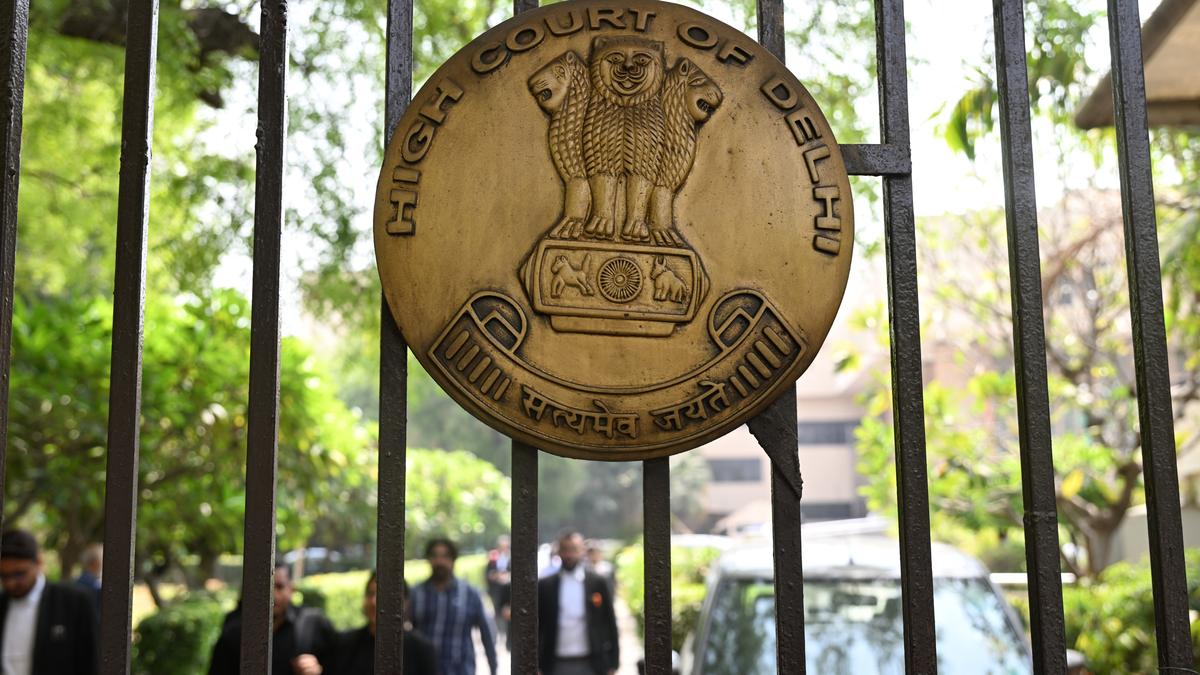
One judge for 18.7 lakh people: vacancy, pendency crises plague High Courts
The Hindu
Delhi High Court cites judge shortage as cause list backlog grows, highlighting systemic challenges in Indian judiciary.
In a rare and candid observation, the Delhi High Court last week cited the “acute shortage of judges” as a key reason for its inability to hear all cases listed in its daily cause list. The comment serves as a sobering reminder of the systemic challenges confronting the judiciary.
Also Read | Explained: The clogged state of the Indian judiciary
The observation came during the hearing of a routine application by a man accused of cheating and forgery, who was seeking permission to travel abroad. Though incidental, the remark has drawn attention to a longstanding issue plaguing the judiciary — chronic judicial vacancies across India.
The Delhi High Court currently functions with only 36 judges, well below its sanctioned strength of 60. This means nearly 40% of judicial posts remain vacant. The court is simultaneously grappling with a staggering backlog of 1,34,090 pending cases.
According to the latest data from the Department of Justice, India’s 25 High Courts have a combined sanctioned strength of 1,114 judges. As of now, only 769 judges are in position, leaving 345 posts, or over 30%, vacant.
These 769 judges are responsible for clearing a backlog of 62,96,798 cases pending across High Courts.
The Allahabad High Court leads with the highest number of vacancies — 81 out of 160 sanctioned posts. It also faces the heaviest caseload, with 11,76,229 cases pending, according to the National Judicial Data Grid (NJDG). The Punjab and Haryana High Court follows, with 32 vacancies against a strength of 85. Only the Sikkim and Meghalaya High Courts report zero vacancies.


Farmers of Kalakudi demand payment for paddy bags procured at DPC

BJP's seal on a 2019 Election Commission letter ignites controversy in Kerala, prompting claims of careless handling by CPI(M).

Transgenders go on rally condemning Transgenders Amendment Bill 2026

Supreme Court dismisses plea challenging Sonam Wangchuk's detention, noting the Centre revoked it on March 14, 2026.

Private medical shops in Telangana government hospitals face eviction due to expired leases and ongoing legal challenges, says Health Minister.

A.P. BIE Secretary reviews answer script evaluation, emphasizing transparency and accuracy to ensure error-free marking and timely results.

Join the walkathon in Puducherry to promote oral hygiene awareness and celebrate World Oral Health Day with community participants.

The ‘Swastha Mysuru’ initiative aims to promote healthy living and preventive healthcare in Mysuru through community engagement and awareness.

Farmers in Ongole protest against BJP's policies, citing dangers to their livelihoods and demanding support for local agriculture.

From March 24, paneer queserotta, prawn tostadas, beef birria and more feature on MadCo's special Mexican pop up menu by Chef Mathangi Kumar alongside experimental cocktails, including a marigold highball

Revenue Minister Krishna Byre Gowda defends subsidies as crucial for economic growth, emphasising their role in boosting consumer demand during recessions.

Three doctors were arrested by the Mico Layout traffic police on Monday (March 23) after a video allegedly showing them triple-riding without helmets with one of the pillion riders seen drinking from a bottle went viral on social media.

Assembly protest ends in arrests as BJP targets Government over guarantees