One can apply for jobs, give interviews while on tourist or business visa in U.S.: Federal agency
The Hindu
The U.S. has announced that individuals travelling to the country on a business or tourist visa — B-1 and B-2 — can apply for new jobs and even appear in interviews. B-1 and B-2 visas are generally referred to as “B visas”, and they are the most common types of visa issued for a wide range of uses in the United States
The U.S. has announced that individuals travelling to the country on a business or tourist visa — B-1 and B-2 — can apply for new jobs and even appear in interviews, but the prospective employees must ensure that they have changed their visa status before starting a new role.
B-1 and B-2 visas are generally referred to as “B visas”, and they are the most common types of visa issued for a wide range of uses in the United States. The B-1 visa is issued mainly for short-term business trips, while the B-2 visa is issued mainly travelling for tourism purposes.
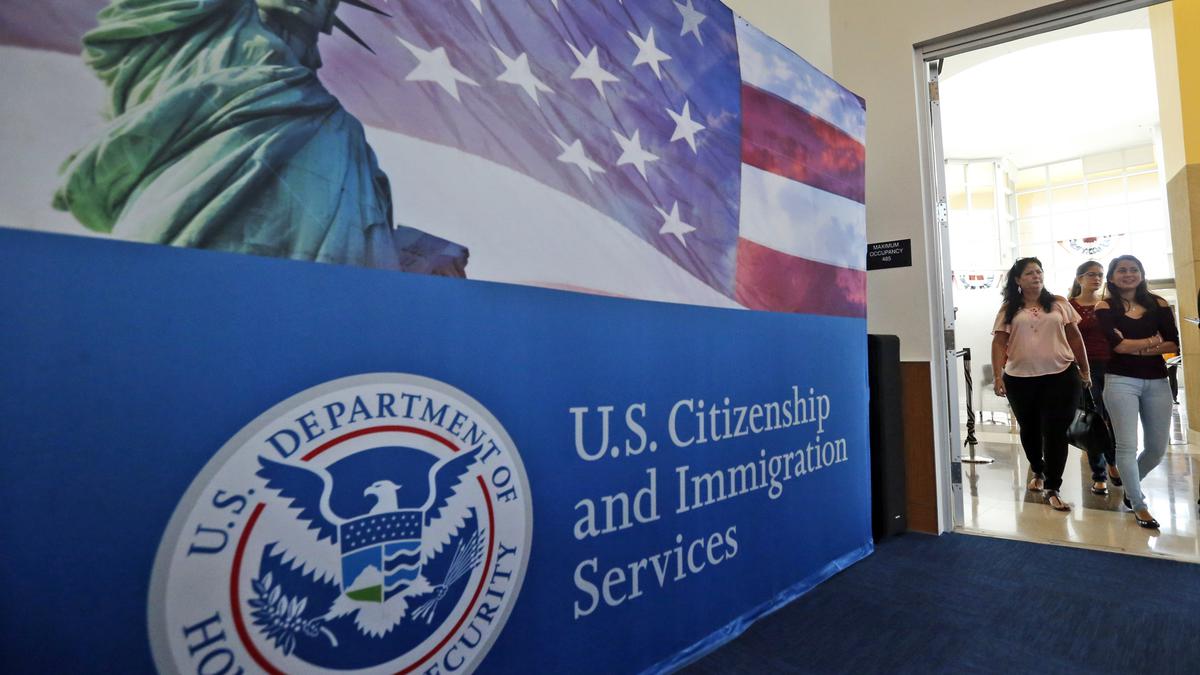
In a note, and a series of tweets, the U.S. Citizenship and Immigration Services (USCIS) said on March 22 when nonimmigrant workers are laid off, they may not be aware of their options and may, in some instances, wrongly assume that they have no option but to leave the country within 60 days.
The move by the USCIS came as thousands of highly skilled foreign-born workers, including Indians, in the U.S., have lost their jobs due to a series of recent layoffs at companies like Google, Microsoft, and Amazon.
They are now struggling to find new employment within the stipulated 60-day period under their work visas following the termination of their employment to stay in the country.
The maximum 60-day grace period starts the day after termination of employment, which is typically determined based on the last day for which a salary or wage is paid.
When a nonimmigrant worker's employment is terminated, either voluntarily or involuntarily, they typically may take one of the several actions, if eligible, to remain in a period of authorised stay in the United States.


Vietnam accelerates its shift to ethanol fuel as rising energy prices from the Iran war impact its economy.

Teenagers sue Musk's xAI, alleging its image-generator created explicit images of them as minors, sparking concerns over AI safety.

Shorts News:Watch: Netanyahu: Israel ‘acted alone’ in Iranian gas field attack

Indonesian billionaire Michael Bambang Hartono, co-founder of Djarum Group, has died at 86, leaving a significant legacy.

European nations, Japan, and Canada unite to ensure safe passage through the Strait of Hormuz and stabilize energy markets.

Some of the estimated 20 billion yuan ($2.9 billion) worth of equipment, including screen-printing production lines, will require export approval from Chinese regulators, according to the people. It wasn't immediately clear how much of the equipment would require approval or how long it would take.

Three men, including a Super Micro VP, charged with smuggling U.S. AI technology to China, threatening national security.

Trump compares U.S. strikes on Iran to Pearl Harbor in meeting with Japan's PM, highlighting the element of surprise.

Iran-Israel war: Follow the latest updates from The Hindu on the West Asia conflict on March 20, 2026

The closure of the Strait of Hormuz disrupts a vital artery of the global economy, triggering price increases and turmoil in energy markets; as supply shocks reshape the geopolitics of energy, countries like India, the U.S., and Russia recalibrate strategies amid shifting oil flows and rising dependence

EU lawmakers advance U.S. trade deal legislation, overcoming delays and adding safeguards amid concerns over compliance from the Trump administration.

Pro-Iran Iraqi group pauses U.S. embassy attacks for five days, imposing conditions amid ongoing regional tensions and strikes.

Russia condemns the Israeli airstrike injuring RT journalists in Lebanon, calling it deliberate amid ongoing regional conflict.