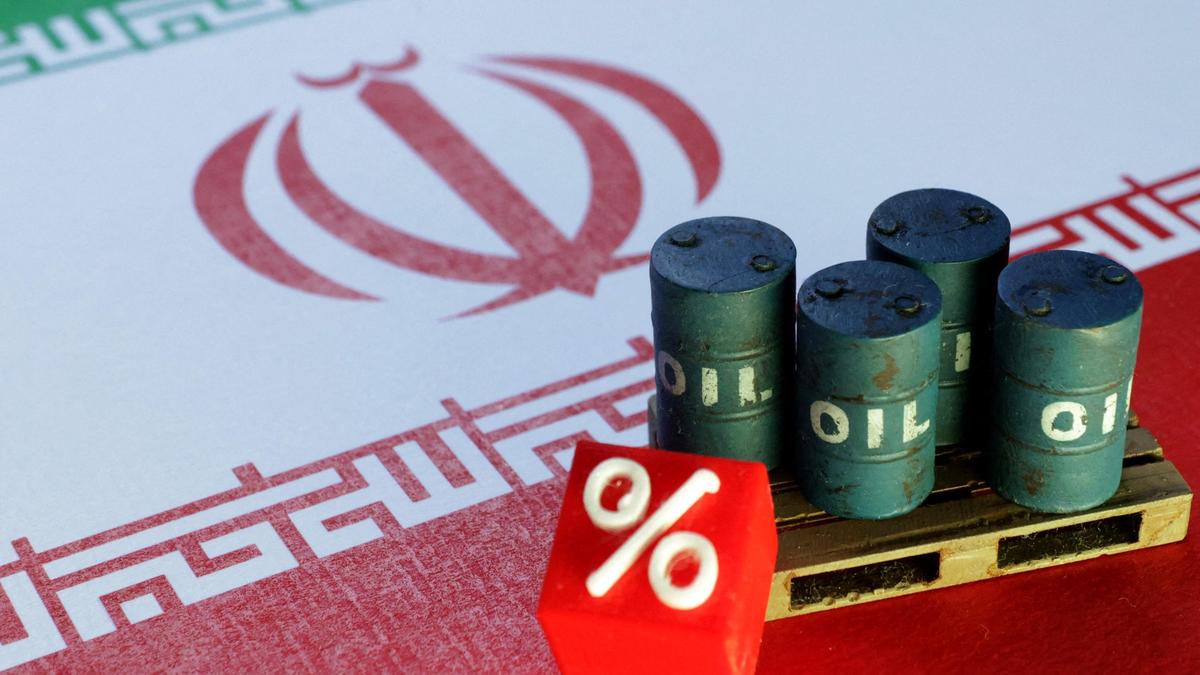
Oil prices rise sharply after attacks in Middle East disrupt global energy supply
The Hindu
Oil prices soar as Middle East attacks disrupt global supply, raising concerns over exports and potential inflation for consumers.
Oil prices rose sharply on Monday (March 2, 2026) as U.S. and Israeli attacks on Iran and retaliatory strikes against Israel and U.S. military installations around the Gulf sent disruptions through the global energy supply chain.
Traders were betting the supply of oil from Iran and elsewhere in the Middle East would slow or grind to a halt. Attacks throughout the region, including on two vessels traveling through the Strait of Hormuz, the narrow mouth of the Persian Gulf, have restricted countries' ability to export oil to the rest of the world. Prolonged attacks would likely result in higher prices for crude oil and gasoline, according to energy experts.
West Texas Intermediate, the light, sweet crude oil produced in the United States, was selling for about $72 a barrel early Monday (March 2), up around 7.3% from its trading price of about $67 on Friday (February 27, 2026), according to data from CME group.
A barrel of Brent crude, the international standard, was trading at $78.55 per barrel early Monday (March 2), according to FactSet, up 7.8% from its trading price of $72.87 on Friday (February 27), which had been a seven-month high at the time.
Higher global energy prices could lead to consumers paying more for gasoline at the pump and shelling out more for groceries and other goods, at a time when many are already feeling the impacts of elevated inflation.
Roughly 15 million barrels of crude oil per day — about 20% of the world's oil — are shipped through the Strait of Hormuz, making it the world's most critical oil chokepoint, according to Rystad Energy. Tankers travelling through the strait, which is bordered in the north by Iran, carry oil and gas from Saudi Arabia, Kuwait, Iraq, Qatar, Bahrain, the UAE and Iran.


Nvidia plans to launch a new processor designed to help OpenAI and other customers build faster, more efficient AI systems, the Wall Street Journal reported

The rupee declines 21 paise to 91.29 against the dollar amid rising crude prices and global market volatility.

AEC establishes safety standards for private nuclear power generation in India, targeting 100 gigawatts by 2047.

Stock markets plunge as the West Asia conflict escalates, triggering a flight to safety and rising crude oil prices.

SEBI urges stricter insider trading enforcement while easing foreign investment rules to attract more overseas investors.

Oil prices soar as Middle East attacks disrupt global supply, raising concerns over exports and potential inflation for consumers.

UAE stock markets close for two days following Iranian strikes, as authorities monitor regional developments and assess the situation.

GST collections rose 8.1% to ₹1.83 lakh crore in February, driven by strong import revenue growth and increased refunds.

FPIs invested ₹22,615 crore in Indian equities in February, the highest in 17 months, driven by positive market catalysts.

Maruti Suzuki India's February 2026 sales rose 7.32% to 2,13,995 units, driven by utility vehicle demand and increased exports.

The rupee fell 8 paise to 90.99 against the dollar, pressured by FII outflows and declining equity markets.

Kerala’s overall achievements in the social sector are best understood as the result of a long journey of reform and renewal rather than a sudden miracle.

SEBI and Canada's Finance Minister discuss enhancing institutional investment and regulatory collaboration in recent meeting.