Kerala’s social miracle: the long journey of breaking chains, building rights Premium
The Hindu
Kerala’s overall achievements in the social sector are best understood as the result of a long journey of reform and renewal rather than a sudden miracle.
Kerala’s overall achievements in the social sector are best understood as the result of a long journey of reform and renewal rather than a sudden miracle. Today’s high literacy, strong public health system, and active democracy grew out of decades of struggle for freedom, equality and social dignity. In the late nineteenth and early twentieth centuries, reformers, tenant movements, and labour unions fought for education, dignity, and fair land rights, gradually dismantling old privileges. After independence, this social energy flowed into politics, allowing the world’s first democratically elected communist government in 1957 to introduce sweeping land reforms and expand public services. These measures, reinforced by subsequent decentralised planning, produced what came to be called the “Kerala Model,” proving that even a relatively poor region could achieve outstanding human development through redistribution, universal education, and participatory governance. However, the story is not only about past achievements. The very forces that once pushed Kerala forward, such as overseas migration, remittance income, and consumer growth, now create new strains: a rapidly ageing population, rising inequality, environmental pressures, and continued dependence on external earnings. The ensuing segments trace this trajectory from feudal past to social transformation and from pioneering welfare to today’s search for sustainable, inclusive growth, showing that each generation must renew the collective effort that made Kerala’s success possible.
Kerala’s widely admired levels of literacy, public health, and civic engagement are the outcomes of a prolonged and often contentious process of social transformation. Historically, the region was deeply hierarchical, dominated by powerful landowning classes and rigid caste-based exclusions. Up until the early 1900s, agricultural production operated within the framework of janmi (feudal landlord) estates and traditional chieftaincies. Tenant farmers faced exploitative rent demands, and were often vulnerable to eviction, while lower-caste groups were systematically denied access to education, religious spaces, and participation in public affairs.
Although British colonial rule disrupted traditional social and economic structures in Kerala, it did not immediately eliminate them. The introduction of British legal frameworks, commercial plantations, and missionary-led education created limited channels for social advancement but also deepened reliance on volatile export economies. These shifts gradually undermined the power base of feudal landlords and exposed internal inconsistencies in the caste-based order. Simultaneously, transformative reform movements emerged from within Kerala’s own society. Visionaries like Sree Narayana Guru and Ayyankali championed ideals of social equality, questioning Brahmanical dominance and advocating for inclusive education. Their efforts — focused on temple entry rights, educational access for marginalised castes, and respect for manual labour — stirred a broad-based social awakening that challenged entrenched hierarchies and laid the foundation for future political mobilisation (Heimsath, 1978).
In the first half of the twentieth century, Kerala witnessed the rise of literacy groups, cooperatives, and labour unions, which played a crucial role in creating a participatory public sphere. These grassroots initiatives empowered agricultural workers and small farmers to demand their rights and contributed to a growing culture of civic engagement. Following India’s independence, this social momentum helped strengthen the electoral processes. The landmark victory of the communist-led government in 1957 marked a turning point, as it launched sweeping land reforms aimed at dismantling the feudal structure. Legislative measures introduced throughout the 1960s and 1970s facilitated the redistribution of land from landlords to tenant cultivators (Herring, 1983). While implementation varied across regions, these reforms significantly restructured property ownership and weakened the economic dominance of the traditional landed elites (Radhakrishnan, 1981). However, a crucial question persisted: did the land reforms truly benefit Dalits and Adivasis, long deprived of land rights? The answer, unfortunately, remains far from reassuring.
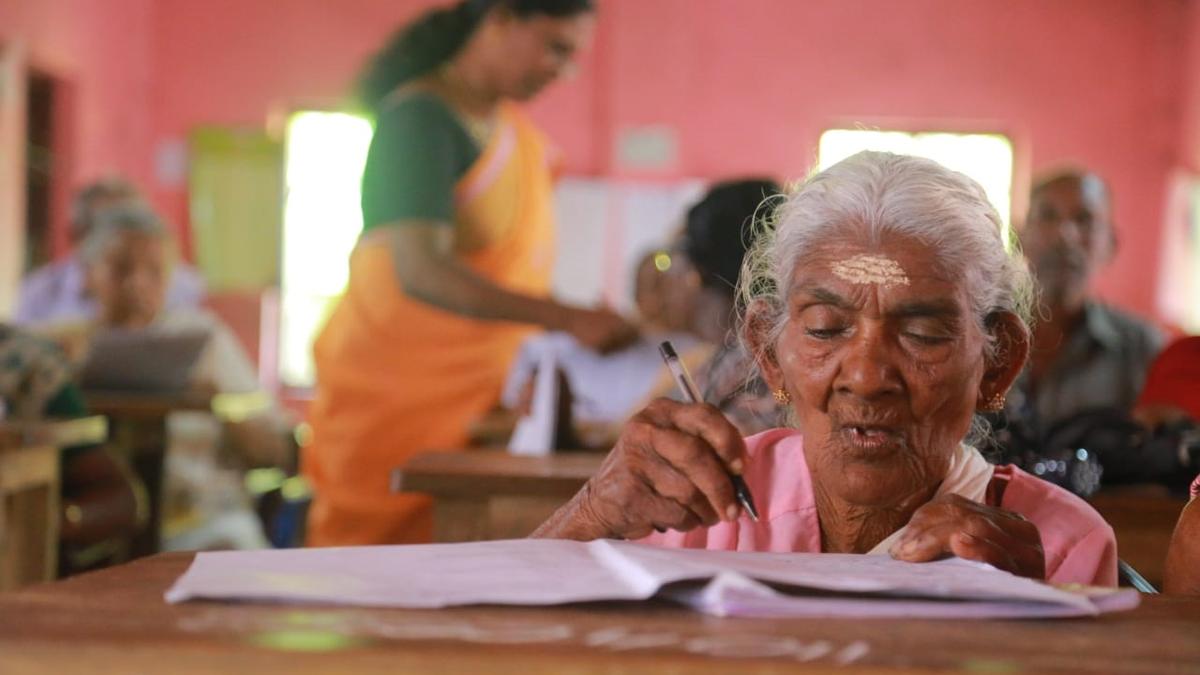
By the end of the twentieth century, Kerala had made remarkable progress in areas such as education, public health, and gender equity. These outcomes were not merely the product of top-down government initiatives, but rather the culmination of long-standing struggles led by marginalised groups — including tenant farmers, women, Dalits and Adivasi communities — who actively demanded their rights and recognition (Franke & Chasin, 1994). The success of public investments in education and primary healthcare was made possible because earlier social movements had already challenged entrenched hierarchies and nurtured a collective ethos prioritising social welfare.
Nonetheless, the narrative is not one of unbroken progress. Land redistribution created new smallholders but also displaced some landless workers. Persistent caste bias and rising economic inequality, especially in the context of Gulf migration and environmental stress, reveal the limits of the so-called “Kerala model” (Oommen, 1999). The State’s celebrated human-development record remains delicate without sustained democratic engagement and ecological care. Kerala’s social history therefore offers a critical lesson: social development emerges not from sudden wealth or external benevolence but from long struggles that dismantled hierarchy and insisted on dignity for all.


Nvidia plans to launch a new processor designed to help OpenAI and other customers build faster, more efficient AI systems, the Wall Street Journal reported

The rupee declines 21 paise to 91.29 against the dollar amid rising crude prices and global market volatility.

AEC establishes safety standards for private nuclear power generation in India, targeting 100 gigawatts by 2047.

Stock markets plunge as the West Asia conflict escalates, triggering a flight to safety and rising crude oil prices.

SEBI urges stricter insider trading enforcement while easing foreign investment rules to attract more overseas investors.

Oil prices soar as Middle East attacks disrupt global supply, raising concerns over exports and potential inflation for consumers.

UAE stock markets close for two days following Iranian strikes, as authorities monitor regional developments and assess the situation.

GST collections rose 8.1% to ₹1.83 lakh crore in February, driven by strong import revenue growth and increased refunds.

FPIs invested ₹22,615 crore in Indian equities in February, the highest in 17 months, driven by positive market catalysts.

Maruti Suzuki India's February 2026 sales rose 7.32% to 2,13,995 units, driven by utility vehicle demand and increased exports.

The rupee fell 8 paise to 90.99 against the dollar, pressured by FII outflows and declining equity markets.

Kerala’s overall achievements in the social sector are best understood as the result of a long journey of reform and renewal rather than a sudden miracle.

SEBI and Canada's Finance Minister discuss enhancing institutional investment and regulatory collaboration in recent meeting.