Navigating floods in Bengaluru: A natural way forward
The Hindu
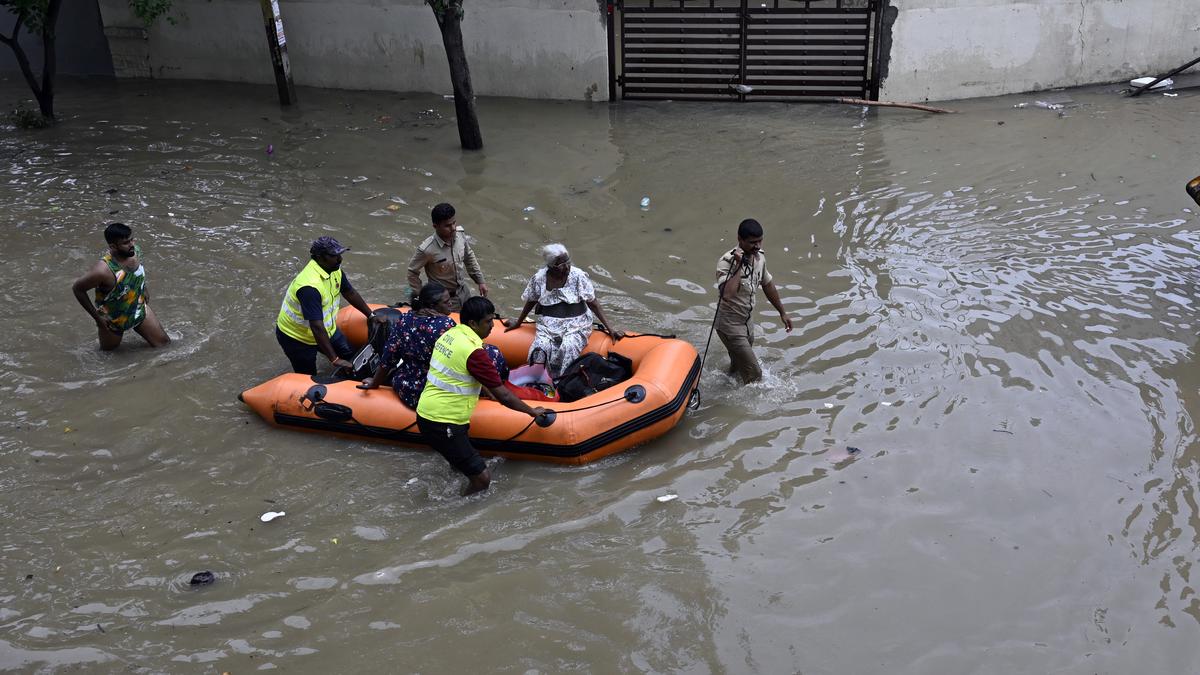
Urban flooding has become a persistent and growing challenge in Indian cities, with Bengaluru experiencing increasingly frequent and disruptive flood events. In 2024, Bengaluru faced severe floods with over 2,000 homes submerged citywide. Bruhat Bengaluru Mahanagara Palike(BBMP) reported that 157 mm of rainfall was recorded in the Yelahanka area within six hours, resulting in the flooding of over 1,030 homes. Heavy rainfall led to widespread waterlogging and traffic congestion, severely affecting daily mobility and resulting in temporary road closures across the city. While climate change and erratic monsoons are contributing factors, the underlying issues stem from longstanding systemic gaps in planning, land use, and infrastructure management.
Urban flooding has become a persistent and growing challenge in Indian cities, with Bengaluru experiencing increasingly frequent and disruptive flood events. In 2024, Bengaluru faced severe floods with over 2,000 homes submerged citywide. Bruhat Bengaluru Mahanagara Palike(BBMP) reported that 157 mm of rainfall was recorded in the Yelahanka area within six hours, resulting in the flooding of over 1,030 homes. Heavy rainfall led to widespread waterlogging and traffic congestion, severely affecting daily mobility and resulting in temporary road closures across the city. While climate change and erratic monsoons are contributing factors, the underlying issues stem from longstanding systemic gaps in planning, land use, and infrastructure management.
Historically, urban planning in Bengaluru and other cities across India has emphasised on the quick removal of stormwater from city limits. Since the drinking water sources to the cities are outside the metropolitan area, urban development strategies prioritised efficient stormwater drainage rather than local water retention or recharge. This led to extensive concretisation of stormwater drains and a planning paradigm that viewed rainwater as a problem to be expelled rather than a resource to be managed. Over time, unplanned urban expansion and weak enforcement mechanisms allowed for the encroachment of water bodies and stormwater channels by both private and government actors. Additionally, the disposal of liquid and solid waste has significantly reduced the natural water-holding capacity of the stormwater drains and water bodies, thereby increasing the vulnerability to flooding.
In this context, nature-based solutions (NbS) offer a promising and scientifically grounded approach to urban flood mitigation. Green infrastructure interventions such as rain gardens, wetlands, bioswales, green roofs, and permeable pavements can slow, store, and filter rainwater while also delivering ecological and social co-benefits. Globally, many cities have embraced such strategies under the framework of “sponge cities.” A notable example is Guangming District in Shenzhen where NbS interventions have resulted in a 72% annual runoff control rate and a 62% reduction in diffuse pollution. These outcomes were achieved through a combination of decentralised green infrastructure, improvements to water and wastewater systems, and active community engagement.
Bengaluru is well-positioned to test and scale nature-based solutions. Known as the “Garden City,” it has more than 1,100 parks and over 250 playgrounds, distributed across eight municipal zones. Many apartment complexes and educational/private institutions also contain green spaces that could be repurposed or enhanced for stormwater retention. These existing assets offer a strong foundation for redesigning how the city absorbs and manages runoff.
A practical way forward would involve piloting NbS in selective wards, with a combination of experimental and control wards to allow for comparative assessment. These interventions could be supported by hydrological modelling to simulate different rainfall scenarios and determine the types, scales, and locations of NbS needed to reduce flood inundation and water depth. The modelling process can also guide the strategic integration of green and blue infrastructure within the existing urban area, optimising flood resilience without requiring large-scale redevelopment.
The benefits of this approach go beyond reducing flood risk. Nature-based solutions can support biodiversity, enhance groundwater recharge, mitigate urban heat, and create opportunities for local employment and community stewardship. These co-benefits align closely with Sustainable Development Goal 11, which promotes inclusive, safe, resilient, and sustainable cities. However, despite their potential, such interventions often remain limited in scale. Key barriers include the absence of standardised design frameworks, limited documentation of long-term impacts, and a disconnect between pilot initiatives and citywide planning or investment decisions.
Addressing these gaps requires a structured and evidence-based implementation strategy. Rigorous pilot studies, coupled with monitoring and evaluation, can generate the performance data needed to inform design standards and build confidence among stakeholders. Integrating these findings into municipal planning frameworks that are supported by cross-departmental coordination and targeted funding will be critical for moving beyond demonstration projects toward systemic change. Ultimately, the aim is to transition from an old model that seeks to quickly dispose of rainwater to one that values its retention and reuse. This shift will help the city manage stormwater more sustainably, while also contributing to water security and climate resilience. The knowledge and tools already exist. The next step is to apply them through a deliberate and collaborative process that brings together science, policy, and practice.


Perundurai's industrial growth faces challenges of pollution, water scarcity, and healthcare, impacting residents ahead of the 2026 elections.

The Travancore Devaswom Board asserts that courts should respect community beliefs in its Supreme Court submission on Sabarimala's entry issue.

Karnataka cancels Deendayal Upadhyay event at KSOU due to protocol violations, citing inconsistency with university objectives.

Illegal pickle unit busted in Hyderabad, one arrested; unhygienic stock worth ₹3 lakh seized

Karnataka has entered a state of demographic transition where a large working-age population will no longer be enough to drive economic growth, and future gains will depend on how productively people are employed, the ‘State of Working India 2026’ report said.

Key demands in Sulur Assembly constituency include reviving the powerloom sector, addressing farmers' needs, and protecting River Noyyal.

Kodihalli urges Karnataka CM to allocate ₹10,000 crore revolving fund for seamless procurement of farm products under MSP scheme.

Kerala's political parties continue to marginalize women candidates, highlighting a troubling disconnect between gender demographics and representation.

The High Court of Karnataka on Tuesday ordered the issue of a notice to the State government on a PIL petition, which had complained about disturbances caused to people residing in the localities around the National Public School situated in Rajajinagar 5th block due to use of loudspeakers with high volume in the school and parking of school buses in residential areas.

China is extensively mapping ocean floors to enhance submarine warfare capabilities against the U.S. and allies across key oceans.

AIADMK's 2026 manifesto promises free rations, women's benefits, education reforms, and economic growth initiatives for Tamil Nadu.

The vehicle towing drive will soon resume in the city to ease traffic congestion. The Bengaluru Traffic Police (BTP), in coordination with the Greater Bengaluru Authority (GBA), is set to relaunch the vehicle towing drive across the city shortly to tackle traffic congestion and illegal parking.

Panic buying, not shortage, is leading to long queues at Hyderabad petrol pumps.