Native plant project aims to bring new life to northeast Calgary green space
CBC
A collaborative project between EcoLogic Horticulture and the City of Calgary will bring native shrubs, grasses, flowers and more to Rotary Park this spring.
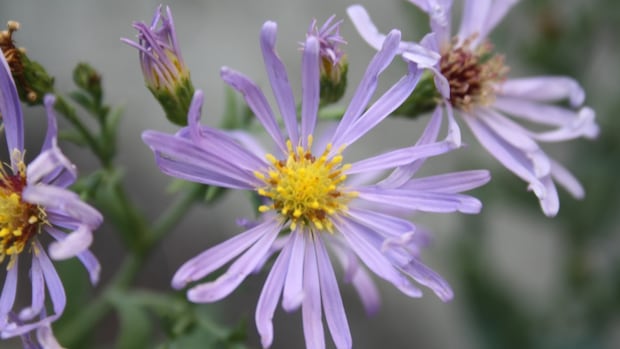
Visitors to the northeast Calgary park will soon find the iconic Centre Street Bridge lion sculpture surrounded by everything from prairie smoke flowers and wolf willow shrubs to grasses like blue grama and wildrye as part of an assortment of around 1,200 native plants.
The goal is to help establish "a native plant community that's based on reference sites within the foothills," said Nathan Gill, owner of EcoLogic Horticulture, during a gardening event on Saturday.
'It's really to provide an example to Calgarians of what native grassland looks like," he said.
The geographic ecoregion being recreated is called the rough fescue grassland, said Gill.
According to the Alberta Wilderness Association, the province has the largest area of rough fescue grassland in North America, with the ecoregion dominating the prairies and foothills.
"It's something that we have less and less of all the time because most of the land around the city's cultivated, and most parks have been vegetated with non-native species," he said.
To prevent the new plants from being outcompeted, the project required all non-native plant species to be removed to make way for the reintroduction of native plants.
Along with beautifying the area, one of the goals of the project is to support local wildlife by providing more homes for birds, bees and other native animal species.
Many insects depend on plants like the ones being planted in Rotary Park for food and to reproduce, said gardener Elaine Rude, attending the event as a representative of the YardSmart program run by the Calgary Horticultural Society and the city.
"If you start at the bottom and build on it, you will attract lots and lots of native wildlife as it matures, but initially it's going to be mostly the insects," she said.
Those insects will make way for birds, while the large plants will attract herbivores like muskrats and deer as part of a healthy food chain.
"These are plants that they use to survive on. They're at the bottom of the food chain and then the others will feed on them, so it completes the circle. Everybody wins, every creature," said Rude.
City parks and open spaces spokesperson Rachelle Nuytten hopes to see these native plants go beyond Rotary Park and into people's yards and gardens.


Mayoral-hopeful Coun. Brad Bradford is calling for a host of safety measures across Toronto’s subway system, including a specific focus on platform edge doors, with a motion before city council this week.

When the one-star reviews first began to appear on his restaurant's Google page, owner Damon Ataei swung into action, trying to contact each reviewer.

The Mounties called it the "Native extremism program." Today, it sounds like a spy novel.

A judge is expected to rule in June on a proposed settlement for a class-action lawsuit involving a crash landing of an Air Canada flight in Halifax more than a decade ago.

An inmate who was on the loose after escaping a jail in Shediac has been caught, New Brunswick RCMP said in a press release late Monday afternoon.

Premier Wab Kinew draped the Manitoba flag over an empty seat as politicians from across the aisle said goodbye to one of their own in an emotional tribute at the legislature on Monday.

Saskatoon police have identified the driver of a vehicle that struck a railway overpass above Circle Drive on Sunday — the third such collision in the city this month.

People who live near Lac Pelletier say effluent from a nearby cattle feedlot has spilled off the site and into a ditch that feeds into the lake downstream.

A man charged in a pair of stabbings in central Edmonton seven years ago has been found guilty of manslaughter.

Police in Metro Vancouver are warning drivers to remain attentive, even in a self-driving vehicle, after ticketing a woman who "appeared to be literally asleep at the wheel" on Highway 1.

Some century-old churches on P.E.I. are renovating to become more accessible, which includes updates to accommodate many different kinds of needs.

Toronto police headed to school zones Monday as part of a safety blitz following March Break.

WARNING: This story details experiences at residential schools.