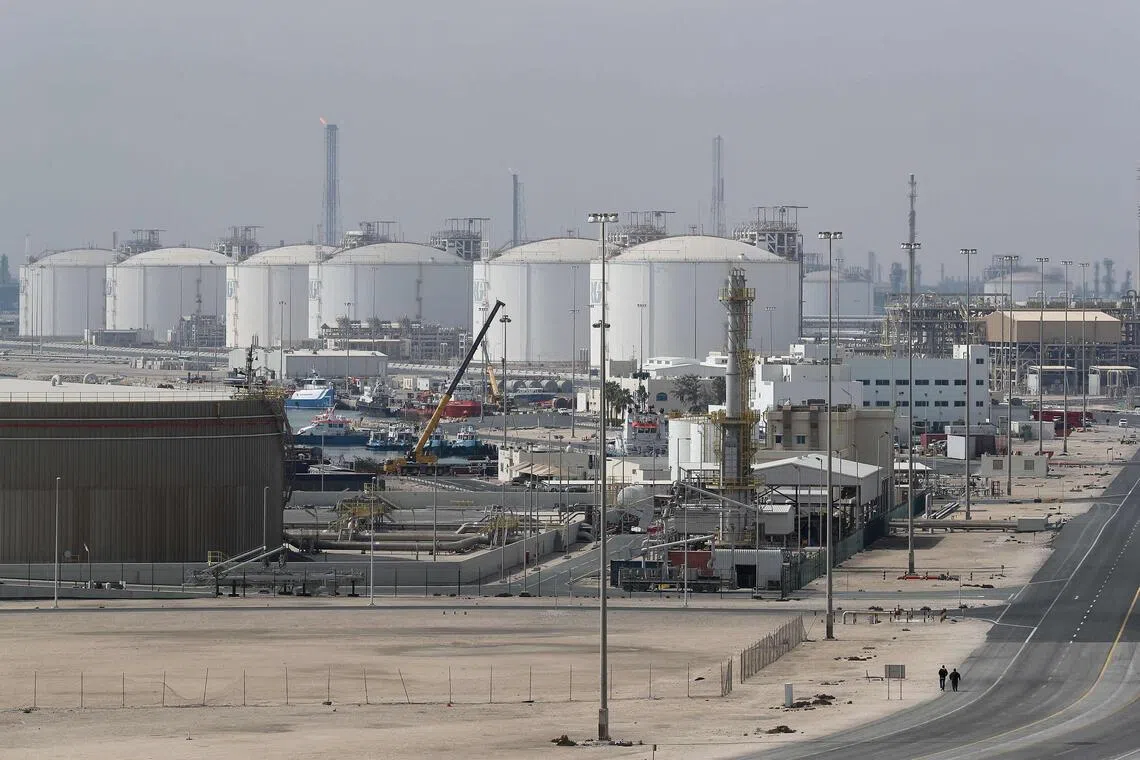
Middle East war spurs emissions from oil and gas sites, satellites show
The Straits Times
The emissions open a new window into the conflict’s growing carbon footprint. Read more at straitstimes.com.
Follow our live coverage here.
DUBAI – The conflict in the Middle East appears to have forced some oil and gas companies to directly burn off more natural gas than usual as their facilities have come under attack or exports have been blocked, releasing planet-warming pollution.
An increase in emissions is a relatively minor issue against the loss of life and economic chaos wrought by the war, yet it shows one of many unanticipated consequences from the fighting.
Before the war, efforts to cut down on excess flaring had become a focus for investors keen to rein in waste and greenhouse gases.
From Feb 28 to March 22, the United Arab Emirates’ Das Island liquefied natural gas plant flared enough to add the equivalent of about 74,100 metric tons of carbon dioxide to the atmosphere, according to analysis by investigative consultancy Data Desk and Bloomberg calculations.
Meanwhile, Qatar’s Ras Laffan facility, the world’s largest LNG export hub, added roughly 101,300 tons of CO2 equivalent, on par with the annual emissions from more than 20,000 cars.


He cited an urgent need to remain at home to manage the widening economic and livelihood impacts of the Iran war. Read more at straitstimes.com.

The move could dramatically shake up the market for routers, which are primarily made overseas. Read more at straitstimes.com.

The four-day Conservative Political Action Conference (CPAC) will open on March 23. Read more at straitstimes.com.

This comes as concerns over supply mount amid the ongoing US-Israel war with Iran. Read more at straitstimes.com.

Counter-terrorism police are now leading the inquiry, even though it was not yet determined to be a terror attack. Read more at straitstimes.com.

It has prompted columbarium operators to review their surveillance and access controls. Read more at straitstimes.com.

South Korea has agreed to deliver dozens of Cheongung missiles to the United Arab Emirates. Read more at straitstimes.com.

Now the effects are reaching industries that might have seemed insulated from the fallout. Read more at straitstimes.com.

The rare hikes are a sign that soaring raw material costs are starting to drive consumer inflation. Read more at straitstimes.com.

The infrastructure strikes have stoked outrage, even among Iranians who oppose their government. Read more at straitstimes.com.

Trump’s decision to back down from his ultimatum shows the scattered approach he has taken to the war. Read more at straitstimes.com.

COPENHAGEN, March 24 - Danes vote in an election on Tuesday that might hand Prime Minister Mette Frederiksen a third term thanks to her staunch line against U.S. President Donald Trump over Greenland even though cost-of-living worries have hurt her leftist credentials. Read more at straitstimes.com.

The probes are the latest effort from Washington to pressure the Ivy League university into reshaping its policies. Read more at straitstimes.com.