Mass layoffs at Washington Post, Amazon beat reporter fired, but where is Jeff Bezos: Story in 5 points
India Today
Mass layoffs at The Washington Post have shaken its newsroom, raised questions over editorial direction, and spotlighted Jeff Bezos' continued silence as the paper struggles to find a sustainable future.
The Washington Post, once seen as a rare media success story under billionaire ownership, is facing one of the darkest chapters in its history. Hundreds of journalists and staffers were shown the door in a single day, entire bureaus were shut, and even reporters covering war zones were let go. At the centre of the storm is Jeff Bezos — the paper’s owner — whose silence is now becoming as loud as the layoffs themselves. Here is what’s really happening, explained in five clear points.
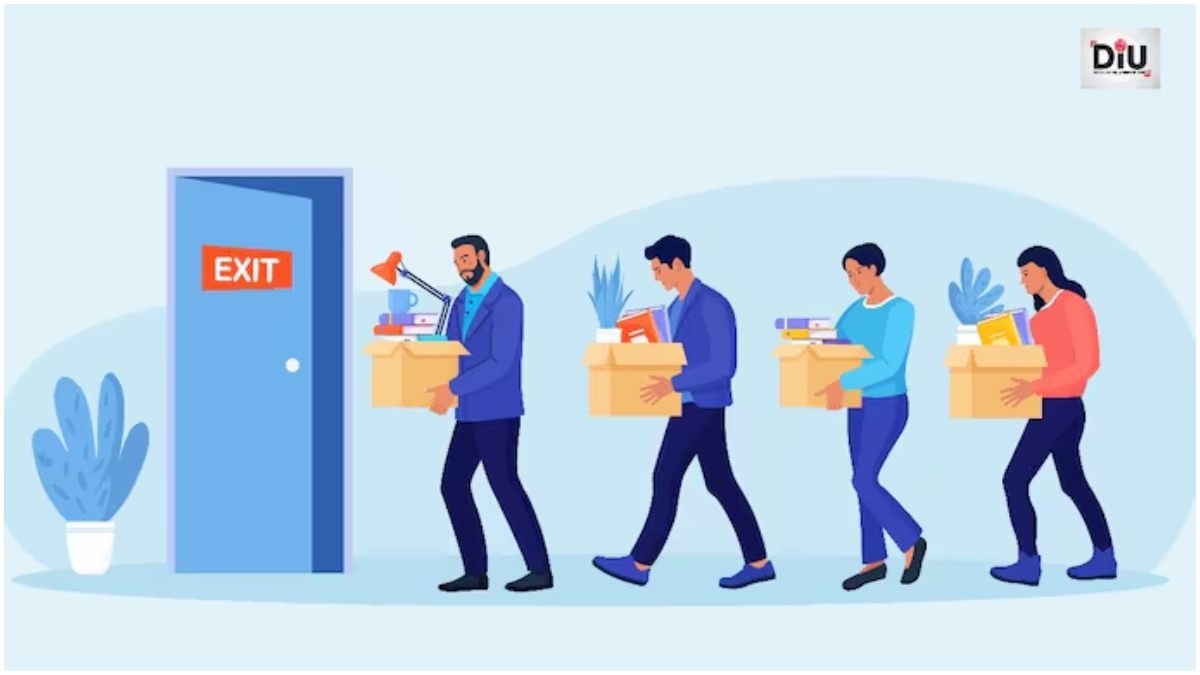
The Washington Post confirmed a sweeping restructuring this week, cutting nearly 30 per cent of its workforce, including more than 300 newsroom employees. Staff were told to stay home and join a video call where leadership described the move as painful but unavoidable.
Executive editor Matt Murray told employees the organisation had become “too rooted in a different era,” admitting the paper was losing large sums of money and its readership had shrunk sharply. Entire desks were hit, and no department was spared, which is a clear sign that this was not a limited trim, but a deep reset.
The scale of the cuts stunned the newsroom. Journalists covering race, culture, technology, books, international affairs, and even active war zones lost their jobs.
Ukraine reporter Lizzie Johnson revealed she was laid off while reporting from a conflict zone. The Jerusalem and Ukraine bureaus were shut down. The once-mighty Metro desk, famous for its role in the Watergate investigation, was reduced to a shadow of its former self.
Several senior editors were so uncomfortable overseeing the process that at least one department head reportedly asked to be laid off instead of participating. An employee who got laid off at The Washington Post shared her views on X.


ICAI CA Final January 2026 results have been declared today, March 1. Candidates who appeared for Group 1 and Group 2 exams can now check their scorecards, merit list and All India Rank holders on the official website, icai.nic.in. Direct result link is now active.

The OnePlus 15T is set to make its debut in China next week. The compact smartphone boasts a 6.32-inch AMOLED display and will be available in three colour options at launch.

The CBSE Class 12 Economics exam 2026 was moderate and balanced, say teachers. The paper followed the CBSE pattern and NCERT syllabus, with a mix of theory, numericals, and case-based questions. While many questions were manageable, application-based and case study questions required careful reading and strong conceptual clarity.

Audi has launched the Audi SQ8 in India at Rs 1.77 crore, slotting between the Audi Q8 and Audi RS Q8 Performance.

Short kurtas paired with loose pants and dupattas were a big trend in the 2000s Bollywood, and now, they seem to be catching on in the West too.

The OnePlus 15T is set to make its debut in China next week. The compact smartphone boasts a 6.32-inch AMOLED display and will be available in three colour options at launch.

Beats has launched the Powerbeats Pro 2 Nike special edition. The earbuds come with ANC, heart rate tracking, and long battery life. Here is more about the device.

A mysterious AI model was recently spotted on AI gateway platform OpenRouter. As per reports, this model, named Hunter Alpha, may be from DeepSeek. It is speculated that the Chinese firm may be testing the model via this anonymous release.

The Galaxy Z TriFold, Samsung's triple-folding smartphone, is reportedly getting the axe barely three months after launch. The TriFold's seemingly high production cost is being cited as the reason.

The CBSE Class 12 Economics exam 2026 was moderate and balanced, say teachers. The paper followed the CBSE pattern and NCERT syllabus, with a mix of theory, numericals, and case-based questions. While many questions were manageable, application-based and case study questions required careful reading and strong conceptual clarity.

WhatsApp is reportedly working on a built-in noise cancellation feature. This feature is designed to improve call quality on the platform. Here is what we know about the feature.

After cutting thousands of jobs, Amazon bets big on AI to power its next phase of growth. CEO Andy Jassy believes AWS could grow into a $600 billion business in the coming years. Here is everything you need to know.

One Nation One Subscription (ONOS) is beginning to reshape access to academic research in India. In its first year, the scheme enabled more than 11 crore article downloads across government institutions, with IIT Madras and IISc Bengaluru among the leading users.