Mars rover data confirms ancient lake sediments on red planet
The Hindu
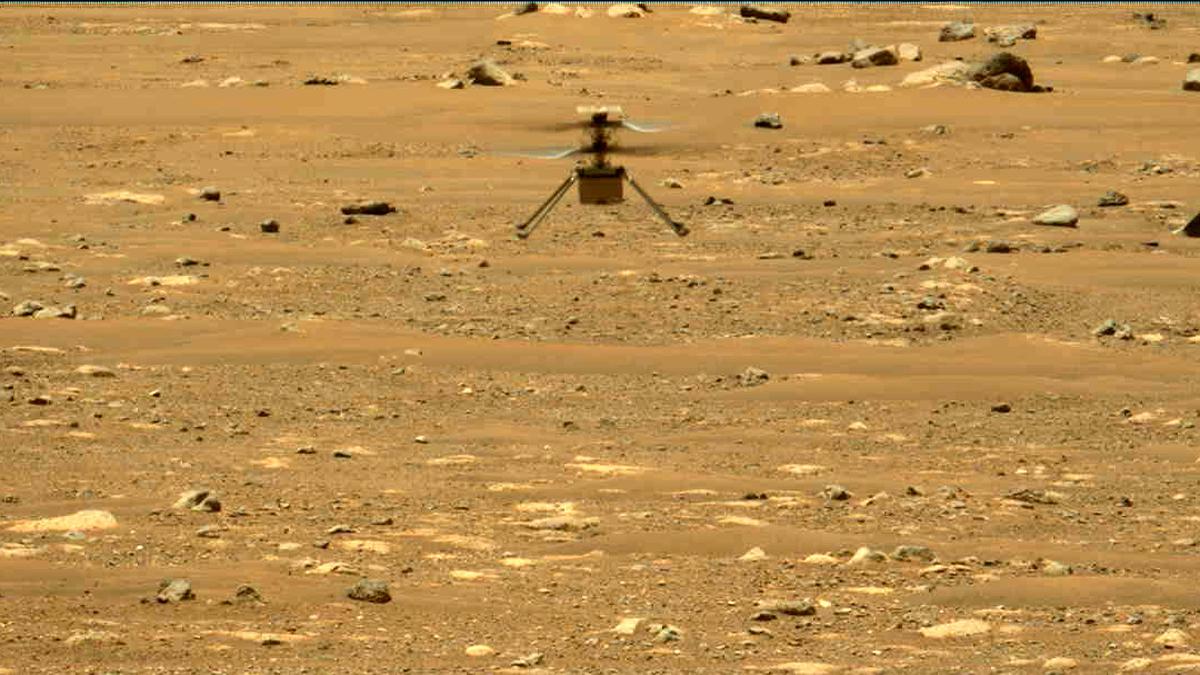
NASA’s rover Perseverance has gathered data confirming the existence of ancient lake sediments deposited by water that once filled a giant basin on Mars called Jerezo Crater, according to a study published on Friday.
NASA's rover Perseverance has gathered data confirming the existence of ancient lake sediments deposited by water that once filled a giant basin on Mars called Jerezo Crater, according to a study published on Friday.
The findings from ground-penetrating radar observations conducted by the robotic rover substantiate previous orbital imagery and other data leading scientists to theorize that portions of Mars were once covered in water and may have harbored microbial life.
The research, led by teams from the University of California at Los Angeles (UCLA) and the University of Oslo, was published in the journal Science Advances.
It was based on subsurface scans taken by the car-sized, six-wheeled rover over several months of 2022 as it made its way across the Martian surface from the crater floor onto an adjacent expanse of braided, sedimentary-like features resembling, from orbit, the river deltas found on Earth.
(For top technology news of the day, subscribe to our tech newsletter Today’s Cache)
Soundings from the rover's RIMFAX radar instrument allowed scientists to peer underground to get a cross-sectional view of rock layers 65 feet (20 meters) deep, "almost like looking at a road cut," said UCLA planetary scientist David Paige, the first author of the paper.
Those layers provide unmistakable evidence that soil sediments carried by water were deposited at Jerezo Crater and its delta from a river that fed it, just as they are in lakes on Earth. The findings reinforced what previous studies have long suggested - that cold, arid, lifeless Mars was once warm, wet and perhaps habitable.


Set between the Siwalik hills and the plains, Butwal offers travellers a mix of regional cuisine, pilgrimage trails to Lumbini and the comfort of Hyatt’s new hospitality landmark

Explore 2026's wallpaper trends in India, highlighting botanicals and handmade designs that enhance modern homes with nature-inspired aesthetics.

Mercedes-Benz CLA 250+ with EQ Technology review: design, performance, range and features explained. Discover how the new electric CLA combines advanced AI, long range, fast charging and futuristic styling for the next generation of luxury EVs.

AI tool for sparrow conservation

BTS’s comeback with ‘Arirang’ marks a major global music event. When does the album release, and where can you watch their concert live stream? We have all the details

The 2026 U.S. cholesterol guidelines urge starting screening and treatment at 30 to prevent cardiovascular disease effectively.

Olam Festival 2026 in Thiruvananthapuram returns March 27-29 with 120+ vendors, music, art, and cultural zones.

A few storytellers in Thiruvananthapuram share their journeys, challenges, and evolving methods on World Storytelling Day, inspiring young minds.

76-year-old Kurian Jacob from Kerala triumphs with seven medals, including five golds, at the Open Masters Games in Abu Dhabi.

Explore the nature of the human mind as an emergent property of brain activity and complex neural interactions.

CERN's Large Hadron Collider discovers the Xi-cc-plus particle, enhancing understanding of quantum mechanics and baryon behavior.

Vibha Batra’s latest book, Spotless (Hachette India) is a novel in verse for young adults

In its first edition, the Madras Art Salon spotlights the works of journalist and artist Narayan Lakshman at The Botanical Club, a social space in the British Deputy High Commission, Chennai