Life in a cold state
The Hindu
Prabhash Chandra discusses how he used poetry to convey the complexities of Kashmir. ’s perspective of take on the trauma of the common Kashmiris
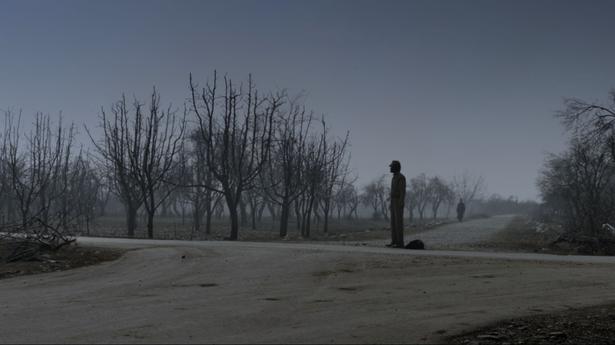
A poetic yet probing take on Kashmir, Prabhash Chandra’s film I’m not the river Jhelum is a moving experience that captures the everyday trauma in the Valley before and after the abrogation of the contentious Section 370.
A student of Physics, the independent filmmaker has delved into the gravity of the situation by using the verses of Jagan Nath Azad, Inder Salim and Angel Gonzalez and has employed his experience in theatre to create lyrical but mind-numbing imagery.
The film fetched the KR Mohanan Award for best debut director from India at the 26 th International Film Festival of India, earlier this year.
Edited excerpts:
I have been visiting Kashmir for sometime now. During the course of my stay, I got an opportunity to engage with the community. I taught theatre in school and colleges there and interacted with many people. I started listening to their viewpoints and kept observing the events happening around me. One thing is very clear: life there is filled with uncertainty and violence. The worst sufferers in this situation are children and women. Personally, I don’t appreciate it when the State requires the use of discipline and death as techniques of social control.
However, when I used to come back to Delhi, there was a completely different narrative, where Kashmiri Muslims were portrayed as anti-national elements. There is a huge gap in the perception and the ground reality of Kashmir.
How did Jhelum become a metaphor for what young Afeefa sees and experiences?


The Spirit of the Land, a solo show by artist Shivakumar Sunagar, is a vista of Nature-inspired emotions

Tal Fry is all set for an exciting new performance season

Netflix is making a bold move by snagging InterPositive, the AI filmmaking company founded by Ben Affleck, in a deal that could hit $600 million

Watch the eerie trailer for 'Hokum,' where Adam Scott faces a witch haunting in a mysterious Irish inn.

Oscars 2026 security heightened amid FBI warnings of a potential Iranian drone threat ahead of the Hollywood ceremony.

Directed by Rahul Pandey, the series also stars Naila Grewal, Nidhi Bisht, Anant Joshi, Anjum Batra and Kusha Kapila

A tribute to the versatile actor and comedian V.K. Ramasamy in his birth centenary year.

‘One Piece’ Season 2 review: As the Straw Hats enter the Grand Line, Netflix’s live-action adaptation finds its sea legs with bigger islands, stranger villains and the same stretch-happy sense of boundless adventure

Geeta Gandbhir, the Indian-origin American filmmaker is waves at this year’s Oscars with not one, but two nominations. Her documentaries, ‘The Perfect Neighbor’ and ‘The Devil is Busy’ are in the race for the Academy Award

Directed by filmmaker and environmentalist Pradip Krishen, the film follows a group of "dope-smoking, bellbottom-wearing and vaguely idealistic" final-year students racing to complete their theses.

Alan Ritchson powers through 'War Machine', a lean sci-fi action thriller on Netflix. A competent, Reacher-style chase adventure with nonstop tension and solid set pieces

Explore the Unshelving Memories exhibition in Thiruvananthapuram, showcasing diverse book art by 61 talented artists until March 15.

Oscars 2026 date and timings: Watch the 98th Academy Awards live on March 15, 2026, at 4:30 a.m. IST in India on various platforms.