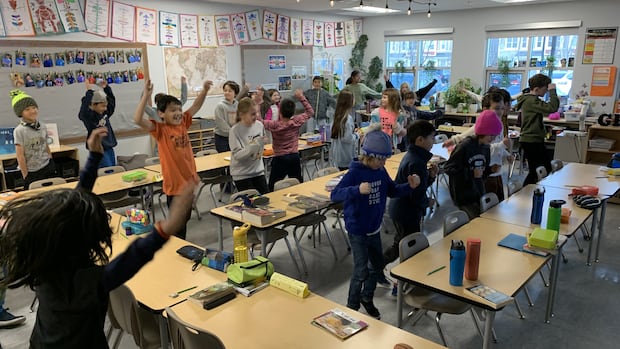
Large class sizes remain unresolved in Alberta — and that's just where the issue begins
CBC
Jacqueline Renfrow is grateful her kids will return to school soon, after Alberta legislated striking teachers back to work early Tuesday. However, the Calgary parent calls it a bittersweet feeling, since a key issue of the three-week strike — large class sizes — remains unresolved.
In classes of close to 30 kids, her daughters have fallen behind these past few years, unable to get individualized support from teachers who are "really good at their jobs," but frequently overwhelmed with demands, says Renfrow, who’s a regular volunteer at the school.
She's been forced to hire outside tutors. Her nine-year-old, who started school during the COVID-19 pandemic, has especially struggled.
"This is something that's been brewing for years," she said. "I'm disappointed that they're forcing [teachers] back to school without coming up with at least some solutions or some steps forward."
Large class sizes aren’t just a top concern for teachers in Alberta: Those in Ontario have also raised the issue, as they prepare to start new contract negotiations. Teachers in Saskatchewan did the same during their rotating strikes last year.
The most recent debates are closely tied to the increased complexity of students in our modern classrooms, experts say. Less homogenous than those of the past, your average class today could include multiple students with special educational supports, youngsters with behavioural challenges, learners with disabilities, those requiring extra enrichment as well as newcomers learning English or French.
Yet while some see capping class sizes as a solution, others call for changing what's actually happening inside the room.
In Alberta, parents and teachers alike have lamented class sizes growing past 30 or 40 students. Alberta Teachers' Association president Jason Schilling harkened to his own experience earlier this month.
"Forty-two students was a struggle to make sure that they each got my attention ... [versus] when I had 25 kids," he said two days into the strike.
Schools are being asked to address more challenges than ever — from mental health issues to food insecurity to childcare, notes education consultant Cathy Montreuil — and the response to these is often calls for smaller class sizes.
"It comes up in almost every round of negotiations in education," said Montreuil, a former deputy minister of education in Nova Scotia and chief student achievement officer in Ontario.
Indeed, after surveying members earlier this year, the Elementary Teachers' Federation of Ontario (ETFO) said it was a top priority. The organization will specifically call for caps in grades 4 through 8 (to join Ontario's existing cap for younger students) when negotiating a new contract in 2026.
Class sizes are "at the heart" of every issue teachers face today, said ETFO president David Mastin, from staff retention to violence to education quality.
Canadian classrooms are much more complex now than 30 or 40 years ago, he explained, and today's student mix includes a wider swath of learners with diverse needs.


In the closing days of the NDP leadership race, Avi Lewis's past activism has resurfaced. But the front-runner's campaign is standing by his past work and a decade-old vision that's been both criticized within the New Democrats' ranks and weaponized by their opponents.

Some rural municipalities want the province to know ambulance response times and basic care in their communities are not meeting the mark.

The sighting of a sniper on Saturday during St. Patrick’s Day celebrations in Waterloo was met with fear and shock by some partygoers, but one policing expert says this was a proactive measure designed to keep the crowd safe.

A 25-year old Prince Edward Island man has been sentenced to six months in jail for firearms offences.

Closing schools, stalled housing starts — not common headlines in Alberta's booming cities.

Two MLAs and the Ka'a'gee Tu First Nation chief say they welcome the territory’s new trespassing legislation because they believe it will help address concerns about uninvited guests intruding in people’s homes and refusing to leave.

U.S. President Donald Trump is struggling to persuade other nations to help protect commercial shipping through the Strait of Hormuz — a development that analysts say is partly the result of treating allies with contempt since returning to the White House last year.

The actions of an Alberta judge who lost his temper and briefly jailed a defence lawyer in the middle of a trial were “unacceptable,” ruled the Judicial Inquiry Board, which recommended a 30-day suspension without pay for Justice Gordon Yake.

Irish-born chef Liam Brannigan says there are four words he loves to hear about the food he serves as he drives his food truck around southwestern Ontario.

Last spring, the Newfoundland and Labrador government announced a loan guarantee program for restaurants — but so far, businesses haven't tapped into it.

Several organizations and groups in Greater Sudbury, Ont. remain closed or operating under a modified schedule after a major storm hit the region Sunday night.

As Halifax scraps plans for a sobering centre, staff at similar facilities across Canada say they’re a crucial part of the continuum of care needed to address homelessness and addiction.

New Brunswick will table its latest budget Tuesday after months of warnings from Premier Susan Holt that spending in some areas will have to come down.