Lab-grown bat organs, next stop on the road to predicting pandemics Premium
The Hindu
Discover how lab-grown bat organoids and cell lines are revolutionizing virus research and pandemic preparedness worldwide.
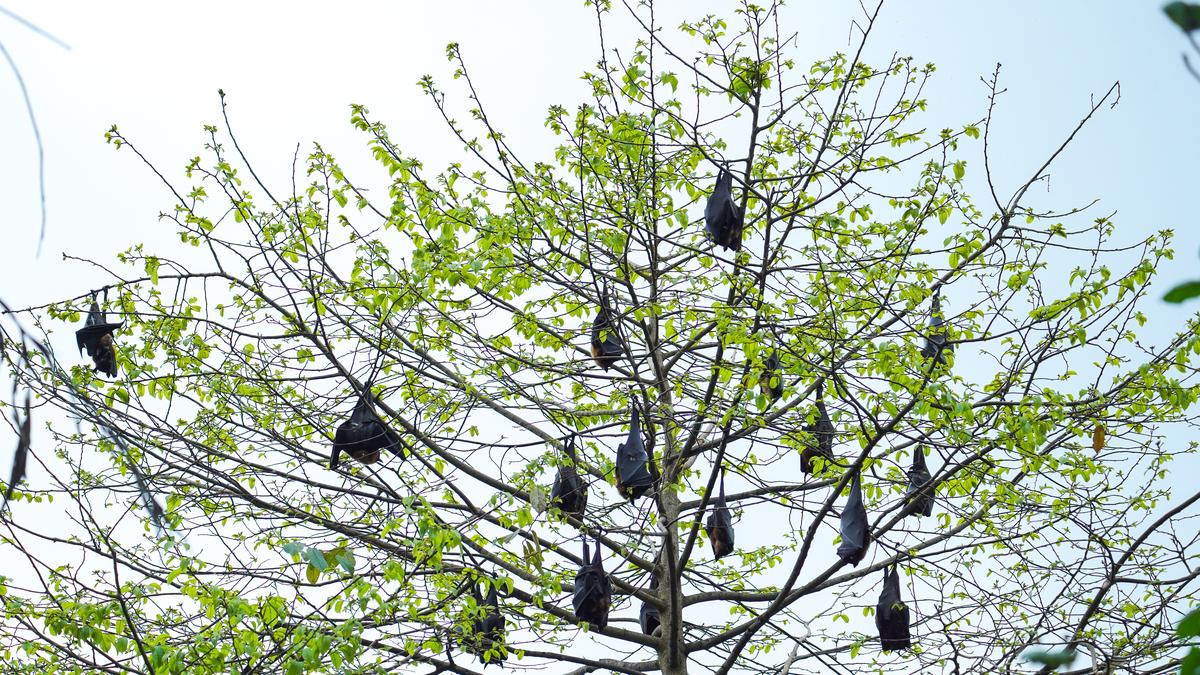
Bats are important animals that help maintain ecosystem balance and human well-being. They play key roles like pollinating plants, dispersing seeds, and controlling insect populations. But of late they have become popular for a different reason: their unique ability to harbour viruses without succumbing to disease.
SARS, MERS, Ebola, COVID-19 — some of the most devastating human diseases of the past century are believed to have originated in bats. Despite their central role in pandemic ecology, we know surprisingly little about how viruses interact with bat biology, or why some viruses remain harmless in bats but become deadly when they jump to humans.
Studying bats has numerous challenges. They are nocturnal, elusive, and in many regions protected by law. Another challenge is a lack of suitable research tools and animal models. Traditional laboratory animals like mice or monkeys fail to replicate the unique physiological traits of bats and primary bat cells are notoriously hard to grow in culture.
Even cell lines derived from the same bat species that hosted a virus may not support its replication due to the loss of key host receptor expression.
In a study recently published in Science, an international team of researchers has developed the world’s most comprehensive platform of bat organoids: small, three-dimensional lab-grown tissues that replicate the structure and function of real bat organs. Organoids have long been developed and used for human biomedical research — and they are now being applied to bats.
Previous attempts at creating bat organoids were limited to a single fruit bat species and one organ type. These models failed to capture the full diversity of bat species, especially those found in temperate regions like East Asia, where many emerging viruses have been identified.
To address this, the team created organoids from five insect-eating bat species native to Asia and Europe. These included models of the trachea, lungs, kidneys, and intestines. These structures mimic the real tissues closely, with features like mucus-producing goblet cells and gas-exchanging alveoli.


Mercedes-Benz CLA 250+ with EQ Technology review: design, performance, range and features explained. Discover how the new electric CLA combines advanced AI, long range, fast charging and futuristic styling for the next generation of luxury EVs.

Pi Day is celebrated every year on March 14, honouring the significance of the mathematical constant π and its applications in mathematics.

Discover how sculptural interior design transforms modern spaces, blending creativity and functionality to evoke emotion and identity.

A study reveals that certain antibiotics can cause long-lasting changes in gut microbiome diversity for up to eight years.

Indian scientists and international experts are divided over a study questioning the viability of a nuclear reactor fuel called HALEU-thorium; while critics cite safety risks, proponents argue the technology is vital to achieve national energy goals.

ISRO and AIIMS partner to enhance space medicine research, focusing on human health during long-duration space missions.

A practical guide to induction setups for students, families, and home food businesses as India’s LPG supply faces its biggest disruption in years

Explore the electrifying Oscars 2026 race, featuring standout films, baffling nominations, and memorable performances amid a cinematic transition.

Zai and Rom Whitaker’s latest book for young readers, The Book of Indian Snakes, tackles common misconceptions surrounding snakes, highlighting their utility to humans

Discover PC Mahalanobis's pivotal role in India's statistical revolution and his lasting influence on modern statistics in this episode.

Explore why nothing can exceed light speed and the paradoxes that arise if it were possible.

Scientists have engineered bacteria to produce designer proteins by smuggling artificial amino acids, enabling precise drug delivery and multifunctional applications.

Scientists successfully grew chickpeas in simulated lunar soil, paving the way for future extraterrestrial agriculture on the moon.