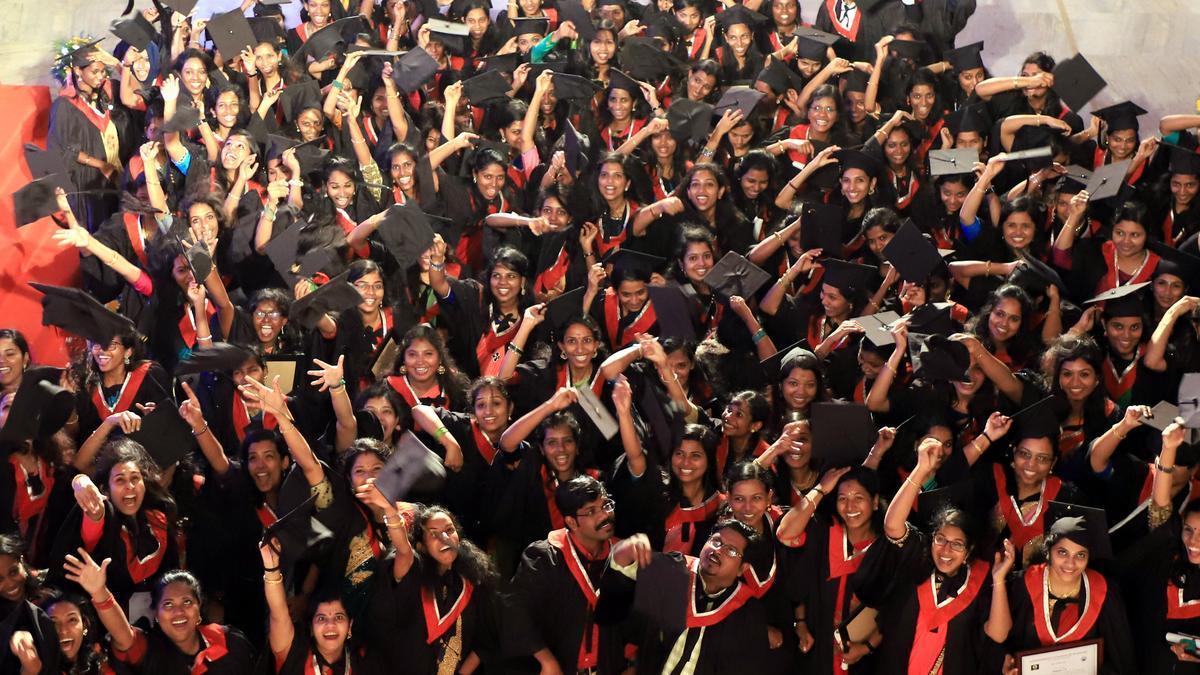
Kerala Assembly passes Private Universities Bill, scripts a milestone in State’s educational landscape
The Hindu
Kerala Assembly passes bill allowing private universities, sparking debate and protests; concerns raised over impact on public institutions.
In a historic move that is set to reshape Kerala’s education landscape, the Kerala Assembly passed the Kerala State Private Universities (Establishment and Regulation) Bill, 2025, on Tuesday (March 25, 2025). This pivotal legislation finally opens the doors to private universities in the state, nearly a decade after the idea was first proposed.
The Bill’s passage follows an intense debate extending across three days, during which nearly 1,400 amendments were introduced. The legislative process saw extensive discussions on the provisions of the Bill as lawmakers from various political parties raised concerns and offered suggestions for improvement.
Leader of the Opposition V.D. Satheesan expressed a cautious stance, stating that while the United Democratic Front (UDF) does not oppose the Bill in principle, they have reservations about some of its provisions.
He emphasised that the higher education scenario in Kerala is not the same as it was a decade ago when the concept of private universities was first introduced.
Raising caution on the possible ramifications on public universities, the Congress leader highlighted the closure of unaided colleges and the difficulty many government and aided institutions currently face in filling vacant seats. The introduction of private universities could exacerbate the issue and also result in a further decline in student enrolment in public institutions. Besides, allowing private universities to open off-campus centres could further undermine the stability of public universities.
Mr. Satheesan also suggested that the government should prioritise long-established and credible corporate educational agencies with several decades of experience in the sector. He proposed relaxing certain requirements, such as the ₹25-crore endowment fund and the 10-acre land mandate, for these veteran educational institutions.
Senior Congress leader Ramesh Chennithala also voiced concerns over student migration, urging the government to focus on ensuring high-quality education and ample employment opportunities within the State to stem the outflow of students to other regions.


The actor, along with director Shashant Shah, speak about their upcoming series ‘Chiraiya’, Divya’s process of working on the dialect, Sushant’s approach to telling a story about women, and more

Sri Lanka's Minister Bimal Rathnayake announces support for Indian refugees, urging political sensitivity from Tamil Nadu and India.

51 couples take thebig plunge at Udaipur mass wedding event

India shows significant progress in reducing child mortality, despite global slowdowns, highlights a new UN report on child health.

Puducherry's upcoming elections test the NDA's governance model amid opposition rifts and promises of stability and welfare delivery.

A Russian oil tanker diverts to India, boosting local refineries despite sanctions and geopolitical tensions.

Supreme Court questions if temple activities like book publishing and prasadam manufacturing qualify as industrial activities under current laws.

Ten of Kozhikode's 13 incumbent MLAs are seeking re-election, with no women candidates from CPI(M) in the upcoming polls.

Height restrictions near airports are stifling Bengaluru's growth, prompting calls for a review to boost development potential.

Explore the Gandhi Bunakar Mela in Vijayawada, showcasing traditional textiles and supporting handloom weavers until March 31.

MDMK leader Vaiko announces a movement to remove Prosopis juliflora trees in Tamil Nadu following a landmark High Court directive.

Lok Sabha Speaker Om Birla emphasizes the importance of Question Hour over meetings and urges decorum during obituary references.

Karnataka approves 300-bed Puttur Government Medical College Hospital project, enhancing healthcare in the coastal region.