'It's time' for OpenStreetsTO to make a comeback, Toronto resident says
CBC
A Toronto resident is campaigning to revive a popular street event after a years-long pause.
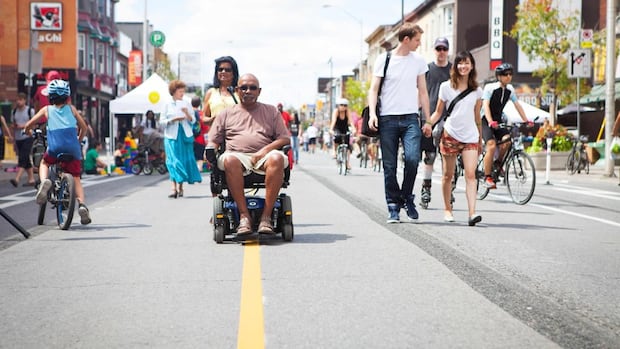
OpenStreetsTO is an event that closes roadways to cars and opens them to pedestrians, encouraging physical activity and recreation while allowing residents to experience the city's streets and architecture differently.
"Open Streets has widespread community support," said Robert Zaichkowski, who's leading the charge to restart the event. "It's a no-brainer to bring it back."
With some Toronto bike lanes under threat of removal, and the city trying to ease traffic congestion, keeping Toronto's streets accessible for pedestrians and cyclists is top of mind for many residents, including some government officials.
MPP Kristyn Wong-Tam, who initially helped launch the Toronto branch of the festival in 2014 when they were city councillor, told CBC Toronto they felt inspired to bring OpenStreetsTO to the city after attending the event in Guadalajara, Mexico, and seeing its benefits.
"I got back to Toronto and said, 'Oh my gosh, we need this,'" they said. "We need this for our health, our happiness. We need this to build up economic development. We need this to bring new customers to our main streets. We need this to connect our kids and our neighbourhoods."
OpenStreetsTO was held across Yonge and Bloor streets every summer until 2020, when it was cancelled due to the pandemic. It came back during the summer of 2022 through a partnership with ActiveTO, according to David Simor, one of the event's original founders.
Simor says that because ActiveTO is not a permanent city program, they didn't have enough support to bring OpenStreetsTO back after that, and it hasn't been held in the city since.
Despite the passion for the program, there are no plans to bring the event back, Simor said. Meanwhile, Hamilton and Waterloo are holding Open Streets events this summer.
The main obstacle is getting multiple city departments, such as transportation and police, to co-operate without having strong support from city hall, according to Amanda O'Rourke, executive director of 8 80 Cities, the non-profit organization that collaborated to help launch OpenStreetsTO. She says political support waned after Wong-Tam left office.
"Bringing all those divisions together was easier to do in a big city like Toronto with a political champion, like councillor Wong-Tam, who could help us bring everyone to the table," O'Rourke said.
However, Wong-Tam says having a municipal champion won't be enough to sustain the program, should it return. Instead, they said management of the event should be raised to the mayor's office, reducing its reliance on councillor and volunteer support.
"I don't think that it's fair for a group of volunteers to launch and sustain Toronto's largest free recreation program on their backs," Wong-Tam said.
CBC Toronto asked Mayor Olivia Chow if the city has any plans to bring OpenStreetsTO back. She said the city has to examine whether the program is needed, as they've already increased funding for many other street festivals. However, she said the city is committed to keeping streets open to pedestrians.


One of two pilots killed in a plane crash at New York's LaGuardia Airport Sunday earned his wings at an Ontario college, CBC News has learned.

Air Canada passengers who were aboard Flight 8646 when the CRJ-900 aircraft struck a fire truck upon landing at New York's LaGuardia Airport on Sunday evening say the collision was sudden and forceful, and they may owe their lives to the pilots who died in the incident.

Cardiac services are set to expand at a Winnipeg hospital once regarded as one of the best in Canada for heart care.

A 26-second TikTok video has ignited a larger conversation about vulnerable populations, theft and content creation.

Some family doctors and emergency room physicians working in Edmonton hospitals warn that an April 1 end to stipend pay arrangements could put patient care at risk and increase suffering.

An Auditor General of Canada report has found that B.C. saw drastically fewer international students than was forecast ever since wide-ranging federal immigration cuts began in 2024.

Six years after e-learning became a mandatory requirement to get an Ontario high school diploma, students don't appear to be taking online school to diversify their course selection as the province had intended, according to a CBC News analysis of provincial enrolment data.

Sarnia City Council will hold a special meeting Tuesday morning to respond to social media comments made by Coun. Bill Dennis, who criticized city spending on a new mural by Indigenous artist Kennady Osborne as “virtue signalling by woke politicians” — then made a series of comments in response to a reply from Aamjiwnaang Chief Janelle Nahmabin that some have characterized as unprofessional and aggressive.

While many Albertans continue to feel the pinch at the pump, Premier Danielle Smith says the government is not considering any fuel tax breaks, as it does not believe it will make much of a difference.

WARNING: This story contains disturbing details about gruesome deaths and sexual abuse.

Waterloo Regional Police Service (WRPS) says they will take part in the federal government's buyback program for assault-style rifles this year, but a local member of parliament says she "can't get behind this decision."

The use of American contracts and services is down by nearly half on Prince Edward Island following tariffs and shaky trade relations under the Donald Trump administration.

The first set of deadlines included in the energy and climate deal struck between Prime Minister Mark Carney and Alberta Premier Danielle Smith are not expected to be met, showing early challenges with the agreement that includes pursuing a new export pipeline from Alberta to the West Coast.