‘It is mind-boggling that local people are capable of protecting wildlife to this extent’
The Hindu
Huliyappa, a new documentary by writer and poet Sourabha Rao, explores the coexistence of Indigenous people and wildlife.
Rama Devadiga, an inhabitant of Yellapura, recalls a frightening story from his past: how he was attacked by a bear while cycling to a temple. “I’d see bears often, and they were always harmless,” he explains in writer and poet Sourabha Rao’s new documentary, Huliyappa. In this case, he says the bear’s two cubs were sleeping on the path, and he did not see the mother approach him. “It was when she gripped my cycle carrier, and I turned around that I realised she was there,” says Rama, whose head still bears the jagged scars of that encounter.
Rama’s story was particularly poignant for Sourabha, the co-founder of multimedia production house, Owletter Creations, who could not help but notice how matter-of-factly Rama described this incident.
“He doesn’t play the victim card or use the word trauma,” she says. This was someone who had “knocked on the door of death” but managed to be casual and matter-of-fact about it. The stoic attitude, she says, is true of many local people who live in close contact with wildlife.
“There is a sense of dignity to their resilience and endurance that evokes a lot of respect,” she says, something that the film highlights too. “These people do not glorify their tolerance and love for wildlife. There is no sloganeering or chest-thumping.”
Without romanticising the consequences of the co-existence of humans and animals, she still feels that “it is mind-boggling that they are capable of protecting wildlife to this extent. I still can’t wrap my head around it.”
According to her, local people do understand humans need to respect animals as it is their space and have been there for a longer time than people. “They never use words or phrases that can be troublesome,” she says. Instead of saying things like “dangerous” or “beast,” while referring to these animals, they say that the animal took away cattle or a dog, adds Sourabha, who, as a writer herself, is fully aware that “your thought informs your language and your language informs your thought.”
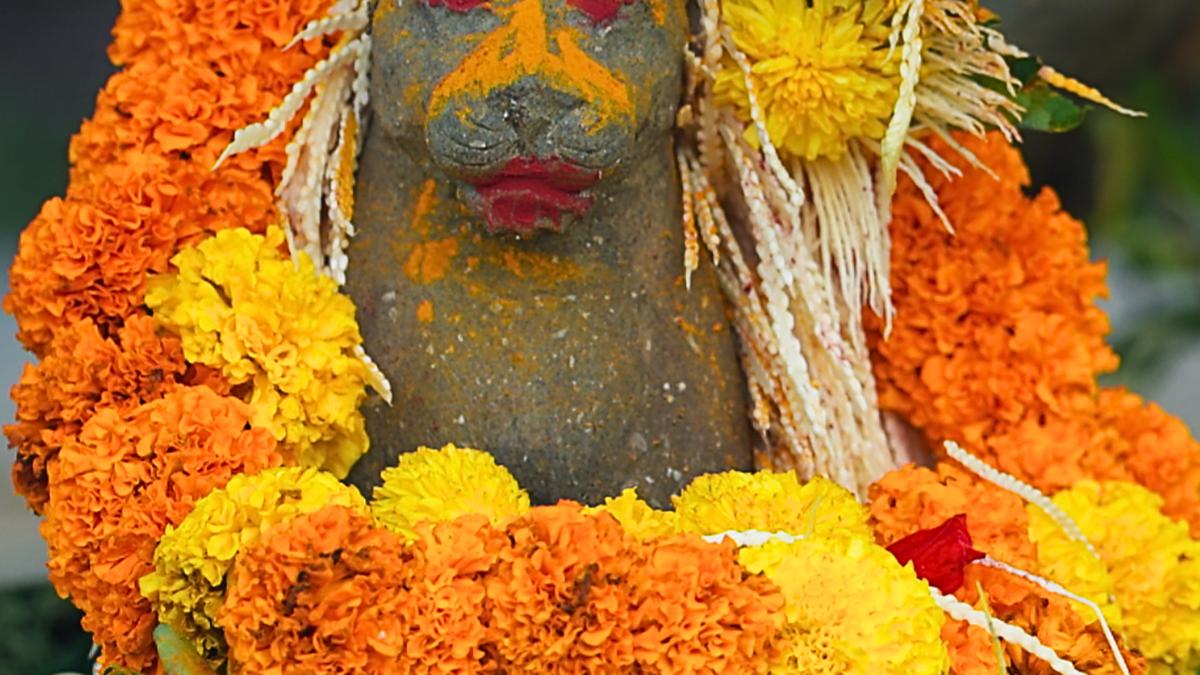
Huliyappa, which premiered at the Bangalore International Centre (BIC) on June 7, explores this co-existence of indigenous people and wildlife. Set in the lush green landscapes of Uttara Kannada, which is flanked by the Sahyadris, better known as the Western Ghats, a global biodiversity hotspot and a UNESCO World Heritage site, the film is a testament to the natural beauty of the landscape as well as to the people, wildlife and cultural traditions it nurtures within it.


Chefs and cookery experts share smart kitchen hacks, hybrid cooking methods and appliance tips to help households reduce LPG use without compromising on food

Discover groundbreaking research on Titan's lakes, bat vaccinations, and the unique aroma of ripening bananas in just one minute.

IRSO's NavIC system faces challenges as the last atomic clock fails, reducing operational satellites for navigation services.

Discover efficient pressure cooking techniques to save up to 50% on fuel. OPOS B Ramakrishnan tells you how

Mercedes-Benz CLA 250+ with EQ Technology review: design, performance, range and features explained. Discover how the new electric CLA combines advanced AI, long range, fast charging and futuristic styling for the next generation of luxury EVs.

Pi Day is celebrated every year on March 14, honouring the significance of the mathematical constant π and its applications in mathematics.

Discover how sculptural interior design transforms modern spaces, blending creativity and functionality to evoke emotion and identity.

A study reveals that certain antibiotics can cause long-lasting changes in gut microbiome diversity for up to eight years.

Indian scientists and international experts are divided over a study questioning the viability of a nuclear reactor fuel called HALEU-thorium; while critics cite safety risks, proponents argue the technology is vital to achieve national energy goals.

ISRO and AIIMS partner to enhance space medicine research, focusing on human health during long-duration space missions.

A practical guide to induction setups for students, families, and home food businesses as India’s LPG supply faces its biggest disruption in years

Explore the electrifying Oscars 2026 race, featuring standout films, baffling nominations, and memorable performances amid a cinematic transition.

Zai and Rom Whitaker’s latest book for young readers, The Book of Indian Snakes, tackles common misconceptions surrounding snakes, highlighting their utility to humans