Inside the rise of robotics firm Unitree, glimpse into China’s tech ambitions Premium
The Hindu
Unitree, a private company started by tech entrepreneur Wang Xinxing (36) who designed his first robot at university, said this week it plans to sell as many as 20,000 humanoid robots this year, an almost four-fold rise from 2025
It’s been an eventful week for the Chinese robotics firm Unitree, which has managed to find itself at the centre of national conversations both in China and in India.
First, in the country where it is based, Unitree’s latest humanoid robots made a stunning splash on February 16, performing complicated martial arts on China’s most watched television spectacle, the annual Chinese New Year gala that is watched by more than half a billion people.
Then, days later, one of Unitree’s older robotic models, a quadruped “robo dog”, unwittingly found itself in the headlines because of a display by the private Galgotias University at the ongoing AI Impact Summit in New Delhi. The university was forced to close its stall after it emerged that, what some of its representatives claimed was a home-grown design, turned out to be a Unitree Go2 quadruped. A model of the Go2 can be purchased online for $1,600.
WATCH | Humanoid robots steal the show during China’s 2026 Spring Festival gala
Unitree, a private company started by tech entrepreneur Wang Xinxing (36) who designed his first robot at university, said this week it plans to sell as many as 20,000 humanoid robots this year, an almost four-fold rise from 2025. The company’s name derives from “universe” and “tree”, according to a South China Morning Post report, taken from a popular Chinese phrase “lighting up the technology tree”.
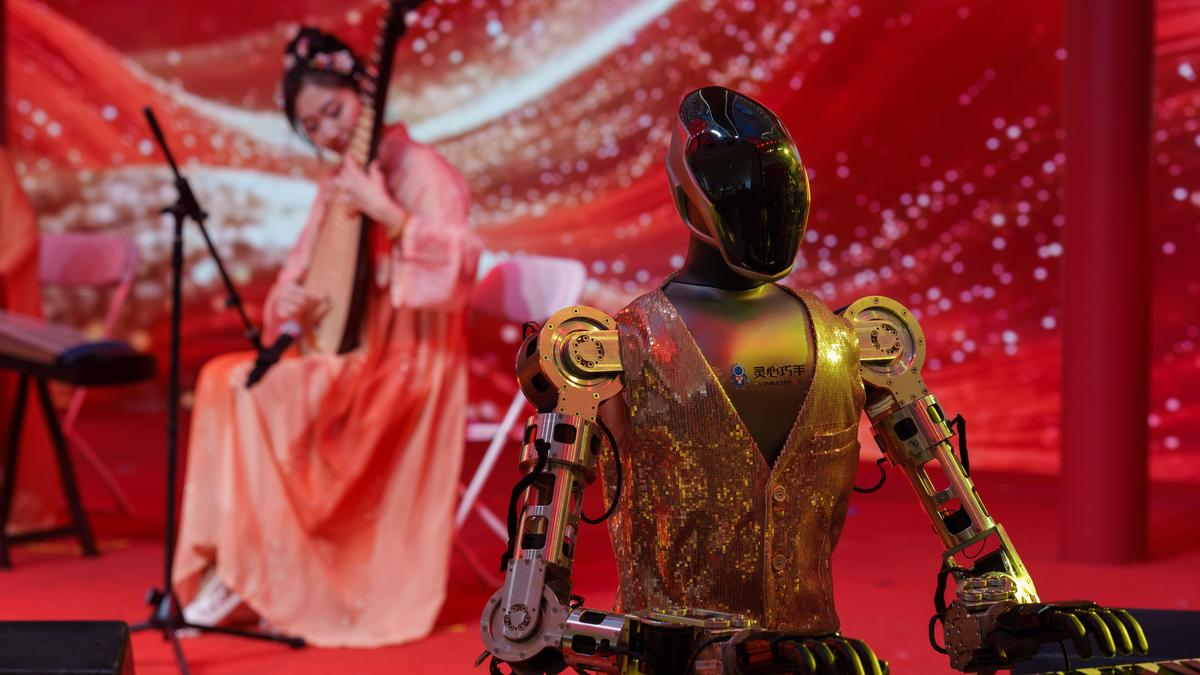
The February 16 display of its latest fully autonomous G1 robot stirred wide attention in China, representing a significant improvement from a display only one year ago where robots performed largely stiff hand-waving motions. This year, they displayed martial arts and punched and kicked with flexibility. Mr. Wang’s latest kung fu-performing humanoid robots, he told state media this week, “lay the groundwork for future robot deployment” in a range of scenarios.


NIA charges three accused in Myanmar human trafficking case involving Indian youth, revealing a network deceiving victims for cyber scams.

Marco Rubio will update Netanyahu on U.S.-Iran nuclear talks during his visit to Israel next week, officials reveal.

The U.S. State Department is developing an online portal that will enable people in Europe and elsewhere to see content banned by their governments

Prime Minister Tarique Rahman pledges to ensure safety for all faiths in Bangladesh, emphasizing law, order, and inclusivity.

Eight skiers are dead and one missing after a deadly avalanche near Lake Tahoe, California, marking a tragic winter disaster.

Trump hosts a Black History Month reception amid controversy over a racist social media post and his policies on diversity.

Russia's Foreign Ministry asserts India hasn't changed its stance on Russian oil imports, despite U.S. claims to the contrary.

Mark Zuckerberg testifies in a pivotal trial addressing social media addiction and its impact on youth mental health.

Sanae Takaichi's rise as Japan's first female PM signals potential structural reforms amid global uncertainties, asserts analyst Sanjaya Baru.

U.S. Energy Secretary Chris Wright calls for the IEA to refocus on energy security, dismissing climate change efforts as political.

Pope Leo addresses global turmoil and environmental destruction during Ash Wednesday service, marking the start of Lent for Christians.

Tilvin Silva discusses the JVP's evolving stance on India and emphasises development cooperation during his recent visit.

Iran and Russia will hold joint naval drills in the Sea of Oman, enhancing maritime security and bilateral relations.