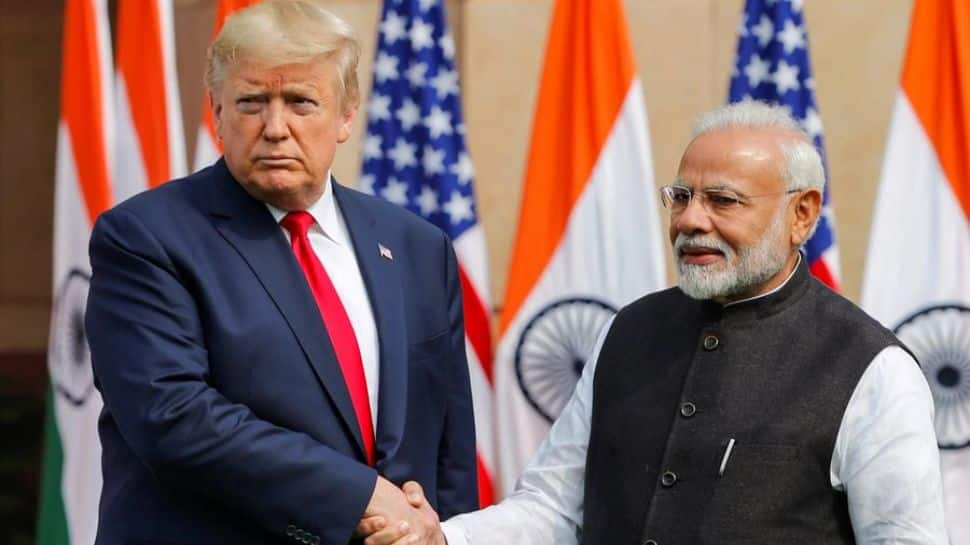
‘India will be paying us tariffs, we will not be paying them tariffs,’ Trump says after US Supreme Court struck down IEEPA tariffs
Zee News
US Supreme Court struck down Trump IEEPA tariffs. While Trump says India will be paying us tariffs, we will not be paying them tariffs; calls ruling deeply disappointing yet insists nothing changes. 18% deal intact.
The US Supreme Court ruled on Friday that President Donald Trump exceeded his authority under the International Emergency Economic Powers Act (IEEPA) by imposing sweeping global tariffs, including on Indian exports.
The 6-3 decision, authored by Chief Justice John Roberts, limits presidential power over trade, reinforcing Congress's role and invalidating broad IEEPA-based duties, such as the 50% tariffs on India.
Following the ruling, Trump, during his address, said, ‘India will be paying us tariffs, we will not be paying them tariffs,’ emphasizing the unchanged India-US trade deal. He described relations with India as "fantastic" and called it a "fair deal" with a "little flip," where India pays 18% reciprocal tariffs while the US enjoys zero duties on its exports. Trump vowed alternative measures, like a new 10% global tariff, insisting nothing changes for India with context to the recently announced India-US trade deal.
Also Read: Trump to ditch IEEPA tariffs; uses alternative legal powers, says US Treasury Secretary Scott Bessent
From India's point of view, the Supreme Court IEEPA tariffs decision is a major win, slashing risks of sudden tariff shocks on key exports like engineering goods, textiles, chemicals, and gems.


The upcoming talks are part of ongoing international efforts, mediated by the US, to find a negotiated settlement to the war between Ukraine and Russia.

Reportedly recent satellite imagery shows major expansions at covert nuclear weapons sites in Chinas Sichuan Province.

Bangladesh’s 13th parliamentary election was not a revolution but a calculated reckoning shaped by voter anger, FPTP arithmetic, and organisational depth. The BNP returned to power as Jamaat surged regionally, yet failed to generate a national wave.

In a post on X (formerly Twitter), the Consulate General of India in San Francisco said that local police had confirmed the recovery of the missing student’s body. This is not the first time such an incident has come to light. Indian students abroad have reportedly often complained of alleged discrimination and racist attacks.

With Tarique Rahman poised to lead the government, attention is now turning to the future of Bangladesh-Pakistan relations. While the BNP may not drastically alter the overall dynamic with Pakistan, Bangladesh will also need to prioritise strengthening its relationship with India, given the broader regional context.

The White House marked Valentines Day 2026 with Meme Diplomacy. From the Maduro capture in Operation Absolute Resolve to the Greenland annexation push, see why the internet is clashing over these bold geopolitical cards.

Nehrus polite ‘no thanks’ handed Pakistan a strategic jackpot by the Strait of Hormuz. Pakistans Gwadar port which is in spotlight for its strategic importance, global turmiol and Balochistan crisis was once offered to India in 1956. Why it matters today.

With Tarique Rahmans BNP winning the 2026 Bangladesh election, the demand for Sheikh Hasina’s extradition from India has intensified. Explore the legal political offense clause and Indias diplomatic dilemma.

India and Israel are currently engaging at a professional level to enhance defence industry cooperation and streamline financial partnerships in high-tech sectors, with a focus on AI, quantum, and cybersecurity.

Fifteen people were killed and several others were injured on November 9 when a car explosion near Delhis Red Fort triggered a high-level investigation.

According to the report, additional law enforcement personnel will be deployed at the identified centres to ensure security. The Election Commission has implemented special measures for these polling stations, including enhanced security.

Meta CEO Mark Zuckerberg is reportedly purchasing a $150M–$200M waterfront estate on Miami’s exclusive Indian Creek Island. Moving into the Billionaire Bunker alongside Jeff Bezos and Tom Brady, the move signals a potential relocation from California amid new wealth tax proposals.

The victim, 62-year-old Susen Chandra Sarkar, a rice trader, was brutally hacked to death inside his shop.