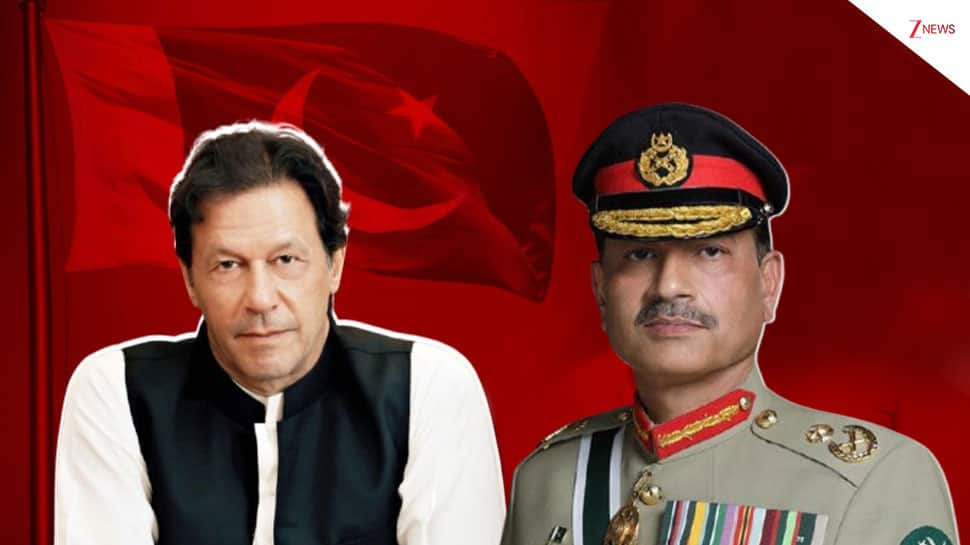
Pakistan’s political vendetta: Asim Munir’s attrition state and the blinding of Imran Khan
Zee News
Imran Khan’s vision loss matters because of what it implies about intent—not necessarily intent proven through a signed directive, but intent revealed through pattern. Complaints are acknowledged yet not meaningfully escalated. Examinations occur without credible diagnostic depth. Specialist access is filtered through institutional gatekeepers. Intervention arrives only after the window for reversibility has narrowed.
For Pakistanis across the globe, Imran Khan’s worsening health in Adiala Jail is not a matter of routine “prison administration.” It is a portrait of what Pakistan has become under Field Marshal Asim Munir—a country where the state no longer needs to execute opponents; it simply manages their decay.
The reported loss of roughly 85% of Khan’s vision in his right eye is not an isolated medical mishap. It fits into a broader architecture of power constructed since Munir took command—an architecture that thrives on delay, denial, controlled access, and narrative suffocation. Reuters reported that Khan had experienced blurred vision for months and that his legal team alleges medical care was delayed. His party has accused authorities of negligence that endangered him in custody. The Associated Press similarly reported that Pakistan’s Supreme Court ordered a medical examination after Khan complained of severe vision loss, amid disputes over whether treatment had been timely and transparent. This is what “law” looks like when subordinated to a command-and-control state: procedures become instruments, and bureaucracy becomes plausible deniability.
Khan’s vision loss matters because of what it implies about intent—not necessarily intent proven through a signed directive, but intent revealed through pattern. Complaints are acknowledged yet not meaningfully escalated. Examinations occur without credible diagnostic depth. Specialist access is filtered through institutional gatekeepers. Intervention arrives only after the window for reversibility has narrowed.
PTI’s objection to the court-ordered medical process—describing it as “malicious” and protesting the exclusion of family members and personal doctors—highlights the central issue--control. A medical board convened inside a jail, without independent oversight, risks becoming a controlled stage set—sufficient to tick procedural boxes, insufficient to safeguard life or dignity.
This is the Munir model--just enough process to deflect outrage, never enough care to prevent irreversible damage.


Nehrus polite ‘no thanks’ handed Pakistan a strategic jackpot by the Strait of Hormuz. Pakistans Gwadar port which is in spotlight for its strategic importance, global turmiol and Balochistan crisis was once offered to India in 1956. Why it matters today.

With Tarique Rahmans BNP winning the 2026 Bangladesh election, the demand for Sheikh Hasina’s extradition from India has intensified. Explore the legal political offense clause and Indias diplomatic dilemma.

India and Israel are currently engaging at a professional level to enhance defence industry cooperation and streamline financial partnerships in high-tech sectors, with a focus on AI, quantum, and cybersecurity.

Fifteen people were killed and several others were injured on November 9 when a car explosion near Delhis Red Fort triggered a high-level investigation.

According to the report, additional law enforcement personnel will be deployed at the identified centres to ensure security. The Election Commission has implemented special measures for these polling stations, including enhanced security.

Meta CEO Mark Zuckerberg is reportedly purchasing a $150M–$200M waterfront estate on Miami’s exclusive Indian Creek Island. Moving into the Billionaire Bunker alongside Jeff Bezos and Tom Brady, the move signals a potential relocation from California amid new wealth tax proposals.

The victim, 62-year-old Susen Chandra Sarkar, a rice trader, was brutally hacked to death inside his shop.

The guidance, issued on Monday by the US Maritime Administration, also cautioned American ship captains against allowing Iranian forces to board US-registered vessels while operating in the strategically sensitive waterway.

The highly contagious but less deadly BA.2 sub-variant of Omicron has pushed the figures to greater highs in recent weeks in South Korea, China and Vietnam.

The annual meeting commemorates February 8, 1979, when a group of air force officers pledged loyalty to Ruhollah Khomeini in a move to overthrow the Pahlavi dynasty. Khomeini was the founder of the Islamic Republic and the predecessor of Ayatollah Ali Khamenei as Supreme Leader.

Donald Trump’s second term as US President has seen bold, unconventional foreign policies, raising questions about his global ambitions. His actions suggest a shift beyond traditional politics, potentially reshaping America’s role on the global stage.

The highly contagious but less deadly BA.2 sub-variant of Omicron has pushed the figures to greater highs in recent weeks in South Korea, China and Vietnam.