India-U.S. deal: Five unanswered questions
The Hindu
Explore the key unanswered questions surrounding the recent India-U.S. trade deal, including tariffs, investments, and energy commitments.
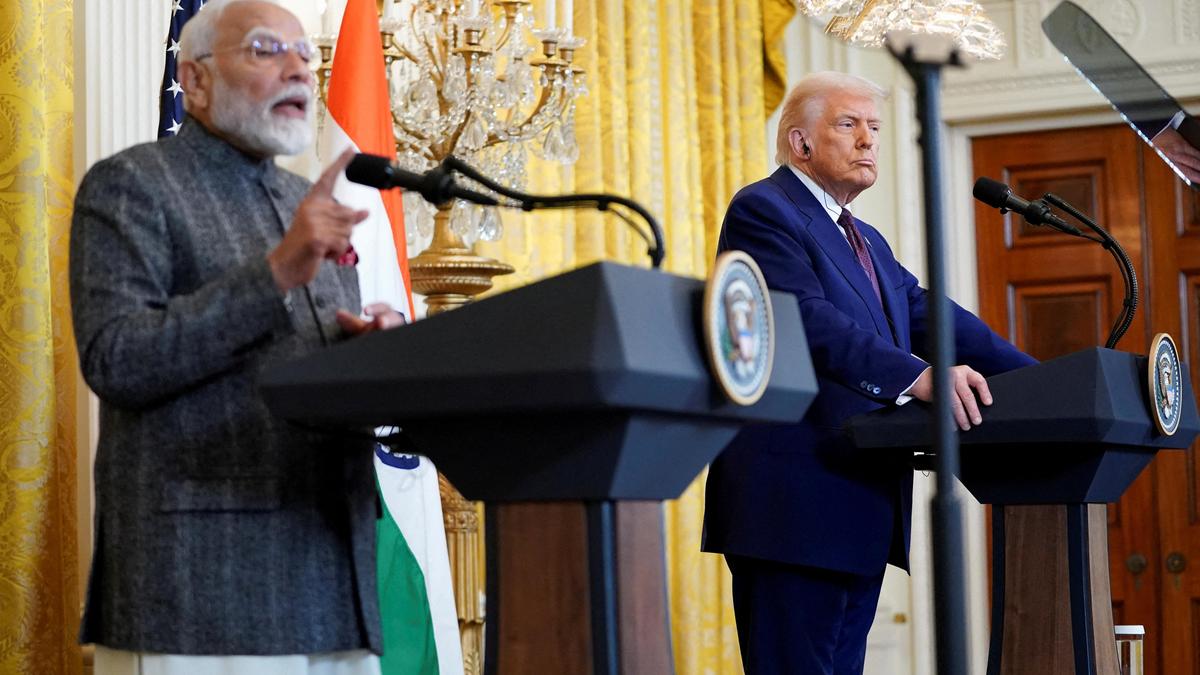
The announcements by both U.S. President Donald Trump and Prime Minister Narendra Modi that the U.S. will reduce “reciprocal” tariffs on India from 25% to 18% are a major relief to Indian exporters, and indicate relations between the two countries are on the mend, after a year of severe tensions.
India-U.S. trade deal LIVE
A U.S. Embassy spokesperson also confirmed that a 25% penalty tariff imposed on India last August, which had pushed total tariffs to 50%, the highest on any country in the world along with Brazil, has now been dropped.
“Out of friendship and respect for Prime Minister Modi and, as per his request, effective immediately, we agreed to a Trade Deal between the United States and India, whereby the United States will charge a reduced Reciprocal Tariff, lowering it from 25% to 18%,” Mr. Trump announced first, adding in a lengthy social media post, that India had agreed to several measures, including stopping Russian oil imports, reduce tariffs and non-tariff barriers “to Zero”, and buying U.S. goods including energy of more than $500 billion.
In his response, Mr. Modi did not refer to any of the conditions mentioned by Mr. Trump, nor did he give details of the trade deal.
“Delighted that Made in India products will now have a reduced tariff of 18%. Big thanks to President Trump on behalf of the 1.4 billion people of India for this wonderful announcement,” Mr. Modi said in a post. “When two large economies and the world’s largest democracies work together, it benefits our people and unlocks immense opportunities for mutually beneficial cooperation,” he added.


Iran executes three men from January protests amid rights concerns over coerced confessions and unfair trials.

Qatar expels two Iranian embassy officials within 24 hours over Iran’s attack on a Qatari gas facility.

Taiwan rejects China's energy security offer linked to reunification, securing alternative LNG supplies amid West Asian conflict disruptions.

Russia-Ukraine peace talks are paused amid the Iran war, potentially pressuring Kyiv toward compromise, Kremlin confirms.

Hong Kong's deadly fire investigation reveals multiple failures causing the 2025 blaze that killed 168 and destroyed seven buildings.

Trump confirms Israel’s solo Iran gas field attack, warning Iran against targeting Qatar or facing U.S. retaliation.

U.S. detects unidentified drones over Fort McNair, prompting officials to consider relocating Rubio and Hegseth amid security concerns.

FBI probes whether ex-counterterrorism official Joe Kent leaked classified info amid ongoing DOJ investigations into Trump critics.

Democrats walked out of a Justice Department briefing on Epstein files, demanding Attorney General Bondi testify under oath.

Iran-Israel war: Follow live updates from The Hindu on the West Asia conflict on March 19, 2026

U.S. Intelligence warns that India-Pakistan relations pose nuclear conflict risks, despite recent de-escalation efforts by President Trump.

U.S. eases sanctions on Venezuela's oil, allowing sales to boost global supply amid rising prices during the Iran conflict.

U.S. considers troop deployments as Iran war escalates, evaluating options to secure oil passage and strengthen military operations.