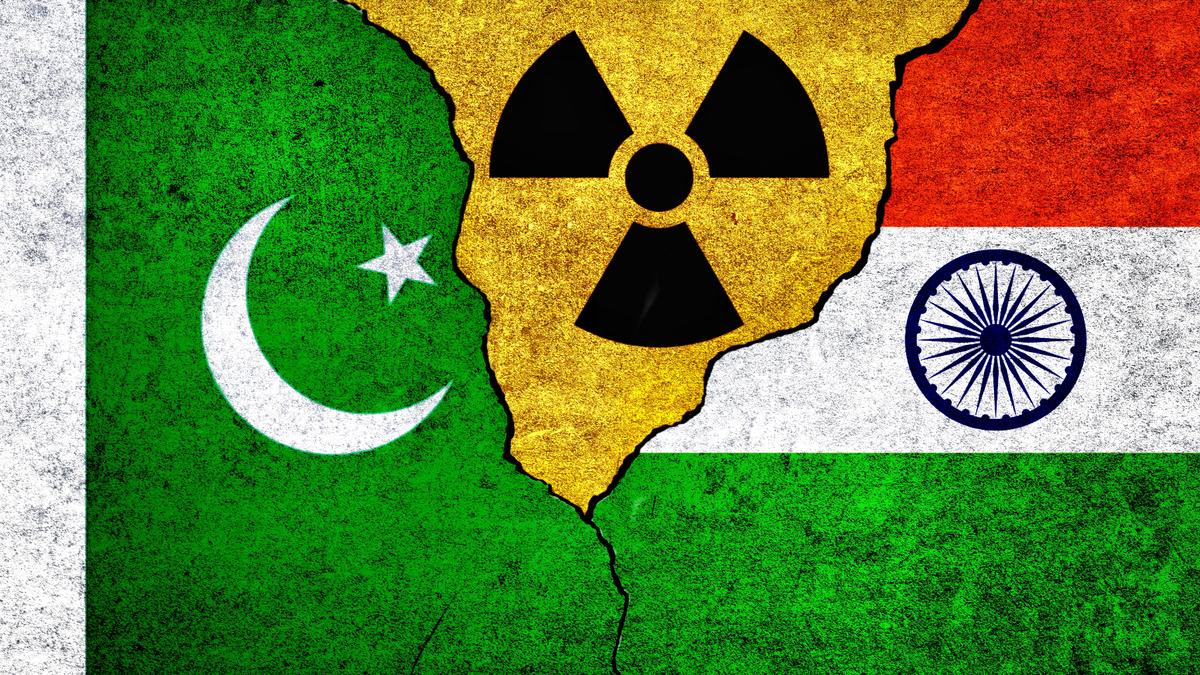
India, Pakistan ties ‘remain a risk’ for nuclear conflict: U.S. Intelligence
The Hindu
U.S. Intelligence warns that India-Pakistan relations pose nuclear conflict risks, despite recent de-escalation efforts by President Trump.
India and Pakistan relations remain at risk for nuclear conflict, according to the Annual Threat Assessment of the U.S. Intelligence Community presented to the U.S. Senate on Wednesday (March 18, 2026).
According to the 34-page report, though India and Pakistan do not seek to open conflict, conditions exist for terrorist actors to continue to create catalysts for crises.
“India-Pakistan relations remain a risk for nuclear conflict given past conflicts where these two nuclear states squared off, creating the danger of escalation. The terrorist attack last year near Pahalgam, in the Indian Union Territory of Jammu and Kashmir, demonstrated the dangers of terrorist attacks sparking conflict,” the document said.
“President Trump’s intervention de-escalated the most recent nuclear tensions, and we assess that neither country seeks to return to open conflict, but that conditions exist for terrorist actors to continue to create catalysts for crises,” it said.
On South Asia, the document said that ISIS-K (Islamic State – Khorasan Province) maintains a foothold in the region and aspires to conduct external attacks, but the Taliban is improving its security services and has taken aggressive action against it. “The Taliban has conducted extensive raids against ISIS-K targets, probably thwarted some attacks, and driven some ISIS-K leaders to relocate to neighbouring countries,” it said.
Pakistan continues to develop increasingly sophisticated missile technology that provides its military the means to develop missile systems with the capability to strike targets beyond South Asia, and if these trends continue, ICBMs that would threaten the US.


Test your knowledge with our daily quiz on significant events that occurred on March 18.

Iran's Foreign Minister asserts nuclear doctrine remains unchanged and advocates for a new protocol for the Strait of Hormuz post-war.

Exploring Banksy's identity reveals the significance of his anonymity and the cultural impact of his provocative art.

Iran's Foreign Minister asserts Larijani's assassination won't destabilize the political system, while the IRGC pledges revenge.

Shorts News:Watch: Cuba right now in ‘very bad shape’: Trump

As political loyalties shift, Vice President Vance navigates the turbulent MAGA landscape amidst Trump's new war strategy.

Oil prices drop over $2 as Iraq and Kurdish authorities finalize an export deal, easing supply concerns amid ongoing conflict.

Marco Rubio denies U.S. efforts to oust Cuba's President, calling a New York Times article "fake" and misleading.

Shooting at Holloman Air Force Base in New Mexico leaves one dead and another wounded; lockdown lifted, base declared safe.

The U.S. offers undocumented migrants $2,600 and free flights to voluntarily self-deport through a new DHS program.

Israeli strikes in central Beirut reportedly kill six, escalating tensions amid ongoing conflict with Hezbollah and regional instability.

Few people realise that the ocean floor beneath the Persian Gulf and Red Sea is crisscrossed with thousands of kilometres of fibre-optic cable.

Ali Larijani, Iran's influential politician, played a key role in both security policy and the violent suppression of protests.