In wake of U.S. attack, some fear Iran may speed up efforts to build a bomb
CBC
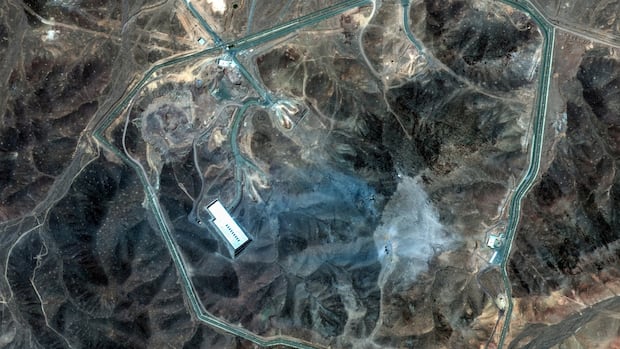
Hiding key Iranian nuclear facilities deep under a mountain made them that much harder for U.S. and Israeli weapons to reach.
It will also make it more difficult to assess just how successful the historic U.S. strikes against them overnight Saturday were and more challenging to predict Iran's next steps.
In his statement moments after the U.S. attack by B-2 bombers and their deep-penetrating almost 14 tonne bombs, U.S. President Donald Trump was unequivocal in his claim:
"Iran's key nuclear enrichment facilities have been completely and totally obliterated," he said.
Israeli Prime Minister Benjamin Netanyahu sounded equally conclusive, claiming his promise to destroy Iran's nuclear facilities had been "fulfilled."
Yet, within hours, Iranian officials were giving Reuters news agency a conflicting account, claiming that most of the highly enriched uranium at Fordow had been moved elsewhere before the attack.
The International Atomic Energy Agency, charged with monitoring Iran's nuclear facilities, also later reported there was no evidence of enriched uranium being present at another attack site in Isfahan, an indication that it might be stored elsewhere.
In his morning-after briefing, General Dan Caine, the head of the U.S. Joint Chiefs of Staff, said the three targeted sites had sustained "extremely severe damage and destruction," but he acknowledged a final damage assessment would take some time.
"The fundamental reality remains that military action alone can only roll back the program by degrees, not eliminate it fully," said Daria Dolzikova, with the Royal United Services Institute, a London-based military think tank.
Given that, Dolzikova says, there are two key questions for both sides to consider: how much damage is enough for the U.S. and Israel to feel they have curtailed Iran's nuclear program sufficiently; and equally important, what have the strikes done to Iran's resolve to speed up enrichment and potentially create a nuclear weapon?
"One thing that I'm looking out for ... is Iran's future within the nuclear non-proliferation treaty (NPT) and whether these strikes actually convince it to potentially pull out of that treaty," Dolzikova told CBC News in an interview.
Exiting the NPT would banish IAEA inspectors from Iran and effectively send its nuclear program into the shadows.
The NPT, which went into effect 55 years ago, is aimed at stopping the spread of nuclear weapons while at the same time allowing countries to build nuclear programs for peaceful purposes.
Iran is a signatory and as part of the monitoring provisions, its nuclear facilities have been open to the IAEA for inspection. A deal signed in 2015 known as the Joint Comprehensive Plan of Action had also aimed to restrict Iran's nuclear capabilities in exchange for an easing of economic sanctions but fell apart after Trump withdrew the U.S. from it in his first term.


Oil prices fell Monday morning after President Donald Trump said the U.S. would hold off on striking Iran’s energy infrastructure amid productive talks between the two countries.

While spring technically started late last week, Newfoundland and Labrador isn't free from winter weather just yet.

The Sudbury School Bus Consortium is suspending all school buses in Greater Sudbury as the community continues to clean up following a major storm.

Two large corporate landlords owning a combined 9,008 rental units in Halifax are reporting smaller annual increases in their average rents for 2025 than the previous year.

The Holt government has reached a deal with Ottawa on compensation for tens of millions of dollars in lost sales tax revenue from the Christmas season in 2024.

The government of Saskatchewan has announced plans to reduce the length of non-resident game bird hunting licences to combat illegal guiding.

An 87-year-old Alberta man is fighting extradition to the United Kingdom to stand trial for historical allegations of physical and sexual assault involving minors.

Eight casinos across southwest B.C. have been sold to First Nations in the last two years, with the province's gambling scene set to be reshaped as a result.

Hamilton hosts the Junos Sunday, and the musical awards show is bringing tourists, musicians, concerts and a ton of themed events to the city this week.

The multi-million-dollar deal at the heart of a high-profile fight between the Canadian government and one of the world’s biggest carmakers contains multiple clauses about the company’s footprint in Ontario, according to a copy obtained by CBC Windsor.

In recent months, Calgary police have carried out three day-long safety blitzes, parading out dozens of officers to flood an area with their increased presence — at least, temporarily.

A national organization is seeking people with experience in Canada's forestry sector as they put together a working group that will examine ways to improve forest recovery following wildfires.

Ella Heyder is bracing for a breakup, even though she already moved out decades ago.