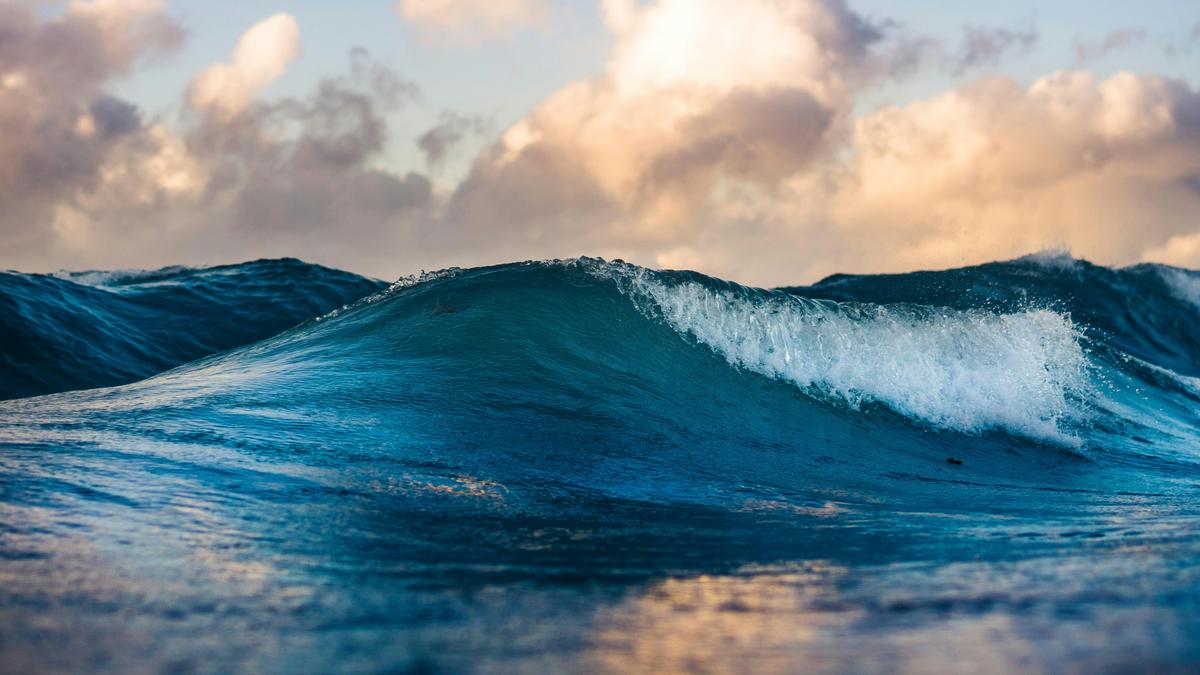
In our fight against climate change, could rivers and seas turn the tide?
The Hindu
The ocean's crucial role in climate moderation, the potential of marine carbon dioxide removal, and the challenges and opportunities ahead.
The ocean, the earth’s vast blue lung, has long played a critical but underappreciated role in moderating the planet’s climate. It has absorbed 25% of anthropogenic carbon dioxide emissions and more than 90% of the excess heat generated by greenhouse gases, buying humankind precious time against the worsening effects of climate change.
However, this seemingly boundless capacity comes at a cost: ocean acidification, disrupted biogeochemical cycles, pollution, and profound harm to marine ecosystems. Acidification, for instance, threatens calcifying organisms like coral and shellfish, while warming alters ocean circulation and deoxygenating vital marine habitats. These disruptions cascade through ecosystems, undermining the services they provide — from fisheries to carbon sequestration. The ocean’s natural carbon and heat absorption processes, though crucial, are slow and carry ecological consequences.
As we grapple with the dual imperatives of decarbonisation and climate resilience, attention is increasingly turning to marine carbon dioxide removal (mCDR) as a strategy to complement emissions reductions and address lingering carbon dioxide burdens. Yet the ocean’s immense surface area and unique chemistry make it a tempting venue for natural and carefully engineered solutions. So far, all our efforts to fight climate change have been land-biased. We have invested heavily on land but ignored oceans, seas, lakes and rivers. Several studies tell us that the land is saturated because soils and rocks are so severely damaged that they no longer support efficient carbon capture.
Ocean, seas, rivers, and even lakes offer a different suite of options. Deep water bodies retain the ability to remove excess carbon rapidly from the atmosphere. They also transport the carbon into depths where it mixes and binds with minerals. As on land, marine carbon capture strategies fall into two categories. (i) Biotic approaches take advantage of living systems like mangroves and macroalgae or of our rivers to carefully calibrate biomass burial at sea. (ii) Abiotic approaches manipulate physical or chemical properties, such as through ocean alkalinity enhancement (OAE), and are more complicated but are also becoming unavoidable. Both these methods promise to capture and store carbon for the long term and potentially transform countries’ contributions to climate goals.
Biotic, or nature-based, solutions rely on the inherent potential of ecosystems to sequester carbon while supporting biodiversity conservation and coastal protection. They are also relatively well-established, with some already integrated into national climate plans. However, their carbon sequestration potential is modest — typically capped at less than one billion tonnes of carbon dioxide every year — and storage durations are limited to hundreds or at best thousands of years.
Abiotic techniques, by contrast, offer greater scalability and permanence. For example, biomass burial at sea if done right can sequester seven to 22 billion tonnes of carbon dioxide per year. Reducing the acidic nature of the seas through OAE is another option. Here, alkaline materials are added to sea water to neutralise its carbon dioxide content, locking the carbon away for tens of thousands of years in the form of dissolved inorganic molecules. This method could potentially sequester one to 15 billion tonnes of carbon dioxide per year, an order of magnitude higher than biotic methods.
To put this in perspective, if we wish to keep global warming below 1.5º C (over the pre-industrial average), all our efforts must collectively cap emissions at 570 billion tonnes of carbon dioxide and reach net-zero by 2050. But at today’s relentless pace, this carbon budget will vanish by 2031—a daunting challenge with the clock ticking.


The 2026 U.S. cholesterol guidelines urge starting screening and treatment at 30 to prevent cardiovascular disease effectively.

Olam Festival 2026 in Thiruvananthapuram returns March 27-29 with 120+ vendors, music, art, and cultural zones.

A few storytellers in Thiruvananthapuram share their journeys, challenges, and evolving methods on World Storytelling Day, inspiring young minds.

76-year-old Kurian Jacob from Kerala triumphs with seven medals, including five golds, at the Open Masters Games in Abu Dhabi.

Explore the nature of the human mind as an emergent property of brain activity and complex neural interactions.

CERN's Large Hadron Collider discovers the Xi-cc-plus particle, enhancing understanding of quantum mechanics and baryon behavior.

Vibha Batra’s latest book, Spotless (Hachette India) is a novel in verse for young adults

In its first edition, the Madras Art Salon spotlights the works of journalist and artist Narayan Lakshman at The Botanical Club, a social space in the British Deputy High Commission, Chennai

Cholesterol enhances melanoma cell invasion by making nuclei squishier, revealing a potential treatment target in cancer progression.

The designers reinterpret the Swedish artist’s symbolic forms and colour energy through contemporary resortwear silhouettes

Discover the inspiring legacy of Bibha Chowdhuri, a pioneering woman in physics and a trailblazer in STEM history.

Discover the inspiring legacy of Bibha Chowdhuri, a pioneering woman in physics and a trailblazer in STEM history.

Ashdeen’s Spring 2026 collection features saris inspired by the designer’s Parsi gara archive