In action there is hope for climate change
The Hindu
Climate conversations seminar explores mental health impacts of climate change, emphasizing storytelling and community action for awareness and healing.
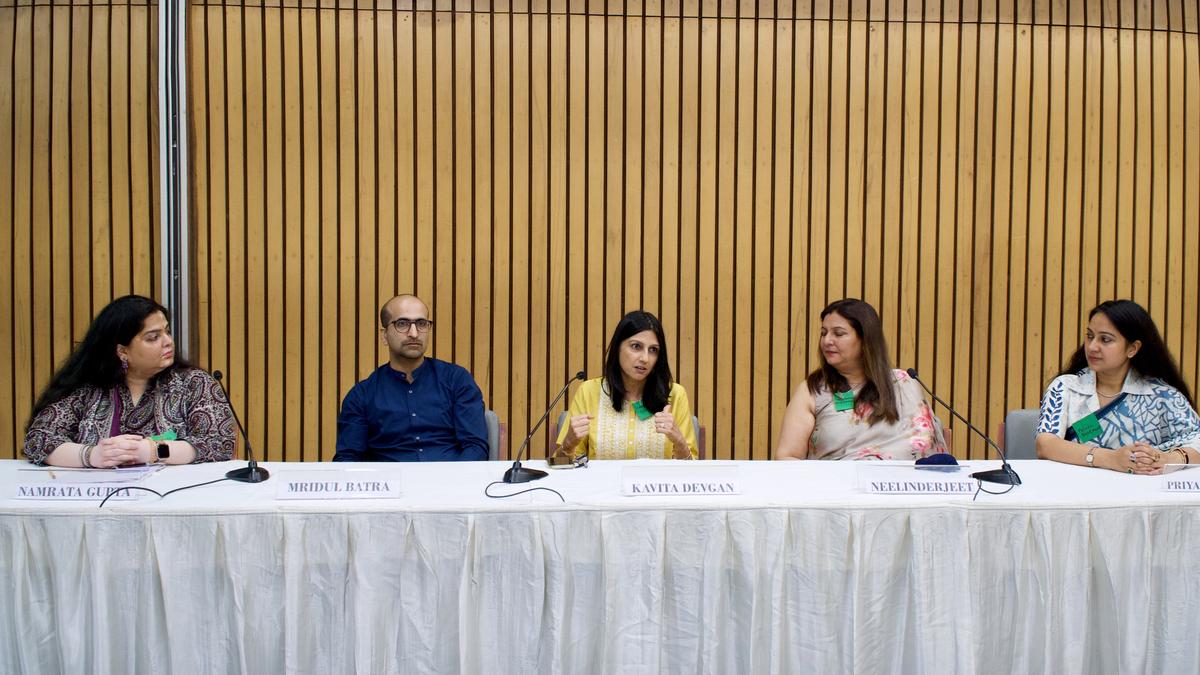
Panellists at a seminar on Climate conversations: Understanding Anxiety and Action, focussed on the deep intersection between climate change and mental health, and how media and the art of storytelling could play a role in raising awareness and mitigating the issue.
The discussions on Friday were organised by The Mind Diaries in collaboration with The Climate Reality Project.
“Climate change is impacting the psychological landscape” said Seema Kumar, co-founder and editor-in-chief of The Mind Diaries. She talked about the healing effect of creative art and storytelling, in the context of engaging mental health and how collective community effort could bring about an impactful change in conversations on the subject.
Aditya Pundir, Director (India and South Asia) The Climate Reality Project, drew the attention to climate change severely impacting agriculture, damaging infrastructure and causing water crisis. He highlighted health concerns particularly with rise in Dengue and Malaria cases. “There are two types of people who experience mental health issues surrounding the climate: those who read up on the climate crises,and develop an anxiety surrounding climate change, and those who have actually lived through such crises, and have to deal with the trauma caused by it,” he said.
According to Sandhya Choudhary from Vidyasagar Institute of Mental Health, Neuro & Allied Sciences, Delhi, a quarter of people who seek therapy at the Institute belong to 14 years to 30 years age group with eco-anxiety. “It is a rational response to an irrational world, which often develops a sense of helplessness. There is was a rhythm to life but when climate change causes inconvenient shifts in seasons, healing begins by talking about it,” she said.
On how media plays a role in driving narratives surrounding climate change, environment journalist Nidhi Jamwal said there was a need for reporters to create solution-centric stories than just writing about the problems. “Media is not trained to report on mental health,” she said. “While highlighting a problem, the tone of a story should be kept positive, which is sometimes difficult to navigate,” she added.
Ms.Jamwal also rued the lack of marginalised voices when it comes to reporting on agriculture. “We need to speak in the language of people’s hearts,” added R J Neelakshi Malik and described how her radio show weaves environmental consciousness into everyday conversations. “Even for eating golgappas by the roadside, I always carry my utensil. Everybody should join Bring Your Own Bartan club,” she added.


Belagavi ZP CEO emphasizes innovative marketing for farmers and artisans, collaborating with Exim Bank to boost exports and opportunities.

Mizoram's civic body election heats up as parties finalize candidates and campaign strategies ahead of the April 21 polls.

Congress nominates Umesh Meti and Samarth Mallikarjun for Karnataka bypolls, keeping candidacies within influential families.

South Africa wins the toss and opts to bat in the fourth T20 match against New Zealand in Wellington.

High in the Nilgiris, a quiet ecological revival is underway. Once lost to plantations and invasive species, native grasslands and shola forests are slowly returning—bringing back wildlife, improving water security, and strengthening climate resilience. Driven by civil society groups, conservationists, and indigenous communities, this restoration story offers hope at a time when fragile ecosystems across India face growing threats.

Blasts and sirens sounded in Jerusalem as Israel warned of incoming Iranian missile threats amid escalating tensions.

275 former judges and officials criticize USCIRF's report on religious freedom, calling it biased and lacking credible evidence.

Jharkhand Police request Indian Army's help to safely defuse an active WWII-era bomb found near Subarnarekha river.

Tamil Nadu Assembly election: VCK under compulsion to consider local candidates, says Thirumavalavan
VCK leader Thirumavalavan emphasizes the need for local candidates amid concerns over past electoral losses due to outsiders.

Explore Tamil Nadu's upcoming four-cornered election contest, featuring key players DMK, AIADMK, TVK, and Naam Tamizhar Katchi.

I and EPS were appointed CMs, Stalin elected by people, says O. Panneerselvam

The ₹88.41 crore AMRUT scheme aims to eliminate Kavali's water scarcity, transforming the town’s infrastructure and services.

A 4.1 magnitude earthquake struck Sikkim's Mangan district; no casualties or property damage reported.