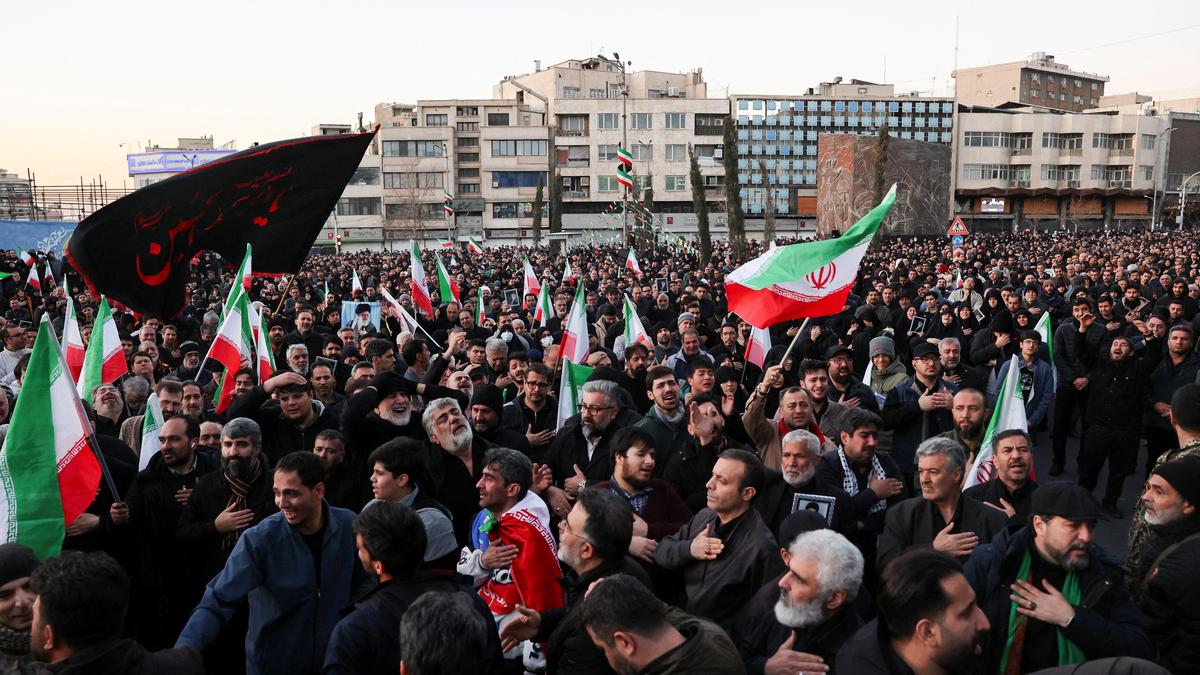
How succession works in Iran and who will be the country’s next supreme leader?
The Hindu
Explore Iran's complex succession process for its next supreme leader, including the role of the Assembly of Experts and potential candidates.
The death of Iran’s Supreme Leader Ayatollah Ali Khamenei raises paramount questions about the country’s future. And while a clerical panel is tasked with replacing him, succession is a complex matter in Iran’s theocracy:
Here is what to know:
An 88-member panel called the Assembly of Experts appoints the supreme leader. The panel can remove one as well, although that has never happened.
Iran-Israel conflict LIVE updates
The panel consists entirely of Shia clerics who are popularly elected every eight years and whose candidacies are approved by the Guardian Council, Iran’s constitutional watchdog. That body is known for disqualifying candidates in various elections in Iran and the Assembly of Experts is no different. The Guardian Council barred former Iranian President Hassan Rouhani, a relative moderate whose administration struck the 2015 nuclear deal with world powers, from election for the Assembly of Experts in March 2024.
Iranian law says the Assembly of Experts “must, as soon as possible” pick a new supreme leader. But until then, a leadership council can step in and “temporarily assume all the duties of leadership.” The assembly is made up of Iran’s sitting president, the head of the country’s judiciary and a member of the Guardian Council chosen by Iran’s Expediency Council, which advises the supreme leader and settles disputes with parliament. If that were to happen now, Iran’s reformist President Masoud Pezeshkian and hard-line judiciary chief Gholamhossein Mohseni Ejei would be on that leadership council.


Clashes between Afghan and Pakistani forces escalate in Kabul, with blasts reported amid ongoing violence and air defence operations.

OPEC+ considers increasing oil production amid rising prices and geopolitical tensions sparked by ongoing Middle East conflicts.

Explore Iran's complex succession process for its next supreme leader, including the role of the Assembly of Experts and potential candidates.

Iranian missile attacks damage Dubai's Palm Jumeirah and Burj Al Arab, sparking fires and injuries amidst escalating regional tensions.

Ayatollah Ali Khamenei, Iran’s Supreme Leader, dies at 86 amid escalating Israel-Iran conflict, raising concerns of regional instability.

Israel-Iran conflict LIVE updates: The Israeli military said it launched a wave of strikes targeting Iranian ballistic missile and air defence sites on Sunday (March 1, 2026). Follow The Hindu for more updates.

PV Sindhu shares her experience of being stranded in Dubai amid flight suspensions due to escalating tensions in West Asia.

Explore the evolving missile defense systems in the U.S.-Iran conflict, highlighting advancements and challenges faced by regional powers.

Trump claims Iran's Khamenei is dead following unprecedented U.S. and Israeli attacks, sparking chaos and conflicting reports.