How safe is America from polio?
CBSN
When 13-year-old music prodigy Itzhak Perlman performed on "The Ed Sullivan Show" in 1958, viewers could see his extraordinary talent. What they couldn't see were the braces and crutches he needed to walk. In:
When 13-year-old music prodigy Itzhak Perlman performed on "The Ed Sullivan Show" in 1958, viewers could see his extraordinary talent. What they couldn't see were the braces and crutches he needed to walk.
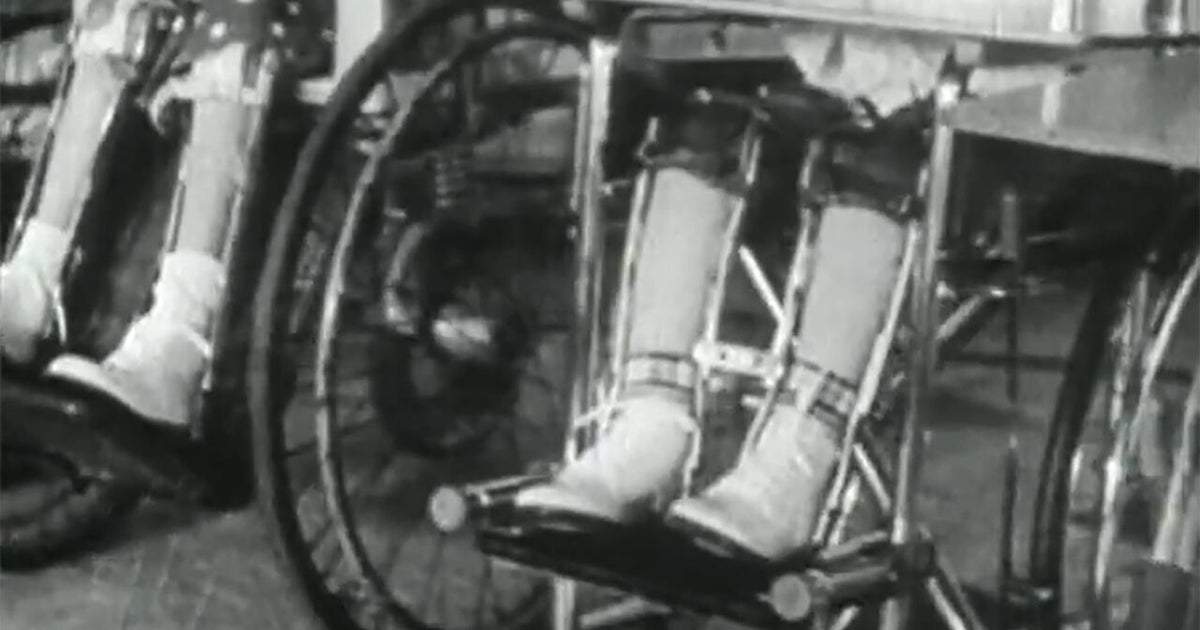
Perlman was four when he contracted polio. "I was already running and walking, and I remember one morning when I got up and I couldn't stand," he said. "I usually would stand up in the bed. And then I would go out and get dressed and so on. All of a sudden it was like, Stop. Can't do that anymore."
Perlman, like hundreds of thousands of other children around the world, was infected by the polio virus before the first vaccine against the disease became available in 1955. He missed the vaccine by about six years. "Yeah, I'm here to tell you that's what happens when you're not vaccinated," Perlman said. "My life was changed forever. My parents were upset. Ugh, they were so upset."
The polio virus could cause paralysis so severe, some children needed machines to breathe. At the height of the pandemic, in the late 1940s and early '50s, thousands of children were kept alive by iron lungs.
"There was no protection, and there was no cure," said historian David Oshinsky, a professor at NYU Grossman School of Medicine, and author of the Pulitzer Prize-winner "Polio: An American Story." "You could be a hands-on parent, a hands-off parent. It didn't matter. You could not protect your child from polio."


Authorities in Ohio have charged a former contestant on "American Idol" with shooting and killing his wife and staging the crime scene to mislead investigators. In:

Engineers ran into problems repressurizing the Artemis II moon rocket's upper stage helium tanks overnight Friday, a problem that will require rolling the huge rocket off the launch pad and back to its processing hangar for troubleshooting. The work will push the already delayed mission from March into early April, NASA officials said Saturday. In:

President Trump said on Saturday that he is going to raise his global tariff to 15%, up from 10% he imposed on Friday, after the Supreme Court struck down a set of sweeping global tariffs. In:

Blizzard warnings were issued Saturday for New York City, New Jersey and coastal communities along the East Coast as a late-winter storm set to arrive on Sunday threatened to make a mess of the start of a new week. Nikki Nolan contributed to this report. In:

Three men were arrested in Spain last month for allegedly shipping dried opium poppy capsules by mail across Spain and to the United States. In:

The late Rev. Jesse Jackson will not lie in honor in the U.S. Capitol Rotunda, after a request for the commemoration was denied by the House Speaker Mike Johnson's office due to past precedent. Nikole Killion contributed to this report. In:

The conflict between the Trump administration and the judicial branch over who can lead the Justice Department's office in the Eastern District of Virginia reached a new stage Friday, after a panel of judges appointed an interim top prosecutor — and the administration fired him soon after. In:

A U.S. appeals court has cleared the way for a Louisiana law requiring poster-sized displays of the Ten Commandments in public classrooms to take effect. Kati Weis contributed to this report. In:

A federal judge who took the extraordinary step of holding a government lawyer in contempt of court earlier this week blasted the Justice Department for its handling of immigration cases on Friday, accusing the department's Minneapolis office of skirting orders and blaming staffing shortages "again, and again, and again." Jacob Rosen contributed to this report.

President Trump said late Friday he signed an executive order that will impose 10% tariffs on imports from all countries, just hours after the Supreme Court struck down a set of sweeping global tariffs that were issued under a different legal authority. In:

Singer-songwriter Barry Manilow announced Friday he needs to reschedule several more concerts as he continues to recover following surgery after he was diagnosed with lung cancer. Emily Mae Czachor contributed to this report. In:

We may receive an affiliate commission from anything you buy from this article. In:

An attorney for the widower of Rep. Tony Gonzales' former aide alleges the Texas Republican coerced the staffer into a sexual relationship and is now "playing the role of a victim in a situation that he created." Aaron Navarro and Fin Daniel Gómez contributed to this report.