House Speaker Mike Johnson denies request for Jesse Jackson to lie in honor at Capitol, citing precedent
CBSN
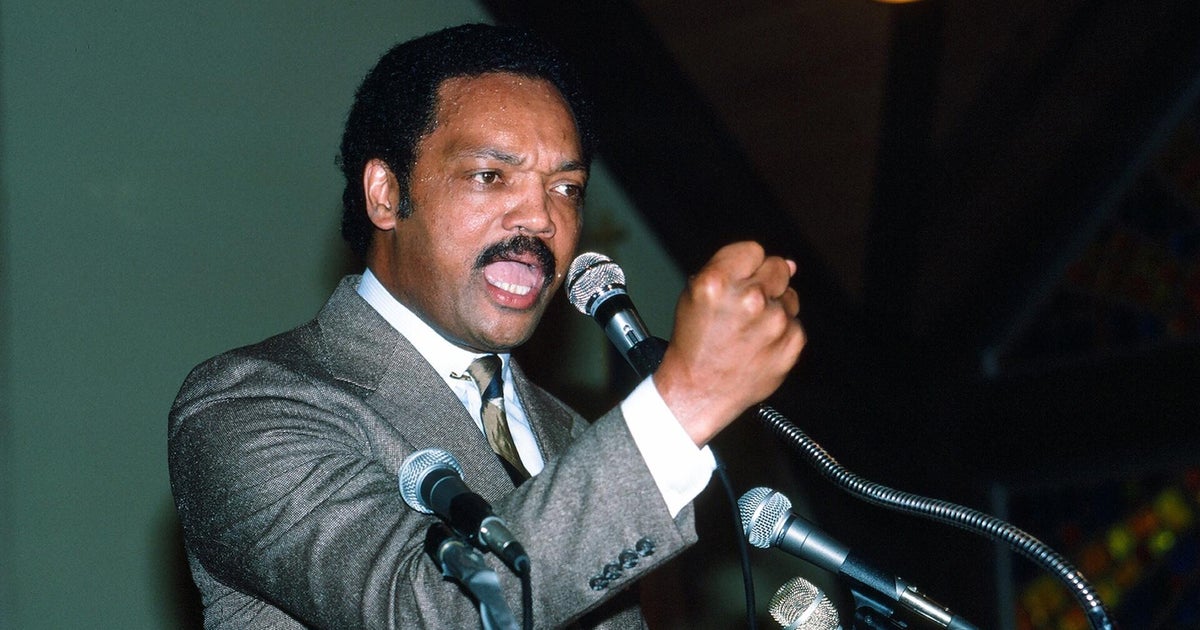
The late Rev. Jesse Jackson will not lie in honor in the U.S. Capitol Rotunda, after a request for the commemoration was denied by the House Speaker Mike Johnson's office due to past precedent. Nikole Killion contributed to this report. In:
The late Rev. Jesse Jackson will not lie in honor in the U.S. Capitol Rotunda, after a request for the commemoration was denied by the House Speaker Mike Johnson's office due to past precedent.
Jackson's family asked to have the civil rights leader's remains lie in honor at the Capitol, multiple sources confirmed to CBS News. One source said the decision to deny their request was due to the fact that the ritual is typically reserved for select military and government officials, pointing to previous requests that were denied for other high profile figures, such as conservative activist Charlie Kirk and former Vice President Dick Cheney.
Johnson's office confirmed the decision to the Associated Press.
The civil rights leader died this week at the age of 84. The family and some House Democrats had filed a request for Jackson to be honored at the U.S. Capitol.
There is no specific rule about who qualifies for the honor, a decision that is controlled by concurrence from both the House and Senate. Amid the country's political divisions, there have been flareups over who is memorialized at the Capitol with a service to lie in state, or honor, in the Rotunda. During such events, the public is generally allowed to visit the Capitol and pay their respects.


Washington — President Trump says he's considering a limited military strike on Iran, as the U.S. military builds up its presence in the region. In:

Some of the biggest U.S. companies say they are passing tariff-related costs on to consumers, with Walmart this week attributing a jump in prices for certain goods sold by the retailer to higher import duties. Edited by Alain Sherter In:

The Justice Department on Friday accused one of Ohio's largest healthcare systems of engaging in anticompetitive behavior that forces patients to pay high prices for their healthcare. In:

Business owners said that a Supreme Court ruling on Friday striking down sweeping U.S. tariffs could spell relief by lowering their costs and potentially leading to refunds. Edited by Alain Sherter

Washington — The Supreme Court on Friday ruled President Trump does not have the authority to unilaterally impose sweeping tariffs on nearly every country under a federal emergency powers law, delivering a significant blow to the president's signature economic policy.

American freeskier Hunter Hess got to the end of his successful run in Olympic halfpipe qualifying, then leaned into the camera. He bent his left thumb and forefinger into the shape of an "L," lifted it to his forehead and pointed at it with the other hand. In:

A Milwaukee, Wisconsin, detective had an unconventional idea of how to help solve the murder of 19-year-old college student Sade Robinson. In:

Property taxes around the U.S. have long been a lightning rod for debate, with political leaders perpetually balancing the need to fund their budget priorities against the risk of alienating homeowners and businesses. This week, for example, New York City Mayor Zohran Mamdani sparked an uproar by proposing to close a budget hole by sharply raising property taxes. Edited by Alain Sherter In:

U.S. fighter jets were scrambled Thursday to intercept multiple Russian bombers, fighter jets and a spy plane that were spotted flying off the coast of Alaska, U.S. authorities said. In:

The two rounds of indirect talks between the U.S. and Iran have produced unique proposals addressing Iran's nuclear program — its enrichment capabilities and supply of highly enriched uranium — and how to make a deal that's economically beneficial to both countries, diplomatic sources tell CBS News.

Eric Dane, the actor best known for his role as Dr. Mark Sloan on the hit medical series "Grey's Anatomy," has died at the age of 53, his family announced Thursday. Kerry Breen contributed to this report. In:

President Trump on Thursday directed his administration to release files on UFOs and any "alien and extraterrestrial life," an issue that has drawn decades of public fascination — and spawned more than a few wild theories. In: