How Jayant Narlikar inspired generations of students through Science popularisation efforts
The Hindu
Remembering the legacy of astrophysicist Jayant Narlikar, a pioneer in science popularisation and inspiration to many minds.
Jayant Narlikar, an eminent astrophysicist who passed away in Pune on May 20, 2025, has left behind a legacy of inspired minds. It is no less known a fact that Mr. Narlikar dedicated significant time and effort to Science popularisation. Inspired by Michael Faraday and his mentor Fred Hoyle, Mr. Narlikar worked to popularise Science through articles, books, speeches, and media.
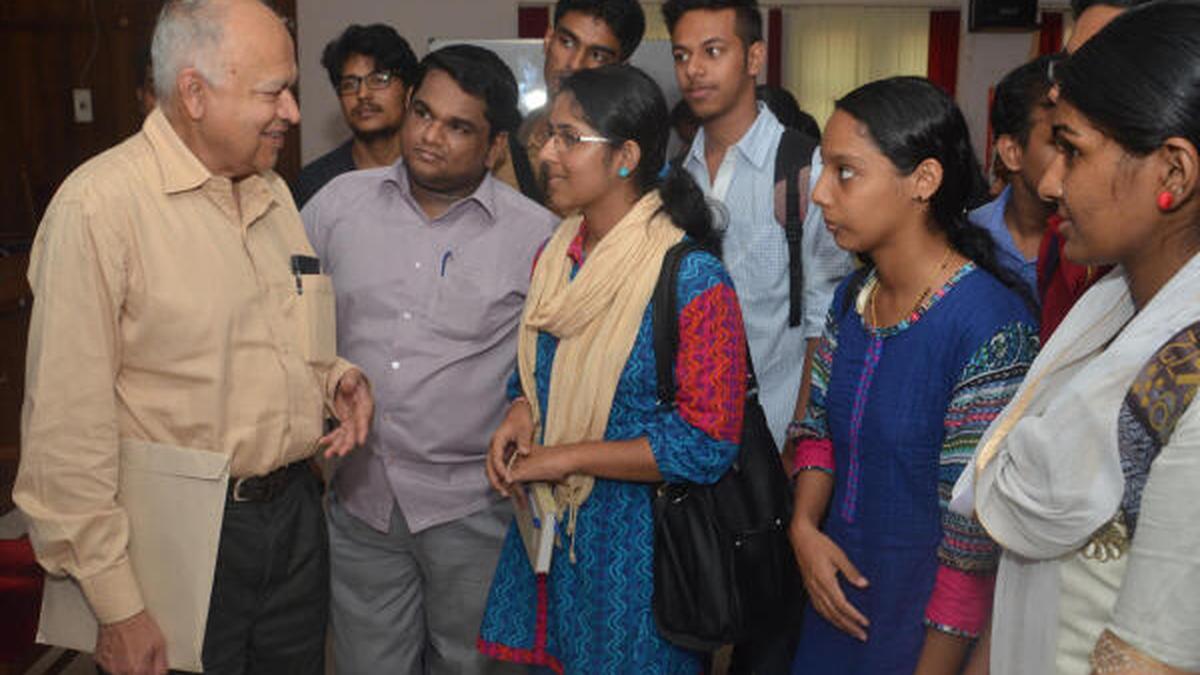
His small acts of kindness, such as replying to postcards, emails, and letters sent by students, attending school exhibitions and interacting with young minds, delivering a guest lectures at various universities left a lasting impression that shaped students’ lives. “Narlikar was an excellent communicator. He could convey complex scientific concepts to the general public simply and engagingly”, says Ajit Kembhavi, Mr. Narlikar’s student and former director of IUCAA.
Mr. Narlikar started blogging about eventful and meaningful stories and lessons from his life in January 2024. In the blog, ‘Sharing the Thrills of Science’, he talks about his drive towards Science popularisation. In the blog, Mr. Narlikar talks about Faraday’s knack for presenting scientific discoveries in simple language, and how his lectures inspired a liking for science in the general public.
In the same blog, he acknowledges the guidance he received from Fred Hoyle. Mr. Narlikar writes, “He (Mr. Hoyle) not only showed me the necessity of keeping an open mind while doing scientific research but also the enjoyment one derives from conveying one’s findings to lay audiences. When I returned to India after some ten years of post-doctoral research, I continued my interest in Science popularisation.”
Also Read: Jayant Narlikar: The Indian astrophysicist and sci-fi writer who challenged ‘Big Bang’
Mr. Narlikar held the directorship of IUCAA until his retirement in 2003. Under his direction, IUCAA didn’t just acquire recognition as a hub of teaching and research in Astronomy and Astrophysics, but also as a hub for public outreach. Mr. Kembhavi recollects, “Hundreds of school children would visit the campus for Saturday lectures, even though it was under construction. These students who are now, in their middle age, still remember the way Mr. Narlikar inspired them”.
Mr. Kembhavi recollects that Mr. Narlikar was always enthusiastic to answer questions from his audience. But he always politely declined their requests for an autograph. He, however, would offer to send a signed reply for a postcard.


Mohamed Salah will leave Liverpool at season's end, concluding a remarkable nine-year tenure at Anfield.

Telangana CM to hold urgent meeting on March 25 to address petrol, LPG, and urea stock concerns amid rising demand.

Karnataka Minister announces efforts to resume separate Haj terminal at Mangaluru airport, pending Centre's approval.

Ahead of the Assembly election, DMK Youth Wing secretary and Deputy Chief Minister Udhayanidhi Stalin has tasked the party youth wing members with meeting young voters every day till the polling day to explain various achievements of the ‘Dravida model government’ to them.

Bird flu outbreak in Chhattisgarh's Bilaspur kills 4,400 chickens, prompting increased surveillance and culling measures.

Four queer activists discuss the repercussions of the Trans Amendment Bill 2026 on dignity and identity within the community.

Explosion in Ooty's Botanical Garden highlights Tamil Viduthalai Padai's protest against Hindi imposition and demand for Tamil Eelam.

Assembly polls 2026: Follow updates from The Hindu on the upcoming elections in five States on March 25, 2026

Royapuram faces urgent issues like livelihood security, affordable housing, and social welfare as residents prepare for the assembly election.

Long queues at Hyderabad fuel stations persist on March 25, 2026, as motorists face delays

ChatGPT maker OpenAI is offering private-equity firms a sweeter deal than rival Anthropic as both artificial intelligence companies court buyout firms to form joint ventures

Opposition parties criticize Delhi's budget as inflated and misleading, questioning transparency and funding for key initiatives.

Srirangam residents seek improved infrastructure and amenities to support rapid urbanization and growing tourism demands in the constituency.