How Indian Board Games Are Embracing Local Culture, Cities, and Stories
The Hindu
A growing number of Indian board games are now tapping into cities, towns, and cultures they are rooted in. You can now moonlight as a real estate magnate in Mumbai or an oarsman in Allepey’s backwaters
On the wall of a school nestled deep in Ladakh’s longest village Chuchot, is a mural painted by an artist from Coimbatore — a map of Ladakh. The map, painted by Varun Manoharan in 2019, attracted many passers-by who would often walk over, point and identify the specific village they hail from. They would stop, talk at length about their land, its inhabitants, both animals and otherwise, and what makes it special. “They used the map to tell stories around the villages,” recalls Varun.
Today, the mural manifests itself on a beautiful tabletop board game aptly titled A World Above the Clouds, inviting one to hike across the various villages of Ladakh, sometimes as a guardian of the region or a storyteller in pursuit of Ladakh’s lost stories. Over the course of this journey, one gathers ‘elements’ and ‘seeds’, and pauses to learn about the region’s ecological wealth. Created over five years spent living in different Ladakhi villages, this strategy game by Floating Rock Games for those over 14 also doubles up as an informal entry point to understanding conservation. Meanwhile, in a tile placement strategy game called Lakshadweep by Siddhant Chand, one gets to build an archipelago with houses, fisheries, hotels, ports, and coral ecosystems.
What connects these two games?
A World Above the Clouds and Lakshadweep are among a steady, long string of homegrown, modern board games that thrive in geographical and cultural specificities. They are vocally, and unabashedly Indian, often inspired by the topography, culture and socio-politics of the country, giving rise to creators who believe that relatability reigns supreme. While the pandemic and the subsequent push for ‘Make in India’ propelled many of these creations, a growing numbers of gamers are excited about this welcome change.
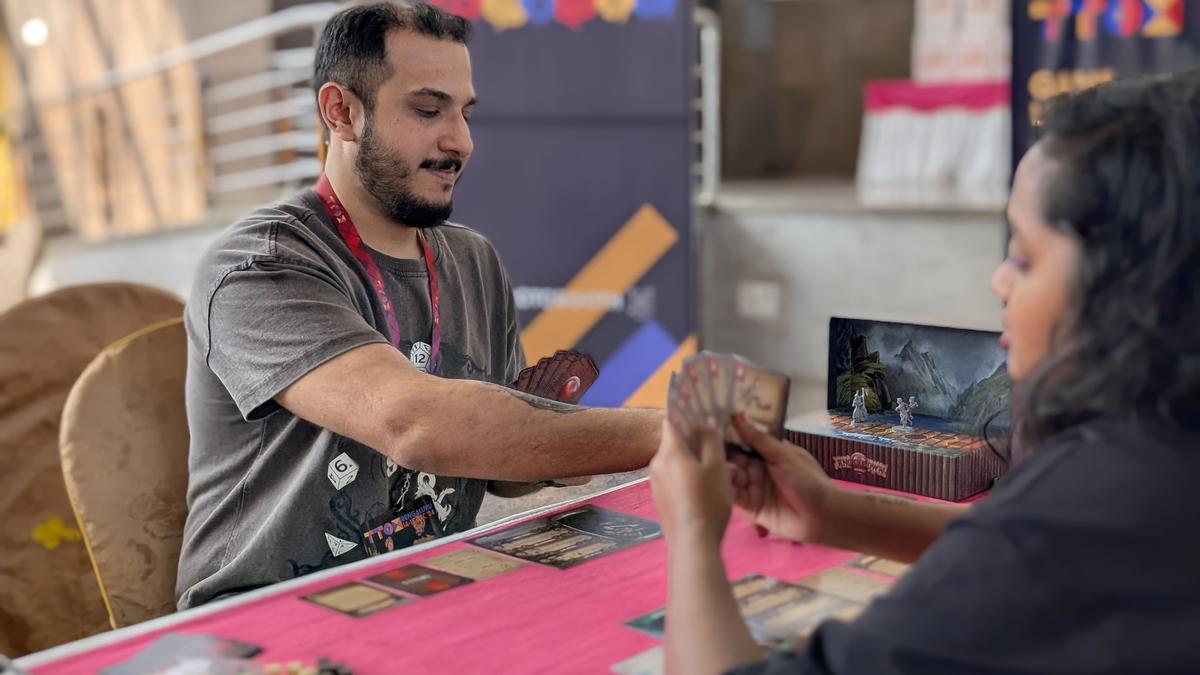
This proliferation can be literally charted to the length and breadth of the country. Phalgun Polepalli of Bengaluru-based Mozaic Games, and one of the key organisers of the annual board game convention called TTOX in Indian cities, draws up a map through a list of these games. “If you come down a little from Ladakh, there is a game set on the Taj Mahal in Agra and if you come further down, there are games based on Jaipur, while Gujarat has a kite-flying game; there is a game based on the Sunderbans in the East, and when you look at the peninsula, there are games coming out of Chennai, based on its food culture, or a game on Athangudi tiles. In Karnataka, there are many creators who are bringing out games based on Hampi.”
Clearly, this is just the tip of the iceberg.
In order to design a board game that reflects the ethos of a specific place, a major pillar of research depends on capturing the city’s nuances — from Bengaluru’s 4am biryani to Mumbai’s local transport or Chennai’s beaches.


South African naturalist Steve Boyes speaks on ghost elephants, ancestral tracking, and Werner Herzog’s documentary exploring Angola’s elusive highland giants

Actor-director Amol Palekar will receive META's Lifetime Achievement award for 2026 on March 25 in New Delhi.

India's artists unite against rising censorship, advocating for creative freedom and support for marginalized voices in the arts.

Written and directed by Kunal, the film also stars Sparsh Shrivastava and Vanshika Dhir

This year, Bharatnatyam artistes will present the Tyagaraja Aradhane as a dance performance

This year, Bharatnatyam artistes will present the Tyagaraja Aradhane as a dance performance

The actor, along with director Sushant Shah, speak about their upcoming series ‘Chiraiya’, Divya’s process of working on the dialect, Sushant’s approach to telling a story about women, and more

An independent video, ‘Feel the Spark’ by Raleigh Rajan with vocals by Ciera Dumas that celebrates Tamil literary giants, garnered 1.4 million views in less than 36 hours.

In ‘Jack Ryan: Ghost War’, John Krasinski is back as the savvy CIA analyst, diving headfirst into a high-stakes mission that unravels a deadly conspiracy and pits him against a rogue black-ops unit

Shriram Bharatiya Kala Kendra’s Shankarlal festival showcased rare ragas, radiant artistry, and inclusive performances, from Pt Madhup Mudgal’s serene morning ragas to Ramana Balachandran’s Saraswati veena.

Explore "Threads that Bind: The Kantha Project," an exhibition in Delhi reimagining kantha as a medium of repair and renewal.

Sean Penn skips the Oscars to meet Ukraine's Zelenskyy, who praises him as a "true friend" amid the war.

The teaser of Tamil star Suriya’s much-awaited film with director Venky Atluri, titled Vishwanath and Sons, was unveiled by the makers on Monday