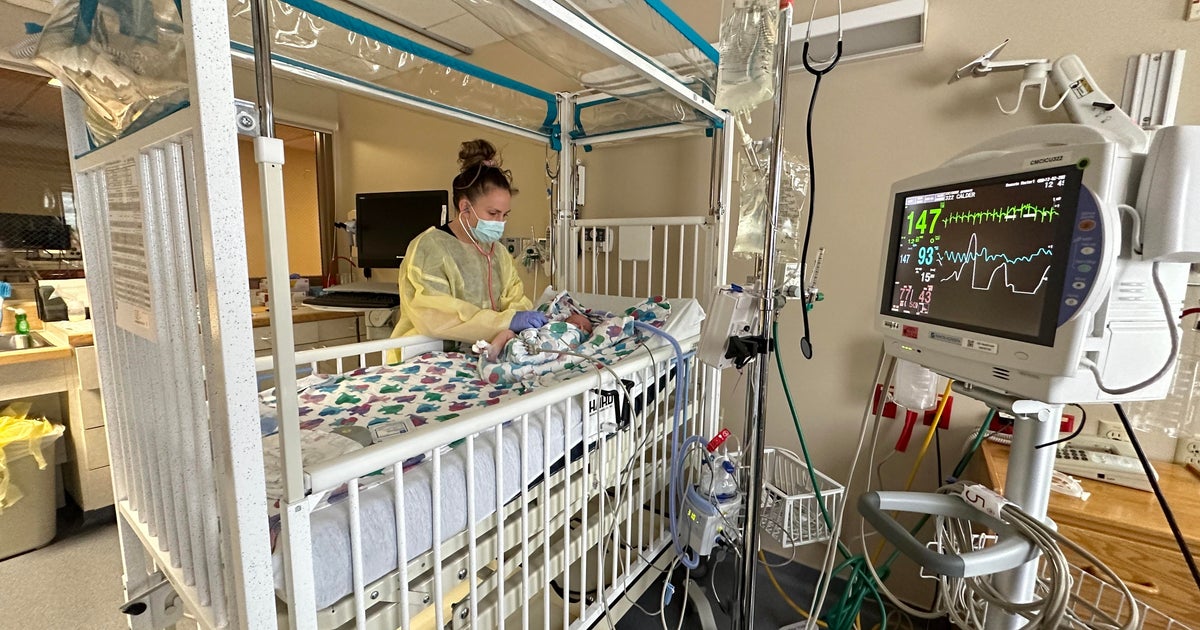
Hospital financial decisions play a role in the critical shortage of pediatric beds for RSV patients: "It really has to do with dollars"
CBSN
The dire shortage of pediatric hospital beds plaguing the nation this fall is a byproduct of financial decisions made by hospitals over the past decade, as they shuttered children's wards, which often operate in the red, and expanded the number of beds available for more profitable endeavors like joint replacements and cancer care.
To cope with the flood of young patients sickened by a sweeping convergence of nasty bugs — especially respiratory syncytial virus, influenza, and coronavirus — medical centers nationwide have deployed triage tents, delayed elective surgeries, and transferred critically ill children out of state.
A major factor in the bed shortage is a years-long trend among hospitals of eliminating pediatric units, which tend to be less profitable than adult units, said Mark Wietecha, CEO of the Children's Hospital Association. Hospitals optimize revenue by striving to keep their beds 100% full — and filled with patients whose conditions command generous insurance reimbursements.


The White House has rejected an offer from billionaire Elon Musk to fund pay TSA workers during a partial government shutdown that has disrupted airport travelers across the country, several sources told CBS News. Kristin Brown and Kathryn Krupnik contributed to this report. In:

Washington — The Justice Department has reached a settlement with former Trump national security official and right-wing activist Michael Flynn after he sued the department, alleging that he was wrongly prosecuted during the first Trump administration. In:

The Trump administration will temporarily lift summer gasoline regulations as prices at the pump near $4 a gallon amid the Iran war. Edited by Aimee Picchi In:

Some of America's wealthiest couples are collecting $100,000 in Social Security benefits — a six-figure payout that a new proposal says should be capped to help the retirement program avoid insolvency in 2032. Edited by Alain Sherter In:

El Paso and Los Angeles were among the most polluted areas in the United States last year, according to a new air quality report that evaluated pollution levels around the world in 2025. In:

Washington — For the first time in history, a robot, not a person, escorted the first lady of the United States Wednesday at the White House.

A jury on Wednesday found that Meta and YouTube are liable for creating products that led to harmful and addictive behavior by young users, a landmark decision that could set a legal precedent for similar allegations brought against social media companies. Edited by Alain Sherter and Aimee Picchi In:

"Today" show co-host Savannah Guthrie said her family is in agony as she made a tearful plea for someone "to do the right thing" nearly two months after her mother Nancy Guthrie disappeared from her Arizona home. In:

Washington — The Supreme Court on Wednesday ruled that internet service provider Cox Communications cannot be held liable for copyright infringement by its subscribers in a closely watched dispute over pirated music.

Joey Amor says his wife, Army Sgt. 1st Class Nicole Amor, was "the rock" and "the glue" for those around her — a role he says defined her life and service before she was killed earlier this month during the war with Iran. In:

An internal watchdog report in the Department of Homeland Security identified serious vulnerabilities in TSA's screenings at airports nationwide — and the agency has yet to respond five months later, according to internal communications provided to House Homeland Security Committee staff and reviewed by CBS News.

Two orphaned bear cubs are settling in at a California animal welfare center after their mother was euthanized for attacking people, the San Diego Humane Society said Tuesday. In:

Travelers at a Houston airport voiced shock and disbelief over seemingly endless TSA security lines caused by a severe staffing shortage. In: