El Paso, Los Angeles among the most polluted cities in the U.S. in 2025, new report says
CBSN
El Paso and Los Angeles were among the most polluted areas in the United States last year, according to a new air quality report that evaluated pollution levels around the world in 2025. In:
El Paso and Los Angeles were among the most polluted areas in the United States last year, according to a new air quality report that evaluated pollution levels around the world in 2025.
The report is the latest iteration of a global analysis that the Swiss technology company IQAir publishes annually. This one centered on some of the causes of declining air quality worldwide, including wildfires, which the report's authors cited as a leading driver of the downward trend.
Fires played a sizable role in U.S. pollution levels, according to the report. It found that air quality worsened overall for the country, with average pollutant levels increasing by 3% between 2024 and 2025. Air pollution in a particular location was measured as the concentration of pollutant per cubic meter of air in that location, where the pollutant is calculated in micrograms, on average for the year.
That's based on an air quality standard set by the World Health Organization that recommends limiting exposure to air that exceeds 5 micrograms of pollutant per cubic meter. By the end of 2025, the average concentration of U.S. air pollutants had reached 7.3 on that scale.
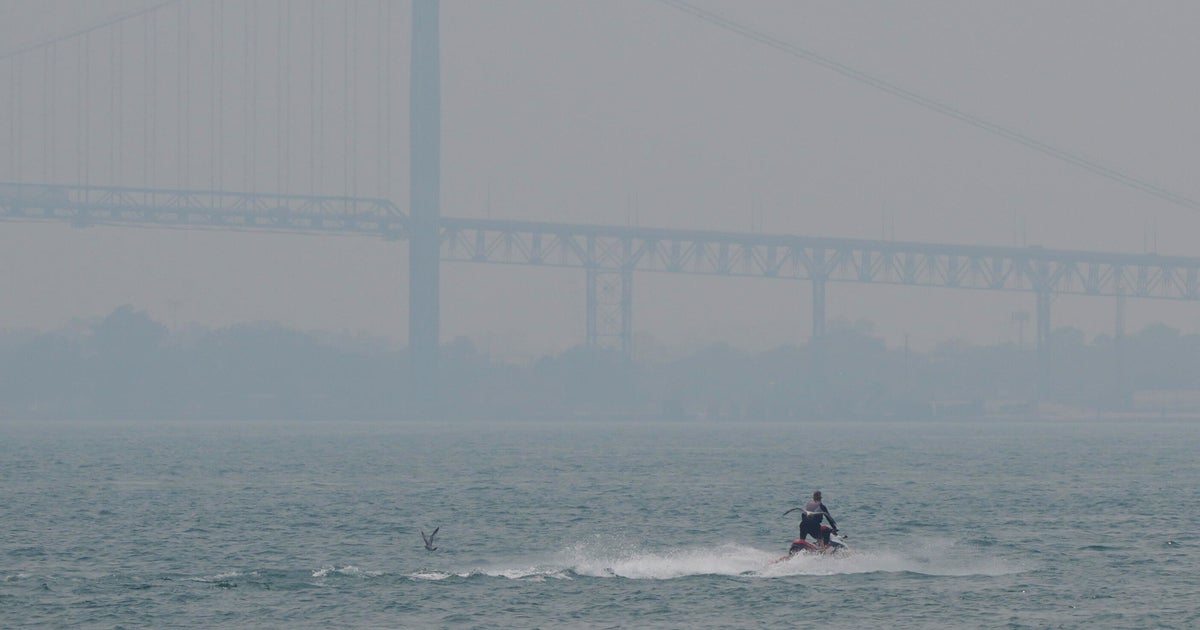
Air pollution levels varied by region and even by state, sometimes significantly, the report showed. In Texas, concentrations of pollutants dropped by 9% on average in some major cities, like Austin, Fort Worth and Houston, while skyrocketing in others, like El Paso. Historic dust storms that blanketed the area last spring sent pollution levels soaring, according to the report, which said those storms triggered a 46% increase.


Paul Kovacich, a K-9 commander serving life for his wife's 1982 murder, has a mixed message for the California parole board ahead of his first chance of freedom: He doesn't want an early release — and he didn't kill his beloved German shepherd. In:

A California court denied the state attorney general's appeal to halt the Riverside County Sheriff's election fraud investigation on Tuesday. In:

The Justice Department's investigation of a $2.5 billion renovation project at the Federal Reserve didn't find any evidence of a crime, a federal prosecutor privately conceded under questioning by a skeptical judge earlier this month, according to a transcript of the sealed hearing. In:

Early this week, Senate Republicans and the president appeared to be edging closer to a framework to ending the Department of Homeland Security shutdown, which is now in its second month — but a breakthrough has remained out of reach.

Democrat Emily Gregory won a special election for a Florida state House seat on Tuesday, The Associated Press has projected, flipping a district that is home to President Trump's estate, Mar-a-Lago. In:

The two Canadian pilots who died in Sunday's runway collision at LaGuardia Airport in New York were young, ambitious men at the start of their careers who each had pursued their yearslong dream of flying. In:

A judge sharply questioned a lawyer for the federal government on Tuesday over the Pentagon's efforts to cut Anthropic out of its classified systems — the latest development in a dispute between the company and the Trump administration over AI guardrails. In:

Washington — The Senate on Tuesday rejected the latest Democratic-led effort to rein in President Trump on Iran as the U.S. and Tehran send conflicting messages about how the war might end.

FedEx said Tuesday that it will offer same-day delivery in partnership with logistics company OneRail, with the announcement following a recent move by Amazon to offer expedited deliveries across the U.S. Edited by Alain Sherter In:

OpenAI said Tuesday that it is discontinuing its Sora AI video app. Edited by Alain Sherter In:

The Pentagon is expected to send parts of the 82nd Airborne division to the Middle East as the Iran war extends into its fourth week, according to two sources. In:

Financial markets experts are raising concerns about possible insider trading after an unusual spike in oil futures trading only minutes before President Trump announced talks with Iran on Truth Social. Edited by Alain Sherter In:

NASA announced ambitious long-range plans Tuesday to spend $20 billion over the next seven years to build a moon base near the lunar south pole featuring habitats, pressurized rovers and nuclear power systems. The announcement came just over a week before the planned launch of NASA's Artemis II around-the-moon mission. In: