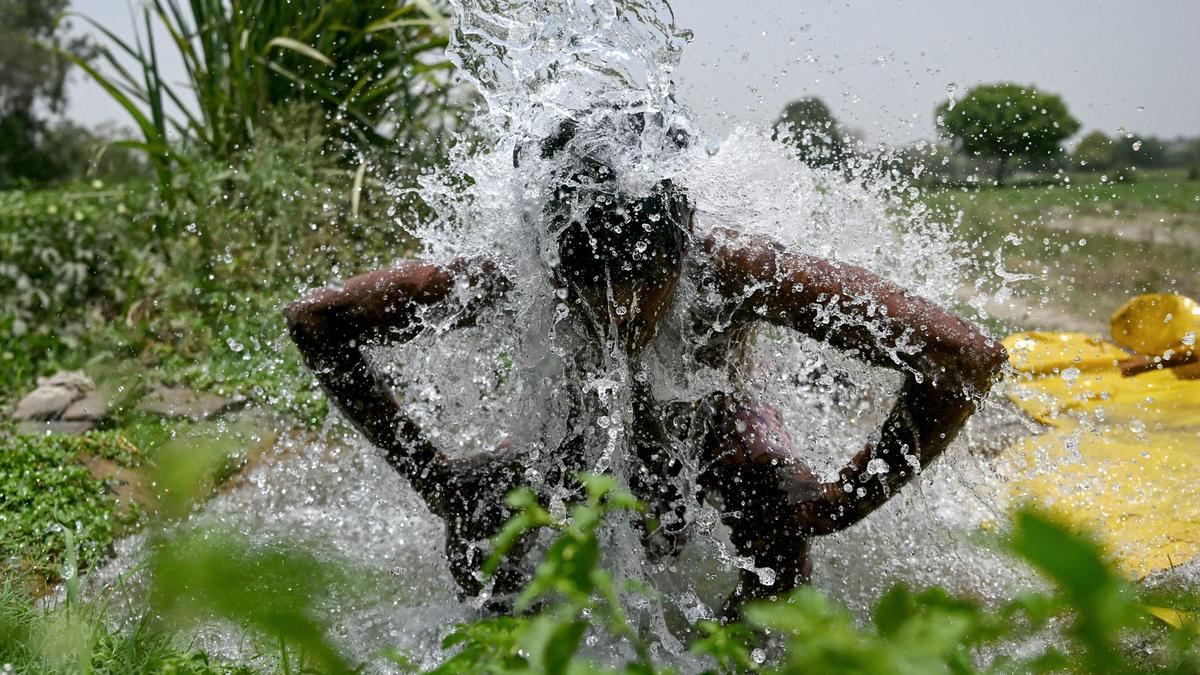
Heatwave observed in May 1.5°C warmer than previous ones: ClimaMeter
The Hindu
An analysis by ClimaMeter has revealed that the heatwave in May was 1.5°C warmer than the warmest heatwaves previously observed in the country.
An analysis by ClimaMeter has revealed that the heatwave in May was 1.5°C warmer than the warmest heatwaves previously observed in the country.
It said that from May 26 to 29, large parts of northern and central India suffered a severe heatwave, with a provisional record temperature of 49.1°C registered in New Delhi. Besides, over 37 cities in the country recorded temperatures over 45°C.
To analyse what led to this extreme meteorological event, scientists at ClimaMeter conducted a rapid analysis, using a methodology based on historical meteorological information from the last 40 years.
They analysed how events similar to the high temperature in India’s May heatwave changed in the present (2001–2023), compared to what they would have looked like if they had occurred in the past (1979–2001) in the region.
“Surface pressure changes show that similar events do not display significant changes in the present climate than what they would have been in the past. The temperature changes show that similar events produce temperatures in the present climate at least 1.5 °C warmer than what they would have been in the past, over a large area of the region analysed,” the analysis stated.
The analysis which is part of ClimaMeter, a research project funded by the European Union and the French National Centre for Scientific Research (CNRS), said that it interprets India’s May heatwave as a largely unique event whose characteristics can mostly be ascribed to human-driven climate change.
“ClimaMeter’s findings underscore that heatwaves in India are reaching unbearable temperature thresholds because of the burning of fossil fuel. There are no technological solutions for Indian metropoles to adopt for temperatures approaching 50°C. We should all act now to reduce CO2 emissions and avoid exceeding vital temperature thresholds in large areas of the subtropics,” said Davide Faranda, CNRS.


Belagavi ZP CEO emphasizes innovative marketing for farmers and artisans, collaborating with Exim Bank to boost exports and opportunities.

Mizoram's civic body election heats up as parties finalize candidates and campaign strategies ahead of the April 21 polls.

Congress nominates Umesh Meti and Samarth Mallikarjun for Karnataka bypolls, keeping candidacies within influential families.

South Africa wins the toss and opts to bat in the fourth T20 match against New Zealand in Wellington.

High in the Nilgiris, a quiet ecological revival is underway. Once lost to plantations and invasive species, native grasslands and shola forests are slowly returning—bringing back wildlife, improving water security, and strengthening climate resilience. Driven by civil society groups, conservationists, and indigenous communities, this restoration story offers hope at a time when fragile ecosystems across India face growing threats.

Blasts and sirens sounded in Jerusalem as Israel warned of incoming Iranian missile threats amid escalating tensions.

275 former judges and officials criticize USCIRF's report on religious freedom, calling it biased and lacking credible evidence.

Jharkhand Police request Indian Army's help to safely defuse an active WWII-era bomb found near Subarnarekha river.

Tamil Nadu Assembly election: VCK under compulsion to consider local candidates, says Thirumavalavan
VCK leader Thirumavalavan emphasizes the need for local candidates amid concerns over past electoral losses due to outsiders.

Explore Tamil Nadu's upcoming four-cornered election contest, featuring key players DMK, AIADMK, TVK, and Naam Tamizhar Katchi.

I and EPS were appointed CMs, Stalin elected by people, says O. Panneerselvam

The ₹88.41 crore AMRUT scheme aims to eliminate Kavali's water scarcity, transforming the town’s infrastructure and services.

A 4.1 magnitude earthquake struck Sikkim's Mangan district; no casualties or property damage reported.