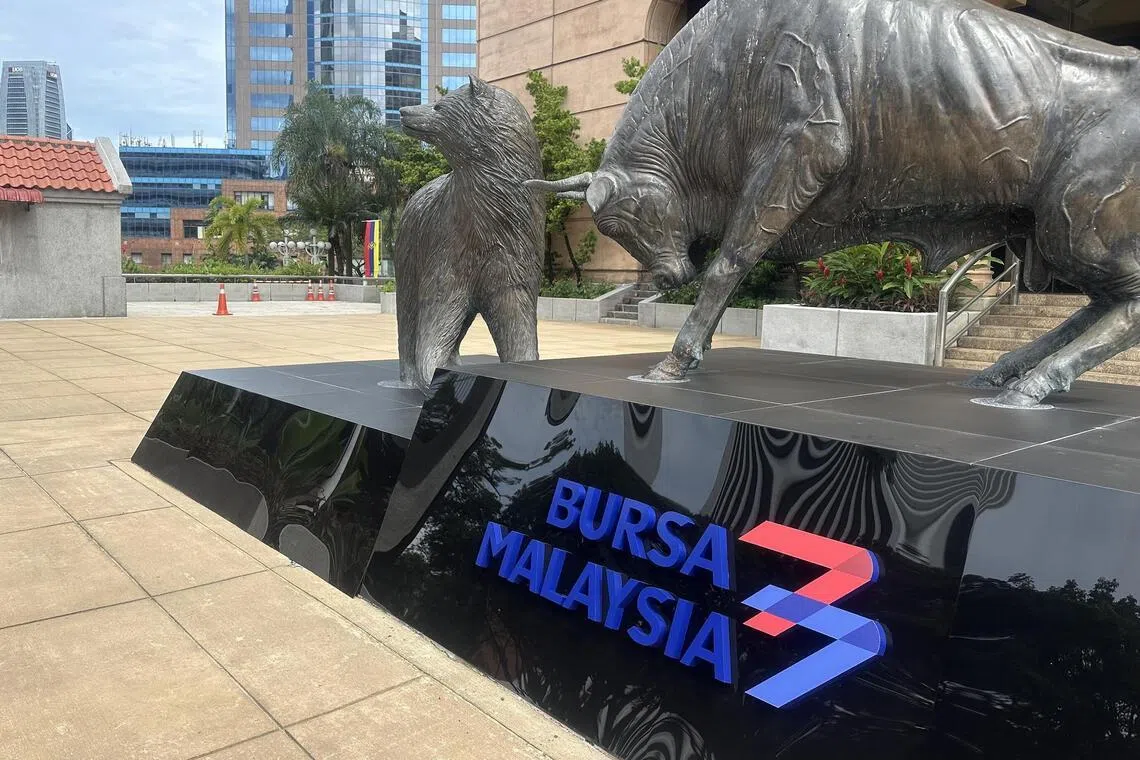
Global funds look to Malaysia as Iran war shakes up Asian assets
The Straits Times
Its stock benchmark has beaten regional peers in March as the war in Iran upended markets globally. Read more at straitstimes.com.
KUALA LUMPUR – Even before the war in Iran sparked a surge in energy prices, Malaysia stood out from its South-east Asian peers as the newfound darling of global investors.
A rare stretch of political stability and investments in higher-value manufacturing and data centres lifted the country’s appeal as some of its neighbours grappled with leadership changes and fiscal strains. The conflict in the Middle East further burnished the country’s advantage as investors looked for markets better placed to weather volatility.
The country’s stock benchmark has beaten regional peers in March as the war in Iran upended markets globally, helped by its status as one of Asia’s few net energy exporters. Foreign outflows from local equities have been relatively muted in March despite heavy selling in most other emerging Asian markets. The ringgit has maintained this year’s gains against the US dollar, outperforming peers.
“It’s where you go when things are going badly elsewhere,” said Mr Alexander Redman, chief equity strategist at CLSA in Singapore, who upgraded the market to neutral from underweight for as long as the war in Iran persists. “Malaysia’s in a relatively good position because it runs a current account surplus, is a net exporter of oil and gas, and the proportion of energy in Malaysia’s CPI basket is not as high as others.”
The rally in crude oil prices spurred by the Middle East conflict could potentially boost revenues for Malaysia, which has offshore oil and gas resources in the Borneo states and Terengganu, even as other countries struggle with the rising cost of energy. Petroleum-related income is projected to account for 12.5 per cent of government revenue in 2026.
That’s helped the country avoid the heavy outflows seen in other markets. Global funds sold about US$80 million (S$102 million) of local shares on a net basis so far this month through March 13, while the FTSE Bursa Malaysia KLCI Index has lost only 1.2 per cent. Foreign stock flows remained positive this quarter.


The Dow Jones Industrial Average fell 119.38 points, or 0.26 per cent, to 46,558.47. Read more at straitstimes.com.

Singapore shares declined as elevated crude prices and Middle East tensions unsettled investors. STI down 0.3%. Read more at straitstimes.com.

Company has invested roughly $3 billion in Singapore to date. Read more at straitstimes.com.

The new game accrued 2.2 million sales in its first four days and earned rave reviews from fans online. Read more at straitstimes.com.

Explore how AI could lead to 'creative destruction' for some companies, disrupting industries and impacting jobs. Read more at straitstimes.com.

Oil-driven shocks significantly affect the yen given Japan’s reliance on imported energy. Read more at straitstimes.com.

Singapore blue-chip stocks decline as Brent crude price movements hold equities to ransom. Read more at straitstimes.com.

Bank had previously projected the rate cuts to begin in June. Read more at straitstimes.com.

It is the first 2026 mainboard listing, and follows a strong offering pipeline in 2025. Read more at straitstimes.com.

Force majeure notices signal a worsening LNG supply crunch for Asia, including Singapore, potentially requiring stabilisation measures. Read more at straitstimes.com.

China is the world’s biggest oil importer and a major fuel exporter. Read more at straitstimes.com.

The global race to build AI infrastructure is fuelling an unprecedented boom in data centres. Read more at straitstimes.com.

A sale might value HSBC Life Singapore at more than US$1 billion, sources said. Read more at straitstimes.com.