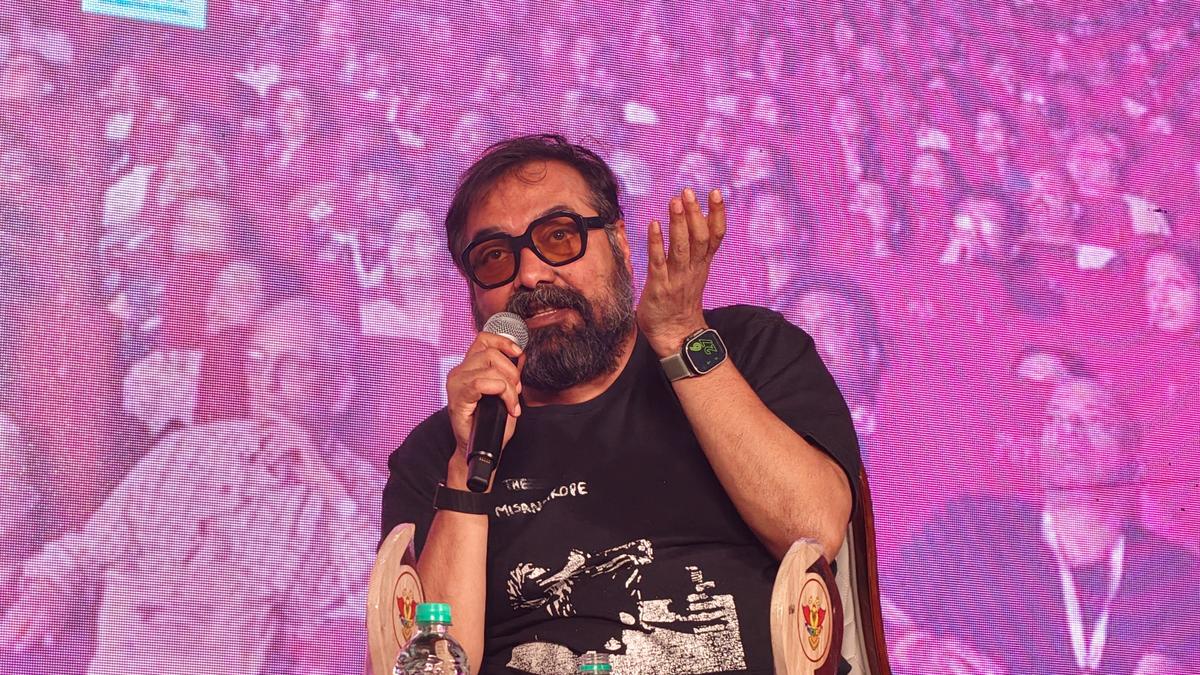
Gangs of Wasseypur or Mukkabaaz would not have been made today: Anurag Kashyap at BIFFes
The Hindu
Anurag Kashyap discusses filmmaking challenges and censorship at BIFFes, reflecting on cinema's evolving landscape and societal issues.
For filmmaker Anurag Kashyap, the biggest fear is not being able to make the kind of cinema he wants to make. He believes he can not make Gangs of Wasseypur or Gulaal or Mukkabaaz today, and even if he does, they would come under the sword of censorship.
Speaking at the 17th Bangalore International Film Festival, 2026, during the session “Fearless Filmmaking” on Saturday (January 31, 2026), Anurag said, “Gangs of Wasseypur or Mukkabaaz would not have been made today because of the themes I chose to tell the story with. And, if they were released, they would have been heavily censored.”
Anurag, known for his iconic films like Gangs of Wasseypur and Dev.D, said that many honest filmmakers are trying to find a way out of the censorship battle. “India is still better, it gives me hope. If filmmakers can make cinema in Russia and China, we also can,” he said in conversation with critic and writer Baradwaj Rangan. “Movies which engender important conversations will be made in India, at some point. We just need to wait,” he added.
Films have always been made for big screen, but owing to OTT platforms and convenience, people choose to watch it on smaller devices like phones and laptops, he said. “When I made Nishaanchi, I envisioned it in such a way that it should be made and watched on the big screen. But, times are changing now. People watch films at their convenience. The format has destroyed the way people watch cinema,” he said.
“The joy of cinema is watching it on big screen. You can’t watch Mera Naam Joker or Sholay on a phone. These films are made for the theatre experience, and it’s a disgrace if they are watched otherwise,” said Anurag.
Calling himself an OTT filmmaker even before OTT platforms came about, he said, “People download my films on Torrents. I’m used to my films becoming popular four years after they released”.


Spring season celebrated at Ramakrishna Mission Institute, Kolkata, with ‘Evening of Basant’

The Spirit of the Land, a solo show by artist Shivakumar Sunagar, is a vista of Nature-inspired emotions

Tal Fry is all set for an exciting new performance season

Netflix is making a bold move by snagging InterPositive, the AI filmmaking company founded by Ben Affleck, in a deal that could hit $600 million

Watch the eerie trailer for 'Hokum,' where Adam Scott faces a witch haunting in a mysterious Irish inn.

Oscars 2026 security heightened amid FBI warnings of a potential Iranian drone threat ahead of the Hollywood ceremony.

Directed by Rahul Pandey, the series also stars Naila Grewal, Nidhi Bisht, Anant Joshi, Anjum Batra and Kusha Kapila

A tribute to the versatile actor and comedian V.K. Ramasamy in his birth centenary year.

‘One Piece’ Season 2 review: As the Straw Hats enter the Grand Line, Netflix’s live-action adaptation finds its sea legs with bigger islands, stranger villains and the same stretch-happy sense of boundless adventure

Geeta Gandbhir, the Indian-origin American filmmaker is waves at this year’s Oscars with not one, but two nominations. Her documentaries, ‘The Perfect Neighbor’ and ‘The Devil is Busy’ are in the race for the Academy Award

Directed by filmmaker and environmentalist Pradip Krishen, the film follows a group of "dope-smoking, bellbottom-wearing and vaguely idealistic" final-year students racing to complete their theses.

Alan Ritchson powers through 'War Machine', a lean sci-fi action thriller on Netflix. A competent, Reacher-style chase adventure with nonstop tension and solid set pieces

Explore the Unshelving Memories exhibition in Thiruvananthapuram, showcasing diverse book art by 61 talented artists until March 15.