Five takeaways from the Bangladesh election
The Hindu
Explore five key takeaways from Bangladesh's election, highlighting political shifts, challenges, and implications for India-Bangladesh relations.
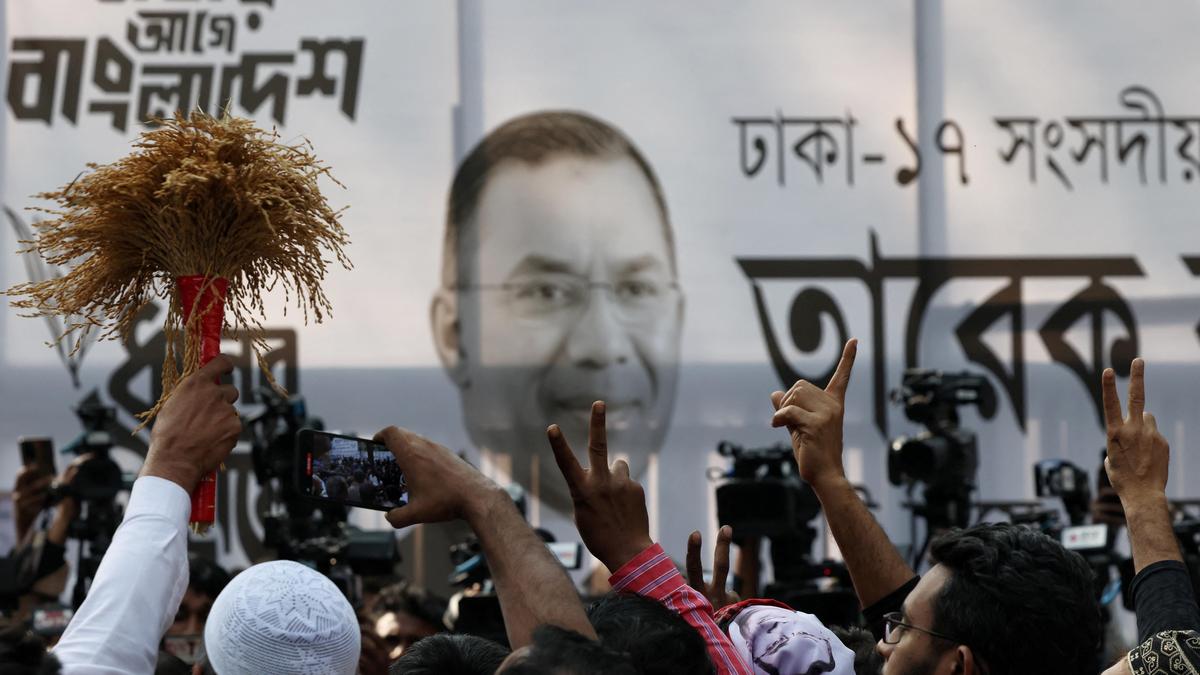
Bangladesh voters, who cast their ballots on February 12 in the first national election since the fall of Sheikh Hasina’s government in August 2024, have delivered a decisive mandate to the Bangladesh Nationalist Party (BNP) and also endorsed the July National Charter in a referendum to amend the Constitution. A BNP-led alliance has won 216 seats in the 300-member Parliament, while an 11-party coalition led by the Islamist Jamaat-e-Islami has secured 76 seats, with final results still pending. Tarique Rahman, the 60-year-old BNP chairman, is expected to become the next Prime Minister. The outcome could significantly reshape Bangladesh’s political trajectory in the years ahead. Here are five takeaways from the vote.
Bangladesh election results: Follow the updates from February 13, 2026
Change and continuity
After Ms. Hasina’s fall in August 2024, Bangladesh entered a phase of uncertainty. The Awami League, Ms. Hasina’s party, and its student wing were banned. Most of the party leaders either fled the country or went underground. There were repeated incidents of violence targeting minorities and Awami League supporters, while clashes between BNP and Jamaat supporters became increasingly frequent. The key challenge before the interim administration was to steer the country through this turbulence towards an orderly political transition.
With nearly 60% turnout in the February 12 election, the electorate has sent a clear message: it wants a stable democratic government. The strong approval of the July National Charter reflects a genuine appetite for structural reform, including judicial independence, a two-term limit for Prime Ministers, a bicameral legislature, stronger representation for women and youth. Yet, when it came to choosing who should carry out this agenda, voters turned to the BNP — an establishment party with deep roots in the old order. While Bangladeshis seek change, they prefer it to be delivered by familiar political hands, rather than old Islamist guards or untested revolutionary forces.
Also Read | Elections in Bangladesh: looking towards the future | Explained


Shooting at South Carolina State University kills two and wounds one, prompting a campus lockdown and class cancellations.

Yuko Yamaguchi, designer of Hello Kitty for 40 years, steps down as new talent takes the reins of the iconic character.

Tarique Rahman celebrates a historic election victory, poised to reshape Bangladesh's political landscape amid challenges from rivals and alliances.

UNSC report links Pakistan-based Jaish-e-Mohammed to Red Fort attack that killed 15, highlighting ongoing terrorism concerns.

EU leaders unite to enhance economic competitiveness against global pressures from Trump, China, and Russia through coordinated restructuring measures.

U.S. and Taiwan finalize a trade deal to reduce tariffs and increase purchases of American goods, enhancing economic ties.

Netanyahu seeks to revoke Israeli nationality from Palestinian citizens convicted of violent crimes, raising legal and ethical concerns.

Angela Merkel will deliver the inaugural Dr. Manmohan Singh Memorial Lecture on February 26, focusing on Germany-India relations.

U.S. diplomat Paul Kapur emphasizes the Quad's importance for strategic cooperation and defense in South Asia during a congressional hearing.

Polling for Bangladesh's parliamentary election and constitutional referendum concluded, with early results expected by February 13, 2026.

U.S. Judge denies BBC's stay request in Trump's defamation case, citing premature application and lack of demonstrated prejudice.

Roman Gautam critiques India's 'Neighbourhood First' policy, highlighting its failures amid rising political tensions in Bangladesh and Nepal.

Test your knowledge of Abraham Lincoln's life with our daily quiz celebrating his 217th birthday!