Faith and the Middle East: How religion could fuel a wider war
USA TODAY
The killing of Iran's supreme leader and ensuing Middle East instability could revive sectarian clashes and see religion emerge as a mobilizing tool.
With their Feb. 28 strikes on Iran, the United States and Israel have stoked Middle East conflict as part of a campaign that President Donald Trump said could last weeks or longer, aiming to cut short what he called imminent nuclear threats from Iran and cripple its military programs.
But the killing of Ayatollah Ali Khamenei, Iran’s supreme leader, in addition to ongoing instability, threatens to trigger a chaotic and drawn-out war involving Iranian and U.S. allies in the region and bring religious rhetoric and sectarian differences into play.
While not a religious conflict at its core, a widening regional war could see religion emerge as a galvanizing tool, said Nader Hashemi, director of the Alwaleed Center for Muslim-Christian Understanding at Georgetown University in Washington, D.C.
“Religion is not the driver of conflict in the Middle East,” said Hashemi, an associate professor of Middle East and Islamic politics at the school. “It’s the vehicle that is used to mobilize people in defense of political ideologies and causes.”
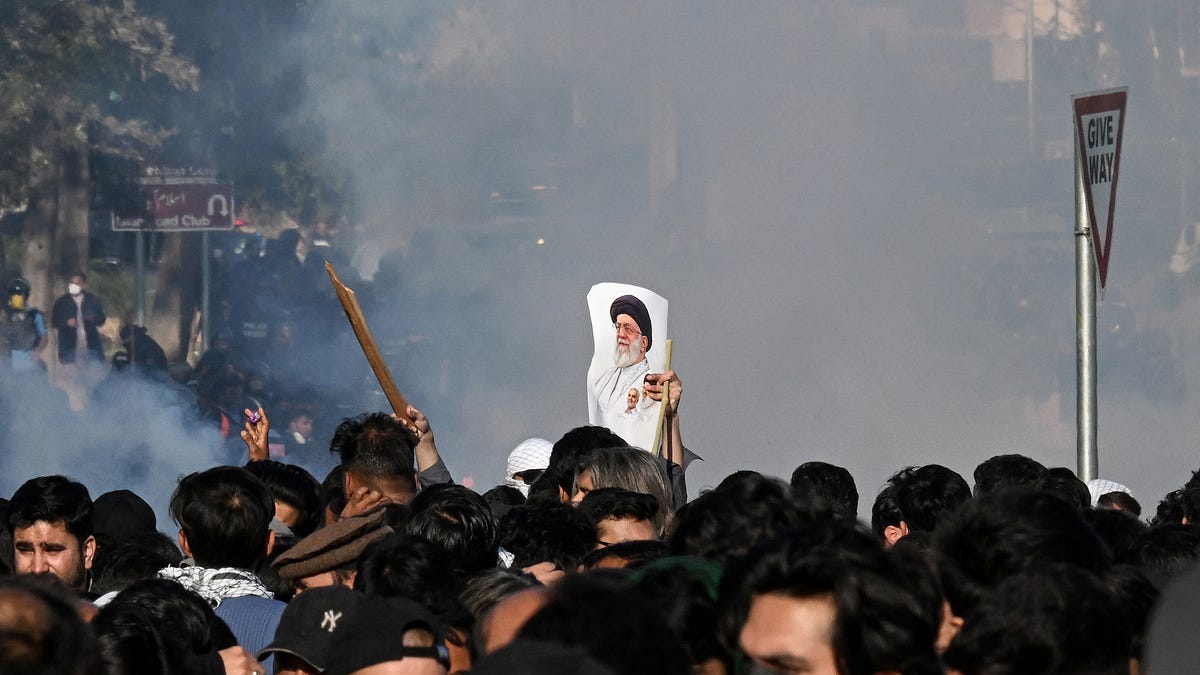
Hashemi said Khamenei’s killing has already stoked instability in many Muslim countries: Nearly two dozen protesters were killed in Pakistan, while demonstrations continue in Iraq, Bahrain, India and Lebanon.


Monica Goods, an 11-year-old girl, was killed after her family's car was rammed while being pursued by the state trooper.

A 5-year-old in Colorado was killed in his home, and authorities suspect his older brother of the crime.

Ayman Mohamad Ghazali, of Dearborn Heights, was identified as the suspect who on March 12 rammed his truck into Temple Israel in West Bloomfield.

Clergy and staff members at the temple had just undergone FBI-led active-shooter training in January, according to the bureau's Detroit field office.

Gerry Goldberg's wife Andie was killed at a the intersection in 2024. He advocated to make it safer, but was killed there in a March 2 crash.

As TSA officers work without pay amid a partial government shutdown, security experts say the threat of terror linked to the Iran war has risen.

The murder of Denise Amber Lee in Florida exposed the vulnerabilities of the 911 system nationwide and led to reform within the industry.

Ayman Ghazali made the purchase at Phantom Fireworks in Michigan in the early afternoon on March 10, a company executive told the Detroit Free Press.

Local prosecutors confirmed to USA TODAY charges were dropped without elaborating on what prompted the change.

A brief clip of a DoorDasher dropping off a food delivery led to over a half a million dollars in donations. See what happened.

A cargo resupply spacecraft is on its way back to Earth from the International Space Station, where it will make a fiery reentry Saturday, March 14.

Authorities are still investigating what led to the shooting that left an instructor dead and two students wounded. Here's what we know so far.

Relatives of the attacker who rammed his truck into a synagogue outside Detroit were killed in an Israeli airstrike in Lebanon, a local official said.