Experts warn snowpack lower than last year in parts of Alberta
CBC
For Stephen Vandervalk, monitoring snowpack in the mountains is an important way to gauge how his farm operation near Fort Macleod, Alta., might fare the rest of the year.
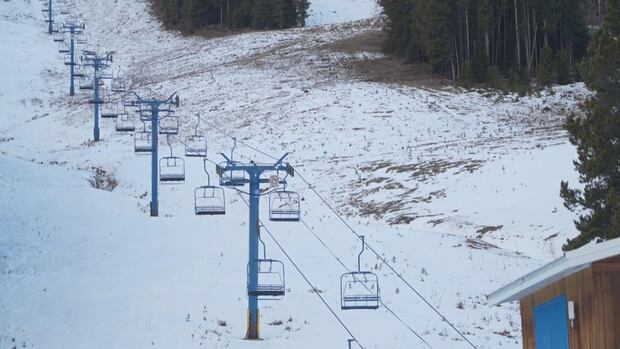
He watches reports from Castle Mountain Resort to see how much snow has accumulated on the mountain. The snowpack there is about 25 to 30 per cent down from the usual average for the first week of March, according to the resort.
"That's one of the main feeding sources for our dam [which irrigates the crops], and yeah, it's significantly down," he said. "It's not looking very promising."
The province's early data shows lower than normal snowpack levels in the Eastern Slopes.
Tricia Stadnyk, Canada Research Chair in Hydrologic Modelling and professor at the University of Calgary's Schulich School of Engineering, said numerous regions are seeing lower snowpack levels than this time last year.
While the province's drought map indicates most regions are experiencing Stage 1 drought conditions, Stadnyk said she believes the current data on snowpack levels point to worse drought conditions that should be a cause for concern
"People last year at this time were very concerned about drought. We were going into unprecedented negotiations around water," she said. "[We were] at Stage 4 drought scenario with the province and this year we're not. But we're actually lower in snowpack [in certain regions] than we were at this time last year."
Stage 1 drought conditions mean "monitor and observe," while Stage 4 indicates "significant drought conditions in multiple water management areas."
John Pomeroy, the Canada Research Chair in Water Resources and Climate Change, said the mountain snowpack is "short hundreds of millimetres of water" from where it's expected to be this time of year.
WATCH | Low snowpack has some lamenting subpar ski season:
"It's not impossible that we're heading into one of the worst mountain droughts of this century," said the professor from the University of Saskatchewan.
"We were very prepared for a drought in stream flows last year and we haven't had those discussions this year, and this year is looking far worse than last year."
According to the Alberta Rivers website, 33 water basins are currently flagged with water shortage advisories.
Ryan Fournier, press secretary to the Minister of Environment and Protected Areas, told CBC News in an emailed statement that it's still early in the year with more precipitation to come. He added there are also positive signs in other areas of the province.


Winter can be tough to bear. Even more so if you’re homeless.

Two future national First Nations leaders, a deputy premier and a city councillor are among the prominent Manitobans who appear in declassified intelligence files from years of RCMP spying on the Indigenous rights movement in the Cold War era.

Saskatoon city hall administration is planning to "refresh" the funding strategy for the proposed $1.2-billion downtown arena district amid a lack of commitments from higher levels of government.

A report of fraud tied to a walleye derby is under investigation after Montreal Lake Cree Nation said a participant allegedly violated derby rules and was asked to leave the fishing area.

An Edmonton architectural firm says it is in talks with the provincial government to potentially redevelop the former Royal Alberta Museum.

Does junior football have a future in Prince George?

People are descending upon the city for the dozens of events and live music performances this week as the Juno Awards are set to take place Sunday at Hamilton's TD Coliseum.

For nearly two decades, Amanda Loewen's world ended where the pavement did.

The notion that home ownership guarantees financial security in old age is being challenged by a recent survey.

The family of Nash Prystie has identified him as the man who died in an Ontario Provincial Police (OPP) shooting earlier this month north of Kenora, and is calling for more and quicker help for people with mental health challenges.

Playoff action in the Ontario Hockey League gets underway Thursday night for Guelph and Friday in Kitchener.

UPEI wants its faculty to sign on to an updated version of its sexual assault and discrimination policy, but the union that represents the school's academic staff says it wants the policies to be part of its collective agreement.

In Texas this week for a global energy conference, the federal natural resources minister is proclaiming "Canada is back" and ready to bolster its energy sector and grow exports.