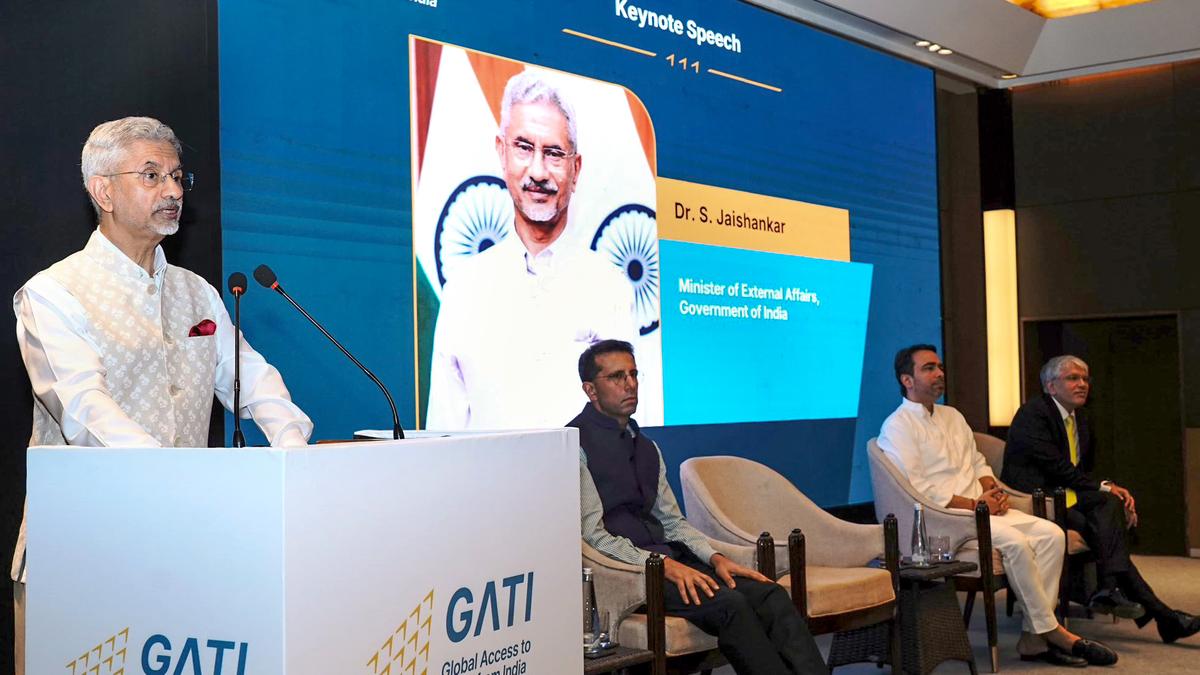
Emigration Act 1983 designed to address demands of particular geography in a certain era, says External Affairs Minister
The Hindu
Government studying Emigration Act, 1983 to adapt to modern needs, promote legal mobility for Indian emigrants globally.
The Government is conducting a study regarding the Emigration Act, 1983, in order to adapt it to the 21st-century realities and risks that Indian emigrants face in international mobility. Speaking at an event on Tuesday (May 6, 2025), External Affairs Minister S. Jaishankar argued in support of Indians reaching out to other economies and taking up employment that suits their skill and talent sets and said the Government is trying to promote “legal mobility” and will “strongly discourage” non-legal routes of international mobility.
“Currently, mobility is largely regulated by the Emigration Act 1983, which was designed to address the demands of a particular geography in a certain era. However, times have changed, and our vistas have expanded. We need to be more promotional and aware of new possibilities, even while taking care of the vulnerable. This issue is currently being examined by the Government,” said Mr. Jaishankar in his remarks at the inauguration of the Global Access to Talent from India (GATI) Foundation in Delhi.
The Emigration Act, 1983, regulates the emigration of Indian citizens abroad for employment-related reasons. Officials pointed out that the Act was enacted to adjust the Indian economy to the post-oil boom period when the Gulf economies provided a large number of blue-collar and white collar jobs to Indian citizens. Over the years, however, India has faced challenges like illegal recruitment agents who often jeopardised the safety and security of Indian citizens who wanted to travel abroad in search of employment. That apart, the profile of the Indians travelling abroad in search of jobs has also changed.
Mr. Jaishankar pointed at Italy, Japan, Spain, Malaysia, Israel, Mauritius and other countries that have expressed interest in hiring Indian professionals in both blue collar and white collar positions and described these opportunities as the “tip of the iceberg”. He recollected his meetings with foreign ministers of Europe and said that they expressed a desire to “have all shown appetite to tap into our human resources pool as urgently and effectively as possible”.
“My short point is that there is a demand in the world, an availability in India and the basic groundwork done to enable Indian talent to gain global access is there. Now, how well they do that and what will be the scale — I think that is up to us,” said Mr. Jaishankar who pitched Indian talent and skills for the global marketplace.
His remarks coincided with the launch of the Top Geopolitical Risks 2025 report by leading consultancy agency KPMG, which observed that India has a demographic advantage, especially as the Western workforce is ageing. The report from KPMG described India as one of the few countries that can “export talent” but cautioned that New Delhi will have to navigate “tightening global mobility and immigration restrictions”. It also calls for “urgent upskilling and reskilling” of the Indian workforce if it has to stand out among the global competitors.


The government plans to amend the FCRA, introducing new regulations for NGO asset management and accountability for key functionaries.

The draft policy for “Responsible Digital Use Among Students”, released on Monday by the Department of Health and Family Welfare, has recommended that parents set structured routines with clear screen-time rules and prioritise privacy, safety, and open conversation with children on digital well-being.

Police Observer Sushant Kumar Saxena conducts surprise inspection at Shencottai police station, reviewing warrants and security arrangements ahead of elections.

Andhra Pradesh government to launch key projects in April, focusing on industrial growth and infrastructure development, says Nara Lokesh.

Lok Sabha refers the Corporate Laws (Amendment) Bill to a JPC amid opposition concerns over CSR provisions dilution.

SHG members in Kanniyakumari use snakes and ladders to raise election awareness and boost voter turnout.

Government accelerates consultations for early implementation of the Women’s Reservation Act to ensure women’s representation in 2029 elections.

CM A. Revanth Reddy distributes ₹1 crore insurance cheques to families of deceased Electricity department employees, enhancing financial security for workers.

The Bengaluru Traffic Police (BTP) registered 634 cases of drunk driving during a week-long special enforcement drive conducted across the city between March 16 and March 22.

GHMC intensifies action against property tax defaulters, seizing properties and offering a One Time Settlement scheme for payments.

CCB arrests three drug peddlers in Mangaluru, seizing ₹2.5 lakh worth of MDMA and other valuables.

TVK's 28 candidates in Puducherry include former BJP MLAs, a sitting Independent, and a retired police IG.

BRS submits notice on private member bill to Speaker