Dwarf elephants? Giant rats? Strange island creatures at high risk
The Hindu
The arrival of people on the islands raised extinction rates more than tenfold
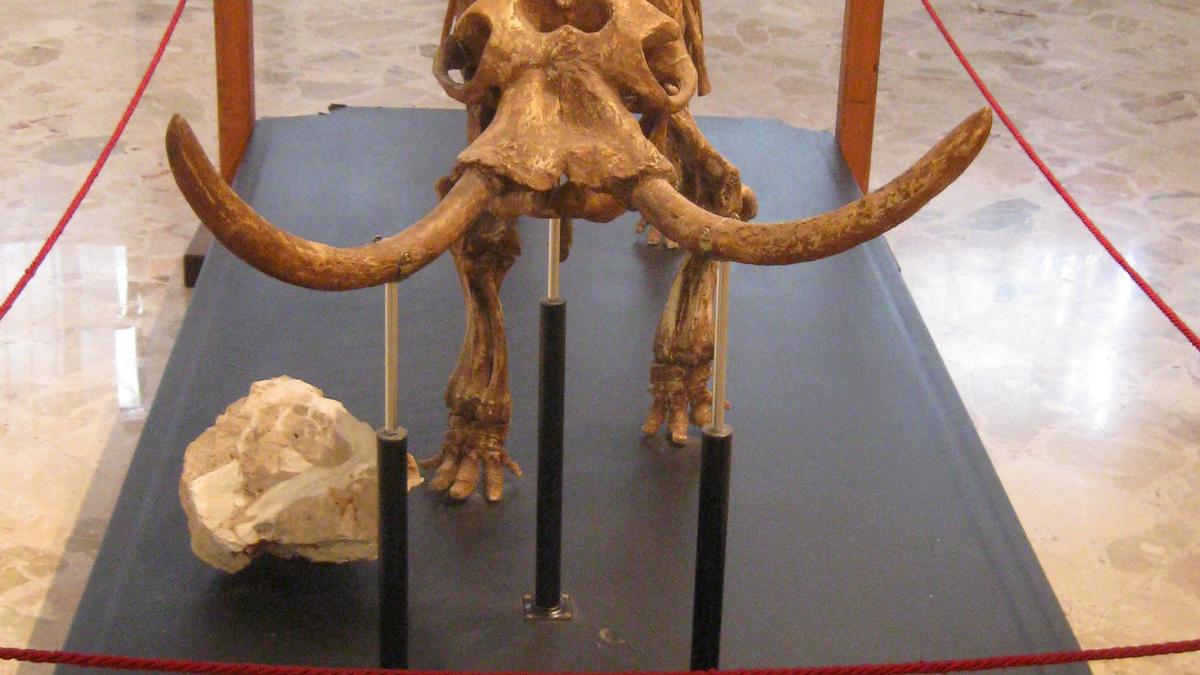
A dwarf elephant the size of a Shetland pony once roamed the Mediterranean island of Cyprus. In the West Indies, a giant rat-like rodent tipped the scales at more than 400 pounds (180 kg), rivaling an American black bear.
They were examples of the "island effect," a rule in evolutionary biology describing how large-bodied species tend to downsize on islands while small-bodied species upsize. These island dwarfs and giants - a menagerie also including pint-sized hippos, buffaloes and wolves - long have faced an elevated extinction risk that, according to a new study, is intensifying, imperiling some of Earth's most unique creatures.
Focusing on island-dwelling mammals, researchers said on Thursday they examined 1,231 existing species and 350 extinct ones spanning the past 23 million years. Extinction risk was seen highest among species that underwent more extreme body size shifts compared to mainland relatives. And the arrival of people on the islands raised extinction rates more than tenfold.
"Unfortunately, the slope of the extinction curve that began with the arrival of the first human voyagers and continued with the later waves of colonisation has become even steeper in recent decades," said palaeoecologist Roberto Rozzi of the Natural History Museum of Martin Luther University Halle-Wittenberg in Germany, lead author of the study published in the journal Science.
Islands foster unique evolutionary dynamics. For large-bodied species, there is evolutionary pressure to get smaller because of limits to habitat area and food resources compared to the mainland. But small-bodied species, because there is a decreased risk from predators on islands, are emancipated from evolutionary constraints on their size.
Some endangered island species today include: the dwarf buffalo Tamaraw on the Philippine island of Mindoro, 21% the size of its closest mainland relative; the spotted deer of the Philippine Visayan islands of Panay and Negros, 26% the size of its closest mainland relative; and Jamaica's hutia, a rodent 4-1/2 times bigger than its closest mainland relative.
Indonesia's island of Flores is a remarkable laboratory for the island effect, also called "Foster's rule," based on observations by mammalogist J. Bristol Foster in the 1960s. It once was home to a dwarf elephant relative, giant rats and a giant stork, as well as a dwarf human species - Homo floresiensis, nicknamed the "Hobbit," standing just 3-1/2 feet tall (106 cm) tall. The Hobbit disappeared about 50,000 years ago, shortly after our species Homo sapiens reached Flores.


Mercedes-Benz CLA 250+ with EQ Technology review: design, performance, range and features explained. Discover how the new electric CLA combines advanced AI, long range, fast charging and futuristic styling for the next generation of luxury EVs.

Pi Day is celebrated every year on March 14, honouring the significance of the mathematical constant π and its applications in mathematics.

Discover how sculptural interior design transforms modern spaces, blending creativity and functionality to evoke emotion and identity.

A study reveals that certain antibiotics can cause long-lasting changes in gut microbiome diversity for up to eight years.

Indian scientists and international experts are divided over a study questioning the viability of a nuclear reactor fuel called HALEU-thorium; while critics cite safety risks, proponents argue the technology is vital to achieve national energy goals.

ISRO and AIIMS partner to enhance space medicine research, focusing on human health during long-duration space missions.

A practical guide to induction setups for students, families, and home food businesses as India’s LPG supply faces its biggest disruption in years

Explore the electrifying Oscars 2026 race, featuring standout films, baffling nominations, and memorable performances amid a cinematic transition.

Zai and Rom Whitaker’s latest book for young readers, The Book of Indian Snakes, tackles common misconceptions surrounding snakes, highlighting their utility to humans

Discover PC Mahalanobis's pivotal role in India's statistical revolution and his lasting influence on modern statistics in this episode.

Explore why nothing can exceed light speed and the paradoxes that arise if it were possible.

Scientists have engineered bacteria to produce designer proteins by smuggling artificial amino acids, enabling precise drug delivery and multifunctional applications.

Scientists successfully grew chickpeas in simulated lunar soil, paving the way for future extraterrestrial agriculture on the moon.