DNA remnants found in fossil of 6 million year old turtle
The Hindu
Remnants of DNA have been discovered in fossilised remains dating to 6 million years ago of a sea turtle closely related to today’s Kemp’s ridley and olive ridley turtles
Remnants of DNA have been discovered in fossilised remains dating to 6 million years ago of a sea turtle closely related to today's Kemp's ridley and olive ridley turtles, marking one of the rare times genetic material has been identified in such ancient fossils of a vertebrate, researchers said on Thursday.
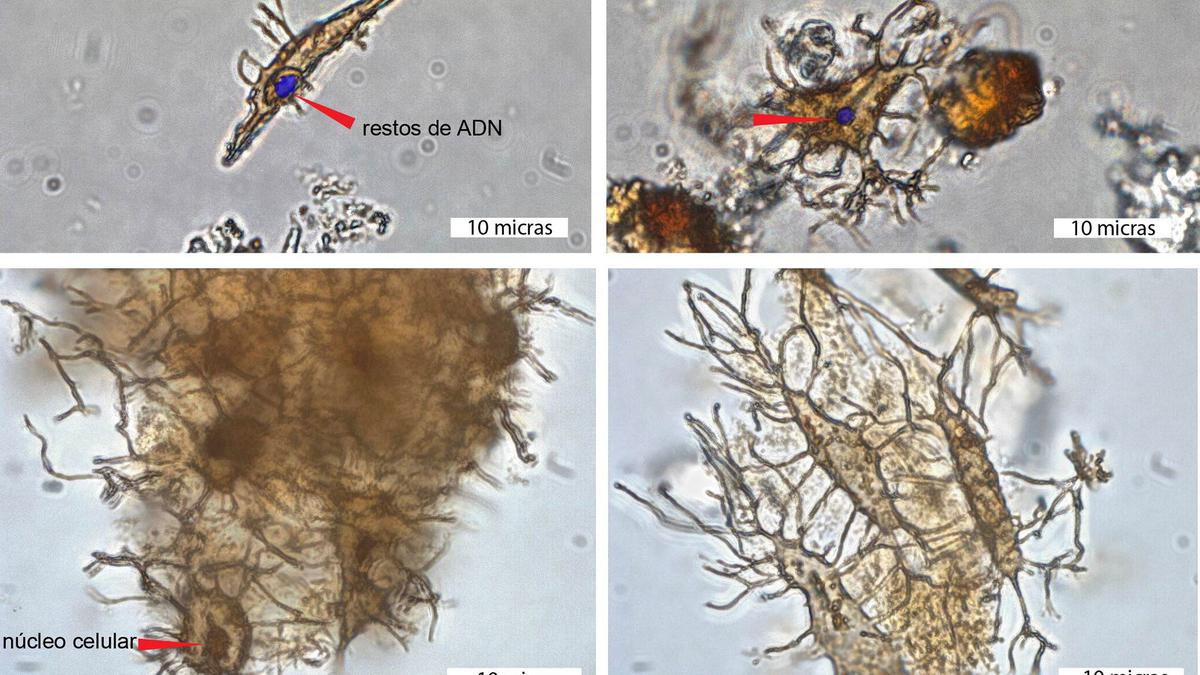
The researchers said some bone cells, called osteocytes, were exquisitely preserved in the fossil, which was excavated along Panama's Caribbean coast in 2015. The fossil is partial, with a relatively complete carapace - the turtle's shell - but not the rest of the skeleton. The turtle would have been about a foot (30 cm) long when alive, they said.
In some of the osteocytes, the cell nuclei were preserved and reacted to a chemical solution that allowed the researchers to recognise the presence of remnants of DNA, the molecule that carries genetic information for an organism's development and functioning, said palaeontologist Edwin Cadena, lead author of the study published in the Journal of Vertebrate Paleontology.
Also Read | Does palaeogenomics explain our origins?
"I want to point out that we did not extract DNA, we only were able to recognise the presence of DNA traces in the nuclei," added Cadena, of Universidad del Rosario in Bogota and the Smithsonian Tropical Research Institute.
DNA is quite perishable, though in the right conditions it has been preserved in some ancient remains. Researchers last year reported the discovery of DNA from animals, plants and microbes dating to about 2 million years ago from sediment at Greenland's remote northernmost point.
Cadena said the only older vertebrate fossils than the newly described turtle to have been found with similar DNA remnants were of two dinosaurs - Tyrannosaurus, which lived about 66 million years ago, and Brachylophosaurus, which lived about 78 million years ago. Cadena said DNA remnants also have been reported in insects dating to tens of millions of years ago.


Mercedes-Benz CLA 250+ with EQ Technology review: design, performance, range and features explained. Discover how the new electric CLA combines advanced AI, long range, fast charging and futuristic styling for the next generation of luxury EVs.

Pi Day is celebrated every year on March 14, honouring the significance of the mathematical constant π and its applications in mathematics.

Discover how sculptural interior design transforms modern spaces, blending creativity and functionality to evoke emotion and identity.

A study reveals that certain antibiotics can cause long-lasting changes in gut microbiome diversity for up to eight years.

Indian scientists and international experts are divided over a study questioning the viability of a nuclear reactor fuel called HALEU-thorium; while critics cite safety risks, proponents argue the technology is vital to achieve national energy goals.

ISRO and AIIMS partner to enhance space medicine research, focusing on human health during long-duration space missions.

A practical guide to induction setups for students, families, and home food businesses as India’s LPG supply faces its biggest disruption in years

Explore the electrifying Oscars 2026 race, featuring standout films, baffling nominations, and memorable performances amid a cinematic transition.

Zai and Rom Whitaker’s latest book for young readers, The Book of Indian Snakes, tackles common misconceptions surrounding snakes, highlighting their utility to humans

Discover PC Mahalanobis's pivotal role in India's statistical revolution and his lasting influence on modern statistics in this episode.

Explore why nothing can exceed light speed and the paradoxes that arise if it were possible.

Scientists have engineered bacteria to produce designer proteins by smuggling artificial amino acids, enabling precise drug delivery and multifunctional applications.

Scientists successfully grew chickpeas in simulated lunar soil, paving the way for future extraterrestrial agriculture on the moon.