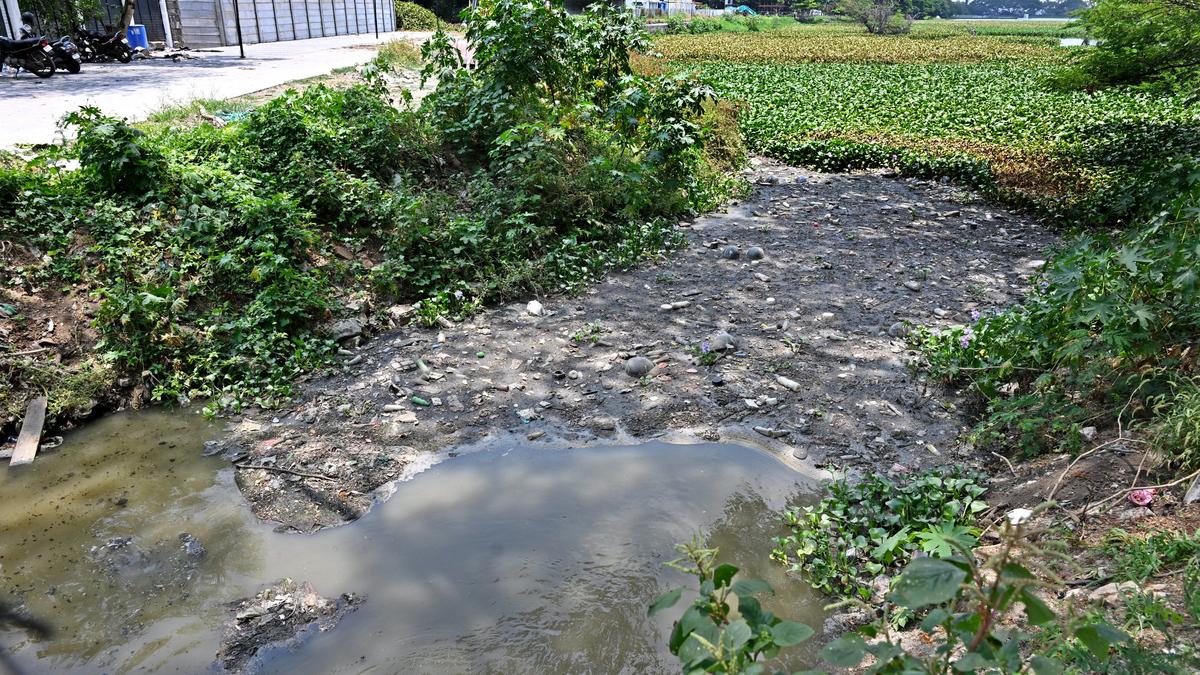
Discharge of untreated sewage leads to widespread growth of water hyacinth in Coimbatore’s lakes, say experts
The Hindu
Environmental activists and experts in Coimbatore raise concerns over water hyacinth growth due to pollution, urging sewage treatment.
Environmental activists and experts in Coimbatore have raised concern over the widespread growth of exotic water hyacinth in all the water bodies across the city. They attribute the rapid spread of the invasive plant to untreated sewage, industrial discharge, and general pollution.
There are nine lakes managed by the Coimbatore Corporation where the recurrence of water hyacinth is common.
A senior official from the Tamil Nadu Pollution Control Board (TNPCB) said, “The presence of organic waste such as urine from sewage in these water bodies leads to a process called nitrification. Urine contains urea, which breaks down into ammonia. This ammonia, during nitrification, results in the formation of nitrates that serve as nutrients promoting the unchecked growth of plants like water hyacinth.”
A researcher pursuing a doctorate on one of Coimbatore’s water bodies said, “Water hyacinth, which is not native to the region, thrives in nutrient-rich environments. Nutrient overload has triggered eutrophication, a condition where excess nutrients cause dense plant growth and algal blooms, depleting oxygen levels in the water. This affects aquatic biodiversity, blocks sunlight, harms fish and other organisms, and hinders fishing and other local activities. The growth of these plants also prevents the growth of native aquatic species.”
S. Sivaraja, secretary of the Koushika Neer Karangal Trust, said that regular maintenance of lakes could help control weed growth. He also suggested that the civic body initiate a study to understand the impact of water hyacinth on local ecosystems.
Experts and activists unanimously say that discharge of treated sewage is the only effective way to prevent the spread of water hyacinth, as fresh water does not support the growth of the weed.
Corporation Commissioner M. Sivaguru Prabakaran said that the city is not yet fully covered under the underground drainage (UGD) system. He added that work was under way to bring all areas under the UGD scheme so that sewage will be treated before being released into water bodies.


Special prayers mark Eid-ul-Fitr celebrations in Madurai

India’s gem and jewellery industry continues to demonstrate remarkable resilience and a spirit of innovation, said Kirit Bhansali, chairman of the Gem and Jewellery Export Promotion Council (GJEPC), at the inauguration of the 4th edition of IIJS Bharat-Tritiya 2026 at Bengaluru International Exhibition Centre (BIEC) here on Saturday, March 21.

HYDGEN dispatches eight modular green hydrogen systems to Surat, enhancing on-site industrial hydrogen generation and operational efficiency.

Fight is between AIADMK and DMK, says Rajan Chellappa

Two habitual offenders arrested in Miyapur for wine shop burglary; police recover stolen cash and bike.

Tiruchi's Smart City projects face underutilisation despite completion, raising concerns about planning, execution, and revenue generation.

Election Observer Anubha Shrivatsava inspects polling booths in Western Ghats, ensuring smooth arrangements amid challenging conditions.

A.P. Minister announces ₹9.8 crore development of Barashaheed Dargah and ₹20 crore international school for minorities in Nellore.

Vice-President Radhakrishnan advocates for modern university syllabi to enhance employability and skill development in today's evolving job market.

A poignant protest at Palakkad Medical College highlights ongoing developmental challenges, initiated by a symbolic wreath-laying by a young girl.

A three-year-old girl was tragically killed by a truck while walking with her mother near Bengaluru.

Iran's President calls for U.S.-Israeli aggression cessation and urges BRICS to ensure regional peace and security.

Harish Rao accuses govt. of cancelling ₹1,070 cr. work sanctioned to Siddipet