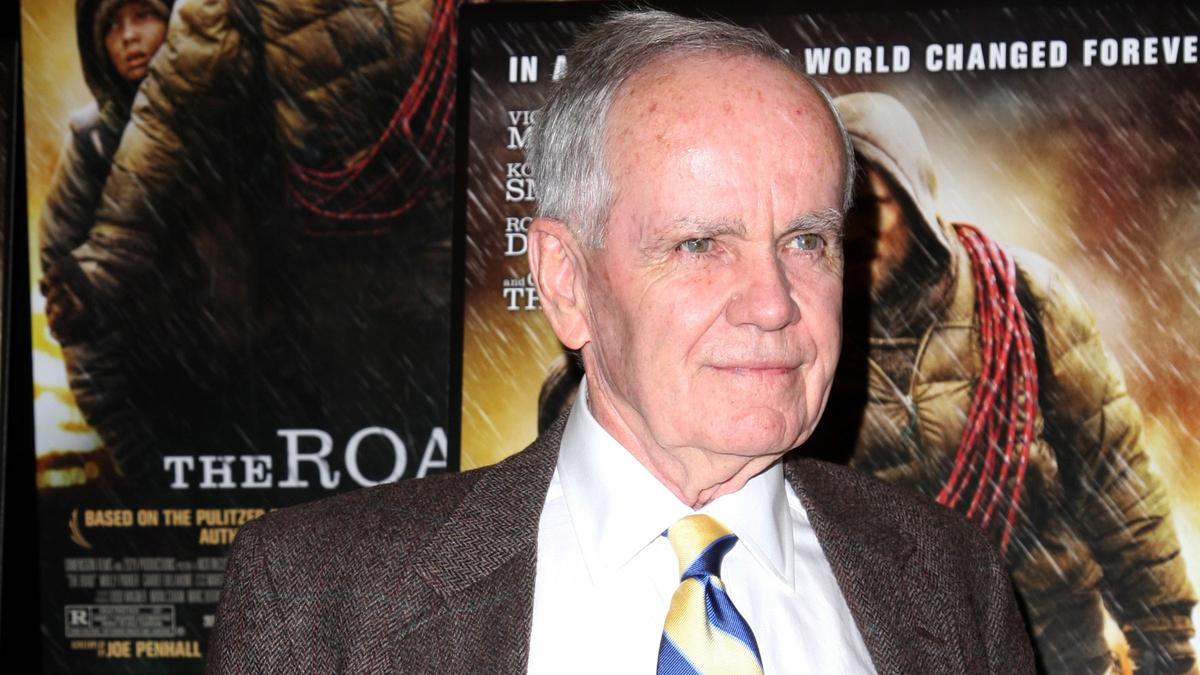
Cormac McCarthy, author of ‘The Road’ and ‘No Country for Old Men’, traced the depths of humankind, and also its greatness
The Hindu
Tributes have been pouring in for McCarthy, hailed as one of the greatest writers of America, after he passed away on June 13 at the age of 89. Critics found influences of William Faulkner in his work, but he charted his own path, tracing the depths humankind could descend to and also the mountains it was capable of climbing, in his 12 novels. In The Road, McCarthy describes the desolate landscape in spare prose and chilling detail, where the sky is forever grey, charred trees lie all around, food is scarce and there’s a sense of foreboding in the air. The premise is terrifying, made even more so because the paranoid dystopia McCarthy imagines could be a reality sooner than later.
He was 69, the child four. On a trip to El Paso, Texas, with his son around 2005, writer Cormac McCarthy looked out of their hotel room at night and saw an old, sleepy town where nothing could be heard except lonesome trains whistling past. In his mind’s eye, he saw fires burning on the hills and everything being laid waste sometime in the future and thought about his little boy.
This image, he told Oprah Winfrey in a rare interview in 2007, became the story of The Road, dedicated to his son John Francis. A moving tale about a journey a father and son undertake in a post-apocalyptic world, it won the Pulitzer Prize that year.
The premise of The Road is terrifying, made even more so because the paranoid dystopia McCarthy imagines could be a reality sooner than later. In the novel, the world as we know it has ended — McCarthy doesn’t provide the reason for this cataclysmic event — but it is likely to have been man-made. Everything seems to have been consumed in a fire, and father and son — both unnamed — have been on the road a long time, trying to get to the warmth of the coast, “each the other’s world entire”.
Tributes have been pouring in for McCarthy, hailed as one of the greatest writers of America, after he passed away on June 13 at the age of 89. Critics found influences of William Faulkner in his work, but he charted his own path, tracing the depths humankind could descend to and also the mountains it was capable of climbing, in his 12 novels.
In all of them, set in communities and landscapes he knew well — Tennessee or the American southwest (like in his debut novel The Orchard Keeper, or Blood Meridian, All the Pretty Horses, The Crossings or even No Country for Old Men, adapted to the screen by the Coen brothers) — he shines a light on people living on the margins.
In The Road, McCarthy describes the desolate landscape in spare prose and chilling detail, where the sky is forever grey, charred trees lie all around, food is scarce and there’s a sense of foreboding in the air. Father and son, with the taste of ash on their lips, their meagre provisions in a cart, travel on, along the unending road.
The father tries to keep his son safe from marauding fellow travellers, some of whom have taken to cannibalism in desperation. “We won’t ever eat anybody, would we?” the son asks. “No, of course not,” his father replies. “Even if we are starving?” and it goes back and forth:


Pinarayi Vijayan criticizes Rahul Gandhi and Congress for allegedly aiding BJP's rise in various states during Kerala polls.

Sonia Gandhi is responding well to treatment for a systemic infection and remains under observation at a Delhi hospital.

J&K Police's Counter Intelligence Wing conducts raids in three districts linked to a transnational terror module operated by Lashkar-e-Taiba.

Vaccination policies must prioritize saving human lives over individual choice amid rising vaccine skepticism, asserts scientist Dr. Virander Singh Chauhan.

Seven Indian fishermen from Rameswaram arrested by Sri Lankan Navy, sparking protests and calls for government intervention.

Kerala cyber police file a case against X for an AI video allegedly defaming PM Modi and the Election Commission.

iKure and Izawa Co. partner to combat avoidable blindness by integrating innovative eye care technology into rural healthcare networks.

Thousand Lights MLA from the DMK N. Ezhilan, in an interview to The Hindu, observes that any popular personality entering politics will attract the limelight. But only a structured party machinery combined with popularity can ensure success. In this interview, he speaks about his tenure as first-time MLA from Thousand Lights Assembly constituency in Chennai, Vijay’s political entry shaping the 2026 elections, redressal of key grievances and more.

Abhishek Banerjee challenges BJP's Suvendu Adhikari in Nandigram, pledging community health initiatives if Trinamool Congress wins.

Rising LPG shortages in Karnataka boost firewood demand, reviving an informal market as households and hotels seek alternatives.

Against the backdrop of intense poll activity, a 400-metre stretch of an arterial road in the outskirts of Chennai (technically in Madurapakkam panchayat under Tambaram assembly constituency) presents a salute to the idea of res publica, which underpins India’s system of governance, where citizens have a say, at least before a government is securely ensconced in the seat of power. A Republic Day initiative shines bright every night

Fadnavis claims zero FIR in Ajit Pawar crash is a defamation attempt by Karnataka against Maharashtra's investigation efforts.

Set to unfold as a one-day pop-up on April 5, the Easter Sadya brings together both vegetarian and non-vegetarian menus, offering a peek into the food traditions of the Syrian Christian (Nasrani) community. While the traditional Sadya is often associated with dishes such as sambar, avial, and rice, this version expands to include community-specific festive dishes.