Choppers, dozers and railway workers: on the front lines of the Manitoba wildfire fight
CBC
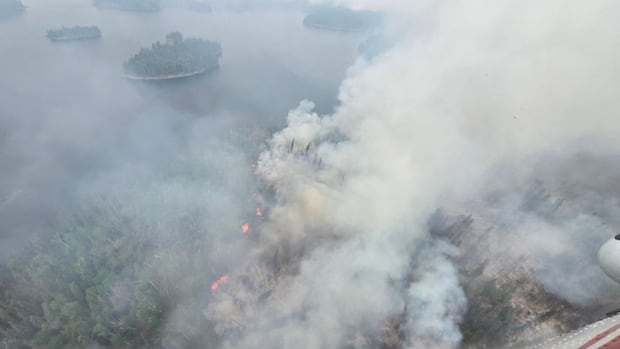
Helicopter pilots, heavy machinery operators and railway workers are some of the people on the front lines of the Manitoba wildfire fight.
Manitoba remains under a provincewide state of emergency as 29 wildfires continue to burn in the east, west and north, 10 of which are out of control. Those fires have forced 21,000 people from their homes and 27 communities are under mandatory evacuation order.
Hundreds of unsung heroes, like Clifford Nabess, are working to contain the flames.
Nabess and seven of his colleagues at the Keewatin Railway Company have been going in and out of the wildfires for days trying to save 16 train bridges that are essential for transporting people and goods to Pukatawagan, also known as Mathias Colomb Cree Nation and Sherridon, a small community north of The Pas, which is about 630 kilometres northwest of Winnipeg.
"It's the only really lifeline besides the airport that gets to the community of Pukatawagan," Nabess said.
Their job is to refuel water trucks that have been keeping the bridges from burning. He said sometimes the fire is so close he can feel it.
"You can feel the heat right through the side of the windows. There's a few times we've drove through fire where it's actually raining fire on the window," said Nabess.
He and his colleagues know their lives are in danger every time they go to work, but if they don't and a bridge burns down, it could take two months to repair.
The Sherridon wildfire is out of control and more than 300,000 hectares big, according to the province. Nabess estimates between 80 and 100 kilometres of forest has been destroyed around the two remote Northern Manitoba communities.
"It's very bad … for people that will come back to work later this year, it's gonna look totally different because there's nothing there."
For miles and miles, all you can see is bare land and total destruction, he said.
Rob Brunken spent 22 years as part of the United States Marine Corps. After retiring, he got his pilot's licence and now works for Columbia Helicopters in Aurora, Oregon. When he and his colleagues heard Manitoba needed critical air support and manpower, they stepped up.
"We kind of showed up … and have just been trying to help wherever we can," Brunken said on the tarmac at The Pas airport.
Four pilots, eight mechanics and two helicopters equipped with 1,200-gallon water buckets, from Columbia Helicopters, arrived in The Pas on May 30 and were ready for deployment the following day. Brunken said they have been working non-stop, but smoke and poor visibility have been challenging.


An RCMP-led corruption investigation is underway into at least one current Calgary city councillor as well as a business, CBC News has learned.

Much of Newfoundland is digging out of a blustery and messy day as another storm slams into the island.

Timiskaming—Cochrane MPP John Vanthof recalls the meeting in Thunder Bay earlier this month. He was part of the nine-day road trip along Highways 11 and 17 with other NDP MPPs.

A bill before the Nova Scotia Legislature is proposing raising the age limit for support for young people who have been in the foster care or group home system to 26.

The Fredericton Police Force has reallocated funds so new staff can be hired this year to better manage evidence after a police error upended murder cases against five people.

One of two pilots killed in a plane crash at New York's LaGuardia Airport Sunday earned his wings at an Ontario college, CBC News has learned.

Air Canada passengers who were aboard Flight 8646 when the CRJ-900 aircraft struck a fire truck upon landing at New York's LaGuardia Airport on Sunday evening say the collision was sudden and forceful, and they may owe their lives to the pilots who died in the incident.

Cardiac services are set to expand at a Winnipeg hospital once regarded as one of the best in Canada for heart care.

A 26-second TikTok video has ignited a larger conversation about vulnerable populations, theft and content creation.

Some family doctors and emergency room physicians working in Edmonton hospitals warn that an April 1 end to stipend pay arrangements could put patient care at risk and increase suffering.

An Auditor General of Canada report has found that B.C. saw drastically fewer international students than was forecast ever since wide-ranging federal immigration cuts began in 2024.

Six years after e-learning became a mandatory requirement to get an Ontario high school diploma, students don't appear to be taking online school to diversify their course selection as the province had intended, according to a CBC News analysis of provincial enrolment data.

Sarnia City Council will hold a special meeting Tuesday morning to respond to social media comments made by Coun. Bill Dennis, who criticized city spending on a new mural by Indigenous artist Kennady Osborne as “virtue signalling by woke politicians” — then made a series of comments in response to a reply from Aamjiwnaang Chief Janelle Nahmabin that some have characterized as unprofessional and aggressive.