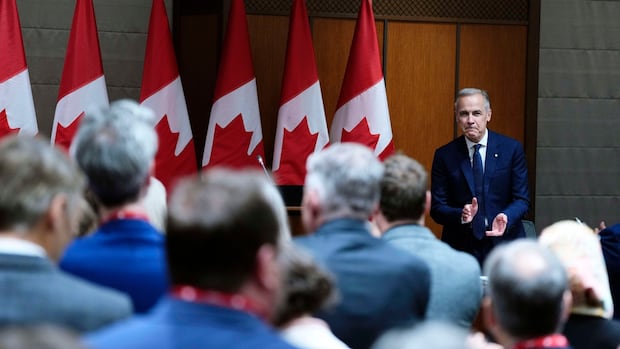
Carney tells MPs to brace for 'very, very busy' few weeks as Parliament reopens
CBC
Prime Minister Mark Carney told his caucus to brace for a "very, very" busy few weeks and months as Parliament reopens, promising to implement his vision for the country with "urgency and determination."
In an address to caucus — which media cameras were invited in to shoot — Carney teased that his Liberal minority government will introduce several pieces of legislation "about making life more affordable immediately," including the promised tax cut.
Speaking in French, the prime minister also said his ministers will introduce legislation to fast-track infrastructure projects deemed to be in the national interest.
"We are going to be very, very busy in the next few weeks, but we are going to be very, very busy in the next few months," Carney told the room.
"We are going to be very, very busy in the next few years."
Carney has already made clear his top priorities include the negotiation of a new economic and security relationship with the United States, and strengthening ties with reliable trading allies while building up what he calls "one Canadian economy."
To that end, Carney has also promised to lower interprovincial trade barriers and bring in an income-tax cut by Canada Day.
"In every one of our actions, we will be guided by a new fiscal discipline," he said in French.
Speaking with Rosemary Barton Live in an interview that aired Sunday morning, House Leader Steven MacKinnon said Carney's made it clear he wants to get things done at breakneck speed.
"It's very refreshing," he said. "We're going to get at it."
Leading up to caucus, there had been some speculation about whether Liberals would adopt the Reform Act, which would have given them more power to oust their newly-elected leader down the line.
However, newly elected caucus chair James Maloney told reporters it was voted down. The MP for Etobicoke-Lakeshore was tight-lipped about the discussions about the act, citing caucus confidentiality.
Liberals have never used the decade-old law, but some MPs floated the idea of adopting it, pointing to the frustrations they felt when former prime minister Justin Trudeau ignored calls to resign for months last year.
Championed by Conservative MP Michael Chong, it's meant to provide more checks and balances between caucus and party leaders, including the ability to vote out an unpopular leader. The Conservatives used the act to push former leader Erin O'Toole out the door in 2022.


One of two pilots killed in a plane crash at New York's LaGuardia Airport Sunday earned his wings at an Ontario college, CBC News has learned.

Air Canada passengers who were aboard Flight 8646 when the CRJ-900 aircraft struck a fire truck upon landing at New York's LaGuardia Airport on Sunday evening say the collision was sudden and forceful, and they may owe their lives to the pilots who died in the incident.

Cardiac services are set to expand at a Winnipeg hospital once regarded as one of the best in Canada for heart care.

A 26-second TikTok video has ignited a larger conversation about vulnerable populations, theft and content creation.

Some family doctors and emergency room physicians working in Edmonton hospitals warn that an April 1 end to stipend pay arrangements could put patient care at risk and increase suffering.

An Auditor General of Canada report has found that B.C. saw drastically fewer international students than was forecast ever since wide-ranging federal immigration cuts began in 2024.

Six years after e-learning became a mandatory requirement to get an Ontario high school diploma, students don't appear to be taking online school to diversify their course selection as the province had intended, according to a CBC News analysis of provincial enrolment data.

Sarnia City Council will hold a special meeting Tuesday morning to respond to social media comments made by Coun. Bill Dennis, who criticized city spending on a new mural by Indigenous artist Kennady Osborne as “virtue signalling by woke politicians” — then made a series of comments in response to a reply from Aamjiwnaang Chief Janelle Nahmabin that some have characterized as unprofessional and aggressive.

While many Albertans continue to feel the pinch at the pump, Premier Danielle Smith says the government is not considering any fuel tax breaks, as it does not believe it will make much of a difference.

WARNING: This story contains disturbing details about gruesome deaths and sexual abuse.

Waterloo Regional Police Service (WRPS) says they will take part in the federal government's buyback program for assault-style rifles this year, but a local member of parliament says she "can't get behind this decision."

The use of American contracts and services is down by nearly half on Prince Edward Island following tariffs and shaky trade relations under the Donald Trump administration.

The first set of deadlines included in the energy and climate deal struck between Prime Minister Mark Carney and Alberta Premier Danielle Smith are not expected to be met, showing early challenges with the agreement that includes pursuing a new export pipeline from Alberta to the West Coast.