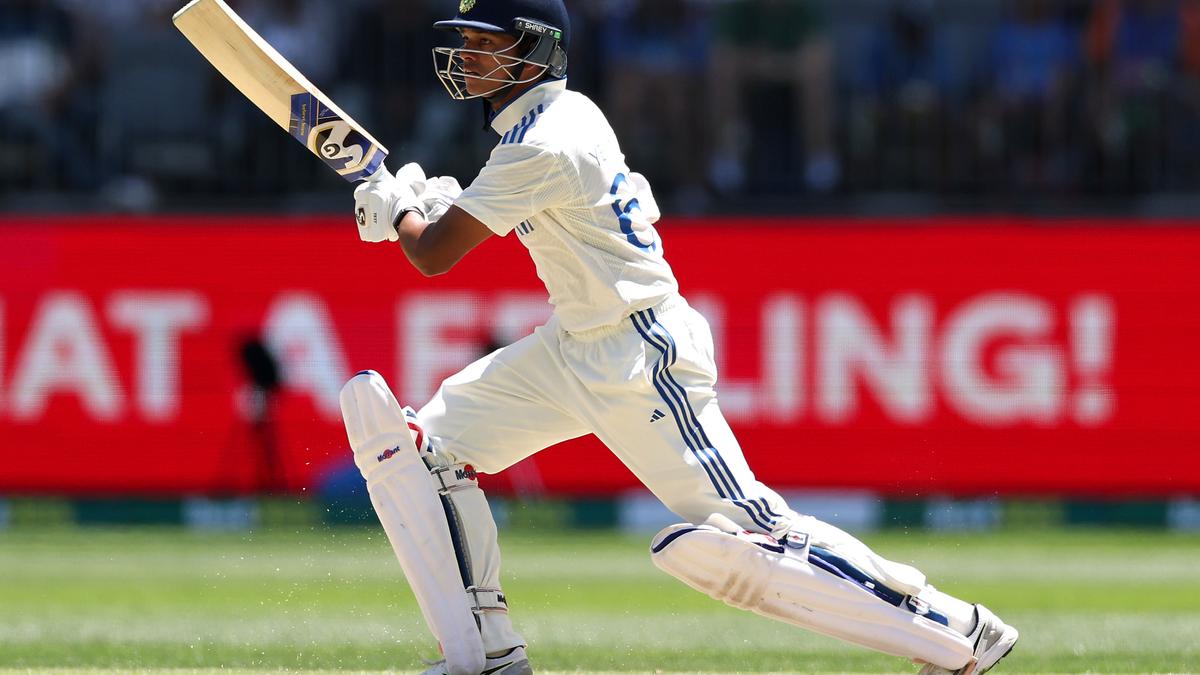
Can Jaiswal pass the Dukes’ challenge? Premium
The Hindu
Rahul Dravid's coaching tenure sees young batters like Yashasvi Jaiswal shine, facing new challenges in England.
In Rahul Dravid’s first stint as India head coach – it was originally scheduled to end at the conclusion of India’s campaign in the 50-over World Cup in November 2023 – not too many specialist batters broke into the Test team. Shreyas Iyer was one of the exceptions, celebrating his debut in Dravid’s first game as coach with a century against New Zealand in November 2021, while Suryakumar Yadav was forced into action for a solitary Test against Australia, in Nagpur in February 2023.
Then came India’s tour of the West Indies in July that year, in what at the time was Dravid’s last Test series in charge. Before the start of the two-Test showdown in the Caribbean, Shubman Gill requested the think-tank to slot him in at No. 3 after having opened exclusively until that point, since his debut in Melbourne in December 2021. Rohit Sharma and Dravid obliged, which meant the captain needed a new opening partner.
That opened the door for Yashasvi Jaiswal to storm through. Only 21 then, the left-hander had already made a name for himself. His journey from the anonymity of Suriyawan in Uttar Pradesh to Mumbai, India’s financial and possibly cricketing capital, to pursue his passion for cricket is too well documented to bear repetition. Under the tutelage of Jwala Singh, Jaiswal began to catch the eye of the discerning, and it came as no surprise when the hunt for a replacement for Gill at the top of the batting tree ended with Jaiswal.
The young man didn’t disappoint. Against Kemar Roach and Alzarri Joseph and Jason Holder, he held his own. He struck up an immediate understanding with his vastly more experienced captain, matching him stroke for breathtaking stroke during an opening stand of 229 that alone was worth 79 more than the hosts’ first-innings tally. By the time Jaiswal was finally dismissed to a loose, tired stroke outside off, trying to drive Joseph on the up and nicking to the wicketkeeper, he had batted 501 minutes and negotiated 387 deliveries in making 171 of the finest.
During that innings, Jaiswal showcased immense powers of concentration and a hunger for runs that was impressive in one so young and inexperienced. Needless to say, he benefited immensely from Rohit’s presence at the other end. Rohit has always had a lot of time for his fellow Mumbaikar – that’s what Jaiswal’s cricketing identity is, after all – but he was also aware that the younger man had a propensity to lapse into looseness (perhaps he saw in Jaiswal a younger version of his own self). Under his captain’s benevolent but stern mentorship, Jaiswal made his debut series a breakthrough one, backing up that big hundred with 57 and 38 in the next Test in Port of Spain.
A difficult tour of South Africa followed, in December-January on challenging surfaces – the one laid out for the second Test in Cape Town was a disgrace, the match ending in a seven-wicket win for India inside six sessions – and while many were quick to pounce on Jaiswal for lack of returns (50 runs in four innings), those within the leadership group recognised that batting was anything but straightforward against a combination of tough tracks and an exceptional attack. Back home that same month, Jaiswal reiterated his quality with 80 in the first Test against England in Hyderabad, a spectacular assault that came off only 74 deliveries and bore no resemblance to the hard graft on debut.
That was the start of a purple patch. He hammered 209 in Visakhapatnam in the next Test and backed it up with an unbeaten 214 in the following game in Rajkot, when he became only the third Indian after Vinod Kambli and Virat Kohli to make double-hundreds in consecutive Tests. Jaiswal continued to impose himself on the English attack in the next two Tests and was one of the few bright spots against New Zealand when India were routed 3-0 at home, though he did show a distinct propensity to get himself out in the 30s.


RBI women's team secures third title in four years, while PSPB men dominate with their 24th consecutive championship win.

Join the IPL 2026 countdown as Shreyas Iyer leads Punjab Kings in their quest for a maiden title.

New Zealand defeats South Africa by 68 runs in the second T20I, leveling the series at 1-1.

Novak Djokovic withdraws from the Miami Open due to a shoulder injury, missing his chance for a seventh title.

Sing language interpreters from India Signing Hands made sure that hearing impaired audience of the matches involving India in the recently concluded T20 World Cup “heard” them

Iran is negotiating with FIFA to move its World Cup matches to Mexico due to safety concerns amid ongoing conflict.

CSK names James Foster as fielding coach

English clubs face daunting Champions League challenges, trailing by three goals against top European teams after disappointing first legs.

My target is to be in the top-30: Devika Sihag

CSK names James Foster as fielding coach

Mayank Chakraborty becomes Assam's first Grandmaster, ending a three-decade wait for the North-East in chess history.

M.S. Dhoni advises CSK rookie Prashant Veer to save money wisely as he navigates his first IPL experience.

Sanju Samson reflects on his T20 World Cup victory, sharing his excitement for the upcoming IPL with CSK.