Bronte Parsonage Museum| Walk where Jacob Elrodi and Margot Robbie did in ‘Wuthering Heights’
The Hindu
Explore the Bronte Parsonage Museum and discover the inspiration behind Wuthering Heights, now featured in a new film.
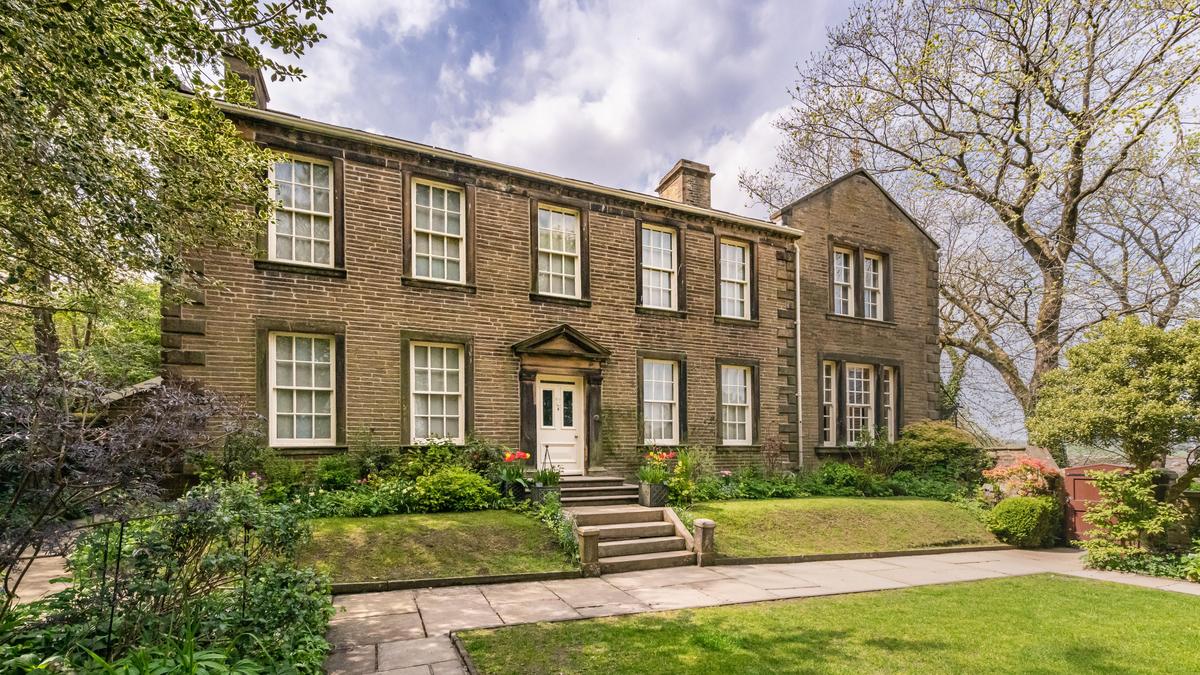
An artist’s sketch of Haworth Parsonage, the former residence of the celebrated Bronte sisters — Charlotte, Emily and Anne — hangs in my childhood home. Nearly 40 years old, the framed casement cloth captures the parsonage as it was in their day — a Georgian house on a desolate landscape overlooking a churchyard with moss-covered tombstones askew. The famed Yorkshire moors lie beyond — bruised by rain, mist floating eerily above the sodden grass. A landscape that the sisters saw every time they looked outside the window and one that influenced much of their writing, especially Emily’s gothic Wuthering Heights featuring the star-crossed lovers Heathcliff and Catherine Earnshaw struggling to defy their fate on those moors. The novel is back in the news with the release of the Emerald Fennell film starring Jacob Elordi and Margot Robbie bringing a new flush of interest in the Bronte Parsonage Museum (BPM).
Diane Fare, outreach officer, BPM, says, “Urbanisation has had little impact on the immediate surrounding of the parsonage. A photograph taken today would look very similar to a sketch drawn in the Brontes’ time. Haworth itself is also relatively unchanged. The shops on the cobbled Main Street are different — there are now cafes and gift shops rather than butchers and tailors — but the buildings look as they once did. Beyond the village, the moors are the same.”
The BPM is helmed by the Bronte Society, founded in 1893 to promote interest in the Bronte family and their works. Its aim was to set up a permanent home for items belonging to the Brontes, and the first museum opened in 1895 above the Yorkshire Penny Bank on Haworth Main Street. Haworth Parsonage was bought by Sir James Roberts and gifted to the non-profit in 1928 when it opened as the BPM. “The Society sought to restore it to how it would have appeared in the Brontes’ time and nearly all the objects and furniture on display belonged to the family,” says Diane.
A room at Bronte Parsonage Museum | Photo Credit: Bevan Cockerill
The BPM, open Wednesday to Monday, stands now in a well-set garden crowded with trees and flower beds. Wandering through its rooms that house writing desks, letters, clothes and more, one wonders how the daughters of a country clergyman who battled illness perpetually, produced some of the most dramatic novels in the English language. It was Charlotte who encouraged her siblings to publish their works and they first did under pseudonyms.
“It’s impossible to say who was the most popular,” says Diane. “Charlotte and Emily are better known than their younger sister Anne, but many visitors know of Anne’s novels, particularly The Tenant of Wildfell Hall. Charlotte was the most famous in her lifetime and we know more about her, simply because she lived longer and corresponded with people throughout her life (particularly her best friend Ellen Nussey),” she says, adding, “Many visitors are huge fans of Jane Eyre and are here to see where the novel was written. Whilst we know less about Emily, her only novel Wuthering Heights has fascinated readers since it was published in 1847 and fans of the novel are keen to visit where the enigmatic Emily grew up and to walk the landscape that so inspired her. Since the announcement of the new Wuthering Heights film, sales of the novel has rocketed. Visitor numbers are in the region of 60,000-70,000 a year and the split is 80% domestic tourists, 20% from overseas.”


‘My Lord’ movie review: Except for a contrived pre-climax sequence, Raju Murugan’s film intersperses social satire and political commentary with wit, heart, and conviction

Why film adaptations that end Wuthering Heights with Catherine’s death, including Emerald Fennell’s version with Jacob Elordi and Margot Robbie, miss the point of Emily Brontë’s novel

Explore the Bronte Parsonage Museum and discover the inspiration behind Wuthering Heights, now featured in a new film.

Directed by Srikanth Odela, the film, starring Nani in the lead, tells the gripping story of a tribal community standing up for their rights

Singer Mika Singh has stepped up to pledge ₹11 lakh to help actor Rajpal Yadav, who is currently serving a six-month sentence at Tihar Jail after a series of cheque bounce issues

Aditya Atmakuri, Ashutosh Verma and Satyam Nayak of the Hindi independent band Khatth talk about their reflective new single ‘Bewaqt’

Explore the challenging clues and solutions of The Hindu Sunday crossword no. 43 for a fun brain workout!

Explore a strategic Goren Bridge hand featuring a modern pre-emptive raise and expert play to secure the contract.

Flipperachi, the rapper behind the viral hit ‘FA9LA from ‘Dhurandhar’, is set to bring his electrifying energy to Mumbai for his debut performance

Rahul Riji Nair's animated short 'Kingara Kavyam,' is a poignant tale of resilience based on a folklore

Shahid Kapoor just dropped the news that Season 2 of the hit series ‘Farzi’ is officially in the works. He took to Instagram to share the news with a fun picture alongside creators Raj and DK

Join 20 Stella Maris College alumni at Lalit Kala Akademi for an exhibition exploring the ocean's mystique and time's fragility.

‘Tuka Mhane, Kahe Kabira’ at Chowdiah Memorial Hall, featured vocalists Bhuvanesh Komkali and Jayateerth Mevundi, who rendered a series of compositions of the two great mystics