Bonded labour persists as modern-day slavery despite five-decade-old law Premium
The Hindu
Despite a 50-year-old law, bonded labour persists in Tamil Nadu, highlighting the urgent need for stronger enforcement against modern slavery.
It started with ₹5,000. Shanmugam, a native of Tiruttani in Tiruvallur district, needed the money for his sister’s wedding. The eldest and only brother in the family, he had to take care of all his three sisters’ weddings. While inviting a relative to the wedding in 2009, he was asked how he planned to fund the event. “Through loans from the village,” Mr. Shanmugam responded. The relative then recommended a wealthy person nearby who could give him a loan that he could work off later.
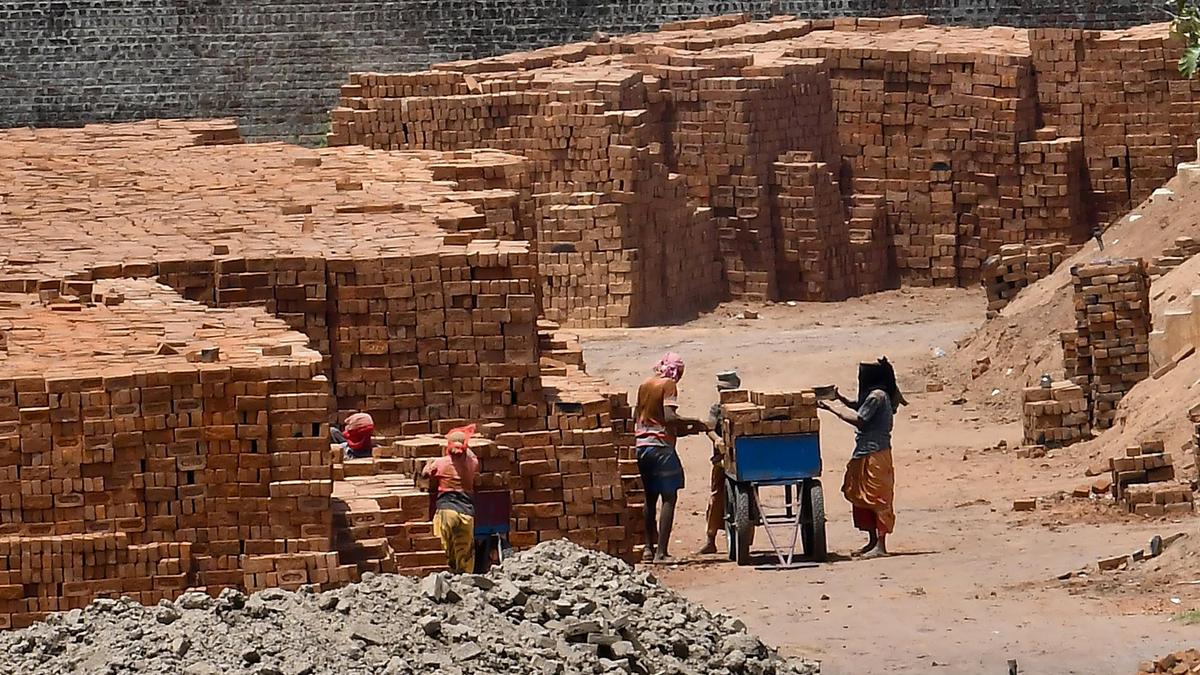
Mr. Shanmugam took his advice. After the wedding, he began working off his debt at a brick kiln in Vellore. He was given a place to stay and a weekly wage of ₹300. He was then told to bring his family; so, his wife Latha and their three-year-old son and six-month-old daughter joined him. As Mr. Shanmugam worked, his son would help by throwing sand on the bricks to help them dry. Ms. Latha, who was not paid any wages, also toiled at the kiln, after which she went over to their employer’s house to perform domestic chores.
“I thought I would have some money left over after the deductions for the loan. But at the end of one year, when I asked my employer how much I had left to repay, he told me it was ₹19,000 with interest,” said Mr. Shanmugam, who soon began to realise that there was no way out.
On February 9, 2026, it will be 50 years since the Bonded Labour System (Abolition) Act was enacted. Although the Act was passed in February 1976, it was given retrospective effect from October 1975 to abolish the bonded labour system and prevent the economic and physical exploitation of people from marginalised sections of society. According to the Parliamentary Standing Committee Report on Labour, Textile, and Skill Development for 2024-2025, as many as 2,95,795 people have been rescued from bonded labour since 1978.
A brick kiln near Ramanathapuram. File | Photo Credit: L. Balachandar
A person rescued from bonded labour is entitled to an initial compensation of ₹30,000, a release certificate, and rehabilitation measures such as land, voter ID, and Aadhaar card, among others. Once their cases see conviction in court, they would receive the final compensation of ₹1 lakh to ₹3 lakh.


PMK president Anbumani Ramadoss criticises DMK for rising crimes against women and children, urging voters to prioritize safety.

Join the 'Clean Kodagu-Beautiful Kodagu' campaign promoting cleanliness at pilgrimage and tourist spots across Kodagu district.

Shorts News:‘Over 2.44 lakh Indians returned from Gulf so far’

Oppo on Tuesday launched the new K series smartphone in India for the mid segment buyers, the new Oppo K15 5G, featuring IP66, IP68 and IP69 ratings for dust, water immersion, and high-pressure hot water jets resistance

NCTP members oppose amendments to the Transgender Persons Act, citing lack of consultation and potential harm to transgender rights.

AIADMK MP C.Ve. Shanmugam faces backlash for derogatory comments about a female actor during an NDA protest in Villupuram.

Urea shortage disrupts farming in Tiruchi as demand spikes during critical sowing period, affecting supply at private outlets.

While granting bail to the tantri in February, the Vigilance Court had observed that the SIT failed to produce substantive evidence to support the allegations levelled against him

Gujarat's panel submits UCC report to CM Patel, paving the way for a draft bill in the ongoing Budget session.

Edappadi Palaniswami criticises the DMK government for failing to file an FIR on cash-for-jobs allegations, seeking High Court intervention.

Cookbook author Sabita Radhakrishna gives us tips on utilizing smart kitchen gadgets you probably already own to make easy meals without using LPG, from an induction stove to her trusty instant pot

Madras High Court postpones PMK intra-party dispute hearing until after Tamil Nadu and Puducherry elections conclude, on May 10.

TMC to contest 291 seats in Bengal polls, confident of winning over 226, announces Mamata Banerjee amid fierce competition.