Between the lines: The truth about kalamkari
The Hindu
Discover authentic kalamkari through the eyes of researcher Nikita Shah.
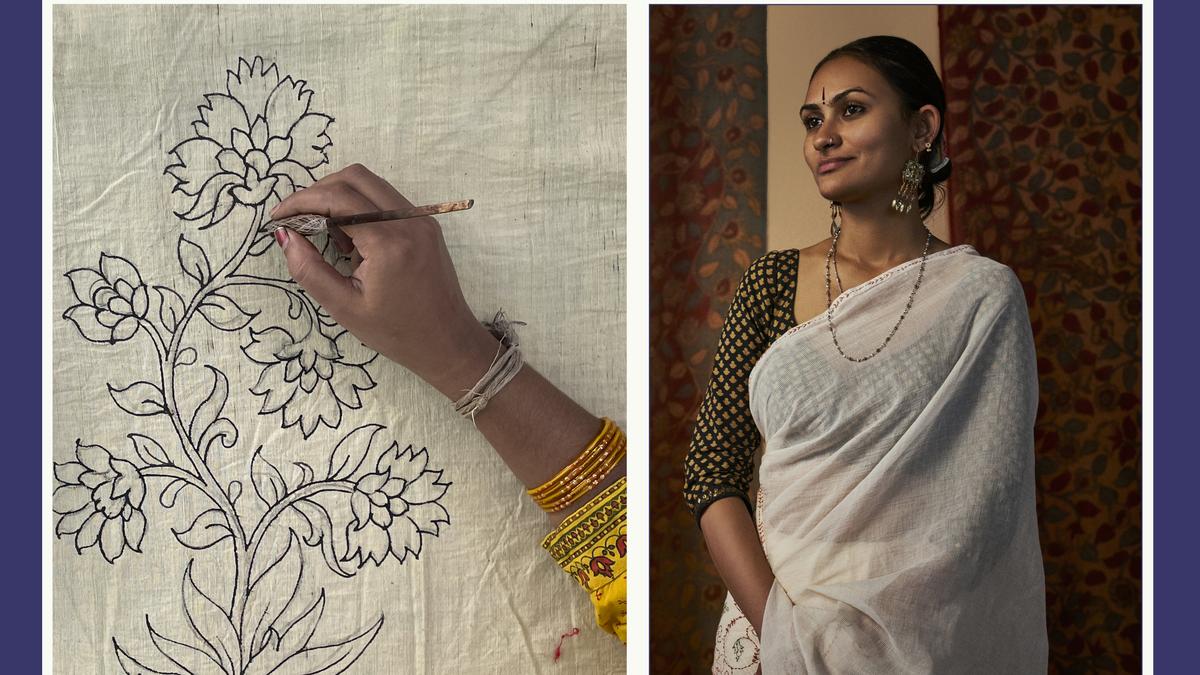
Buying a handloom textile that uses a 3,000-year-old craft is akin to acquiring a work of art. Much like a painting or sculpture that holds value for its authenticity, a handmade fabric is worth every rupee spent, says Nikita Shah, a Brooklyn-based independent researcher affiliated with the Metropolitan Museum of Art in New York. Nikita, who honed her skills in kalamkari while in Hyderabad, believes mindful consumption is key to keeping the craft alive.
She believes mass production has prompted many artisans to take shortcuts. “Kalamkari is a slow craft. Less is more — that should be the approach if we want it to survive,” she says.
Kalamkari, which takes its name from the kalam or pen used by artisans to draw motifs, involves a painstaking, multi-step process. The fabric — typically cotton or silk — is treated with milk and natural astringents before being hand-drawn and coloured with natural dyes. Srikalahasti in Andhra Pradesh is known for hand-painted kalamkari, while Machilipatnam is recognised for block-printed variations. Originally a medium for narrating folk tales, kalamkari later evolved into wearable art.
During a recent visit to Srikalahasti, Nikita observed that traditional pens were increasingly being replaced by thick brushes, fingers and even sponges — often used with chemical dyes. “It’s disheartening to see artisans prioritising speed over technique. Younger artisans, despite being trained by older generations, are under pressure to meet market demands and are compromising on the process,” she says.
In Machilipatnam, digital and screen printing are steadily replacing hand block printing, making it harder for consumers to tell the difference.
Mumbai-born Nikita is an alumna of National Institute of Fashion Technology Kannur and worked for nearly a decade with Hyderabad-based designers Gaurang Shah and Mamata Reddy (Kalam Creations) before pursuing an associate degree at the Fashion Institute of Technology, New York. In 2021, she launched her own label, Untitle by Nikita, in the US, creating separates like trench coats and dresses using traditional craft techniques. The name reflects her decision to break away from the seasonal cycle of fashion collections. “Fast fashion is not compatible with slow, traditional methods. Back when I worked with Gaurang for Lakmé Fashion Week, we would begin collections nearly two years in advance. You cannot rush kalamkari — it is not even feasible in the monsoon,” she says.
When she realised many NRIs hesitated to pay for cotton or appreciate the labour behind the craft, she began offering kalamkari workshops to bridge the gap. “Once people try it themselves, holding a kalam and attempting to paint on fabric, they understand why a sari or dress can take months to finish.”


A communication from British Council Chennai notes the physical library shuts down on February 15. Library services will however continue in an enhanced digital format. In a larger development, the Council will be shifting to a new space, relinquishing its famous address, 737 Anna Salai

Neelambur junction in Coimbatore faces severe evening traffic congestion, prompting calls for immediate management and infrastructure improvements.

Sunetra Pawar is set to become Maharashtra's first woman Deputy Chief Minister amid ongoing discussions about NCP leadership and reunification.

Following public outrage over tobacco-related advertisements on State-run buses, Karnataka Transport Minister Ramalinga Reddy on Friday directed all road transport corporations in the State to immediately stop carrying advertisements linked to tobacco products and remove those already displayed.

A.P. Revenue Minister Anagani Satya Prasad demands an error-free Resurvey 2.0 to build trust among farmers.

Residents in Tirupattur protest against lorries' 24x7 operation to a stone quarry, demanding closure for safety and environmental concerns.

Farmers complain about brick kilns operating in violation of rules

The Barke police have arrested a 44-year-old Madikeri resident allegedly involved in 12 crimes, including seven theft cases of bags of passengers travelling in KSRTC buses

T.G. Sitharam emphasizes the need for increased gross enrolment in higher education to achieve India's vision of 'Viksit Bharat' by 2047.

Mangled cars to be displayed to remind drivers against over-speeding

Part of Aruppukottai West Bypass road opened for public use

Lokesh calls on the Centre to permit CSR funding for R&D in educational institutes, supporting Andhra's Quantum Valley initiative.

Chief Minister Naidu inaugurates the Kanuri-GMCANA Mother and Child Care Centre in Guntur, enhancing maternal and child healthcare.