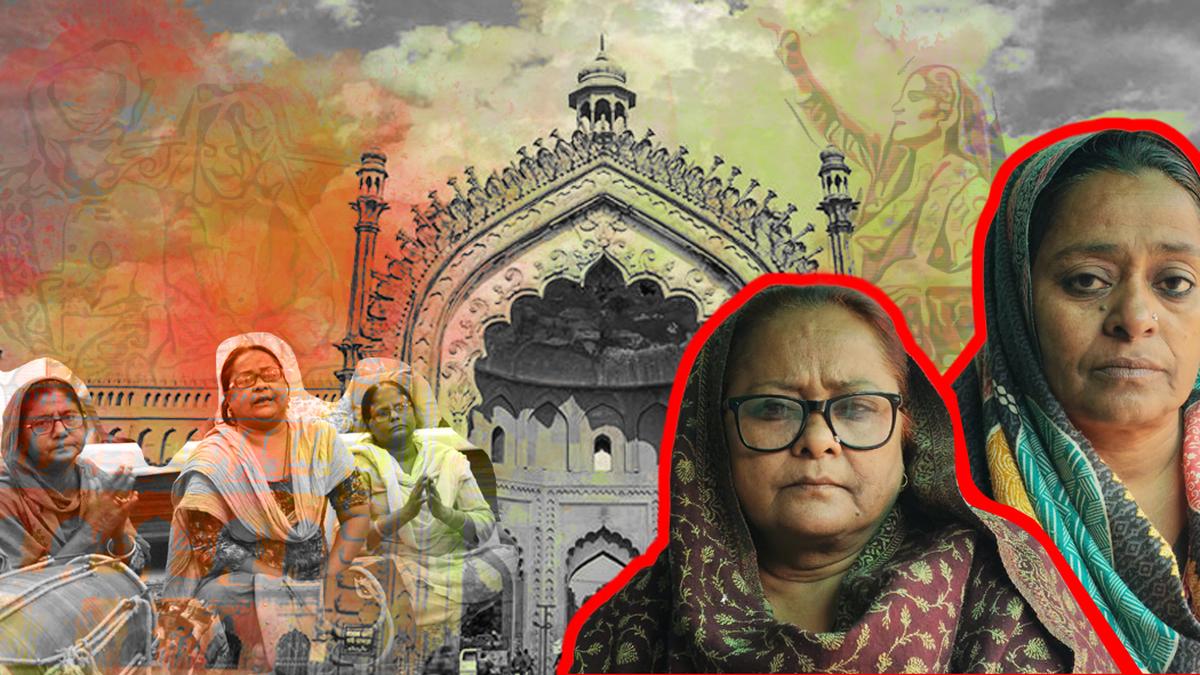
Awadh’s last mirasins struggle to keep their musical heritage alive
The Hindu
Umrana Niyazi, a Mirasin singer from Lucknow, reflects on the decline of her musical heritage and struggles to survive.
Umrana Niyazi hunkers down in her small verandah with her paan daan (betel leaf box) and sings Chhap tilak sab cheeni... mohse naina milaike (You have taken away my identity, my beauty, and everything that was mine... just by locking eyes with me), written and composed by Sufi poet and mystic Hazrat Amir Khusrau in braj bhasha, a western Hindi dialect. Her husky voice floats out into the lanes of old Lucknow, Uttar Pradesh, where she lives.
“Now people rarely call us to sing at mehfils [gatherings]. Times are changing but I hope our songs will continue to resonate with people. Otherwise, how will we survive?” asks the 51-year-old, who hails from the Mirasi community, a group of traditional singers and dancers commonly found in northern India and Pakistan.
The word ‘mirasi’ comes from the Arabic word, ‘miras’, meaning heritage. In Awadh, the Mirasins, or female singers, are traditionally invited to sing at auspicious events such as births, Aqeeqah (where a newborn’s hair is shaved for the first time), Bismillah (when the child reads the Quran for the first time) and weddings.
Umrana and her sister Farzana, 45, are perhaps the last custodians of the musical heritage of the Mirasins, who enjoyed great popularity in the 19th century, when there was a surge in cultural nationalism. In response to the colonial rulers’ disdain for Indian culture, talukdars, landowning Indian aristocratic families, began supporting artists, including the Mirasins, who became linked with their patron families.
“Though considered socially inferior to women from ‘respectable’ families, they received the patronage of nobles and royals,” says Rana Safvi, historian, translator and author of The Forgotten Cities of Delhi and Shahjahanabad: The Living City of Old Delhi.
Mirasins played a special role during weddings as they were invited to sing at every function. It would begin at the bride’s home with Milad recitations in praise of the Prophet, followed by the haldi ceremony. There were songs to welcome the baraat (groom’s party) and, after the nikaah (wedding), songs were sung to bid farewell to the bride.
Mirasins also sang at the bridegroom’s home — while he tied the headdress or sehra, and when family members applied surma to his eyes. During the wedding, when families and friends gathered to bless the newlyweds, the Mirasins sang a Persian composition by Hazrat Sarmad Shaheed Shahana Mubarakbaad. “Mirasins play a crucial role in preserving our cultural heritage. Their songs are a repository of our history,” says Safvi.


The government plans to amend the FCRA, introducing new regulations for NGO asset management and accountability for key functionaries.

The draft policy for “Responsible Digital Use Among Students”, released on Monday by the Department of Health and Family Welfare, has recommended that parents set structured routines with clear screen-time rules and prioritise privacy, safety, and open conversation with children on digital well-being.

Police Observer Sushant Kumar Saxena conducts surprise inspection at Shencottai police station, reviewing warrants and security arrangements ahead of elections.

Andhra Pradesh government to launch key projects in April, focusing on industrial growth and infrastructure development, says Nara Lokesh.

Lok Sabha refers the Corporate Laws (Amendment) Bill to a JPC amid opposition concerns over CSR provisions dilution.

SHG members in Kanniyakumari use snakes and ladders to raise election awareness and boost voter turnout.

Government accelerates consultations for early implementation of the Women’s Reservation Act to ensure women’s representation in 2029 elections.

CM A. Revanth Reddy distributes ₹1 crore insurance cheques to families of deceased Electricity department employees, enhancing financial security for workers.

The Bengaluru Traffic Police (BTP) registered 634 cases of drunk driving during a week-long special enforcement drive conducted across the city between March 16 and March 22.

GHMC intensifies action against property tax defaulters, seizing properties and offering a One Time Settlement scheme for payments.

CCB arrests three drug peddlers in Mangaluru, seizing ₹2.5 lakh worth of MDMA and other valuables.

TVK's 28 candidates in Puducherry include former BJP MLAs, a sitting Independent, and a retired police IG.

BRS submits notice on private member bill to Speaker